How to Prep a Cross-Stitch Pattern

Prepping the cloth and floss for a new cross-stitch pattern makes it easy to jump in and start stitching. Here’s how I do it.

All the supplies for stitching Tiny Modernist’s Cute Crocodile cross-stitch pattern.

This past summer, I was bitten by the cross-stitch bug. When I was around 10-years-old, my mom introduced me to Christmas cross-stitch ornament kits—those little plastic round frames into which I’d pop the image of Santa Claus, or a snowman, or a train that I had painstakingly crisscrossed out with the provided threads. They were fun when I was a kid. But as an adult, I lost interest…until now.

Needing a hand sewing/stitching project, I browsed Pinterest and found a pattern that caught my eye. I was able to order the pattern and all the required embroidery floss and cloth from a single website. (Etsy is also a great place to get fun patterns, but you need to have the ability to print the pattern and must purchase the floss and cloth somewhere.)

Quilting and tailoring tools come in handy for prepping cross-stitch patterns.

Starting a cross-stitch pattern larger than those tiny ornaments can be overwhelming. Fabric! Thread! Find the center! Here’s how I set up my supplies after I have a pattern I want to start making.

First, I get my cloth. There are a lot of different sizes and colors. For now, I like working with 14-count Aida. White and beige are my favorite colors and easy to find. Consulting the pattern, I see how big the finished image is on the particular size of Aida I’m using. Then, I’ve learned to cut 3” extra on all sides. But, I wish pattern makers/writers would say “add 6 inches to the height and width” because a few times I’ve been tempted to just add 3”—and then I’d only have an extra 1.5” on each side. This extra fabric is so that you have finishing options.

I use my quilting ruler and tailor’s chalk to mark the size just on the edges of my larger piece of fabric. I cut the fabric using the weave as a guide.
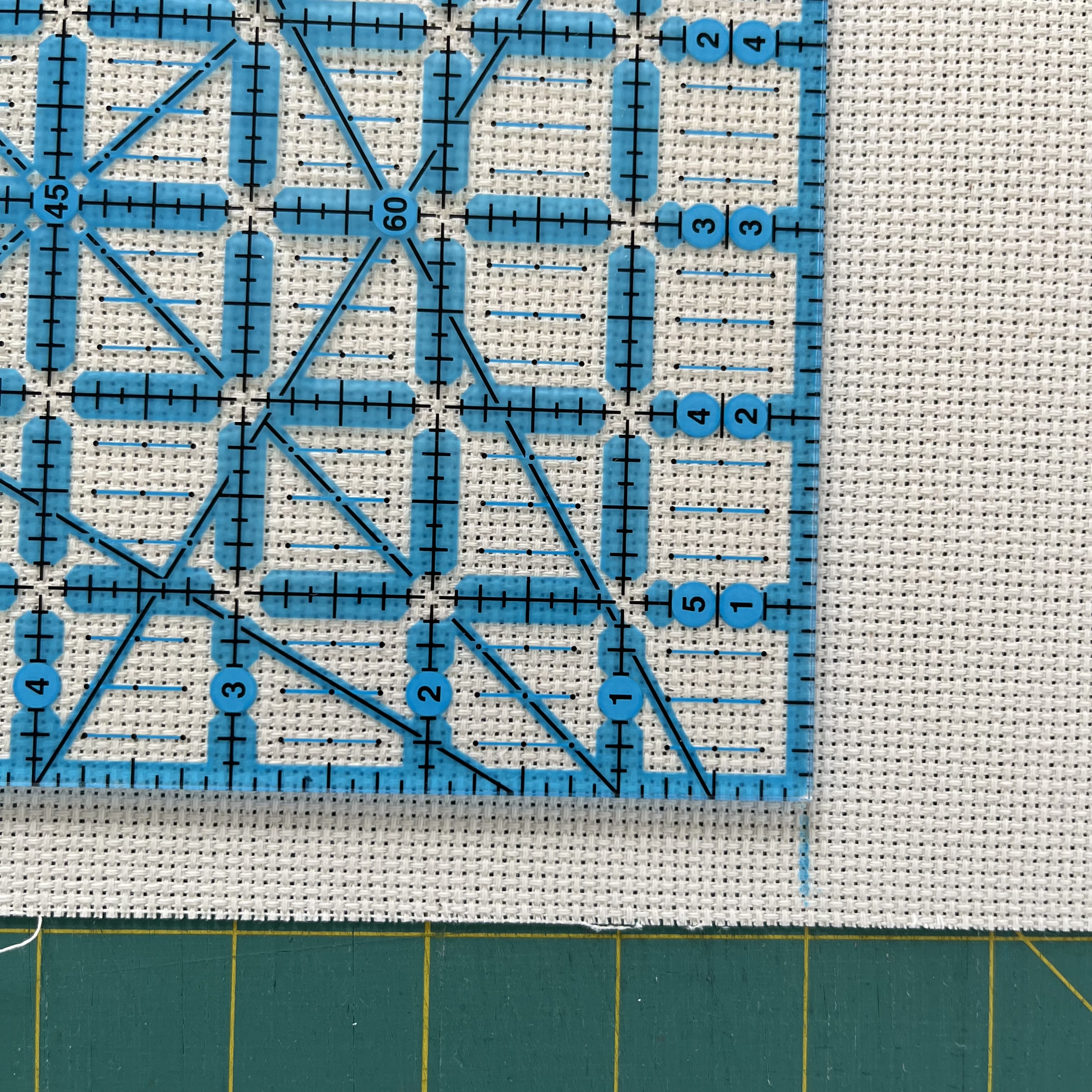
No need to mark the whole line. Just follow the weave to cut a straight line.

Next, most patterns recommend working from the center out. Cross-stitch patterns generally have markers so you can easily find the center on the chart. I have been folding my fabric in half one way and then in half the other way. Then, I thread a needle with a single strand of black embroidery floss and run it up and down every 10 holes along the two folds. Once I get started and create the center stitches, I go ahead and clip and remove these marking threads so I don’t permanently stitch them into the design. (Ask me how I learned this.)
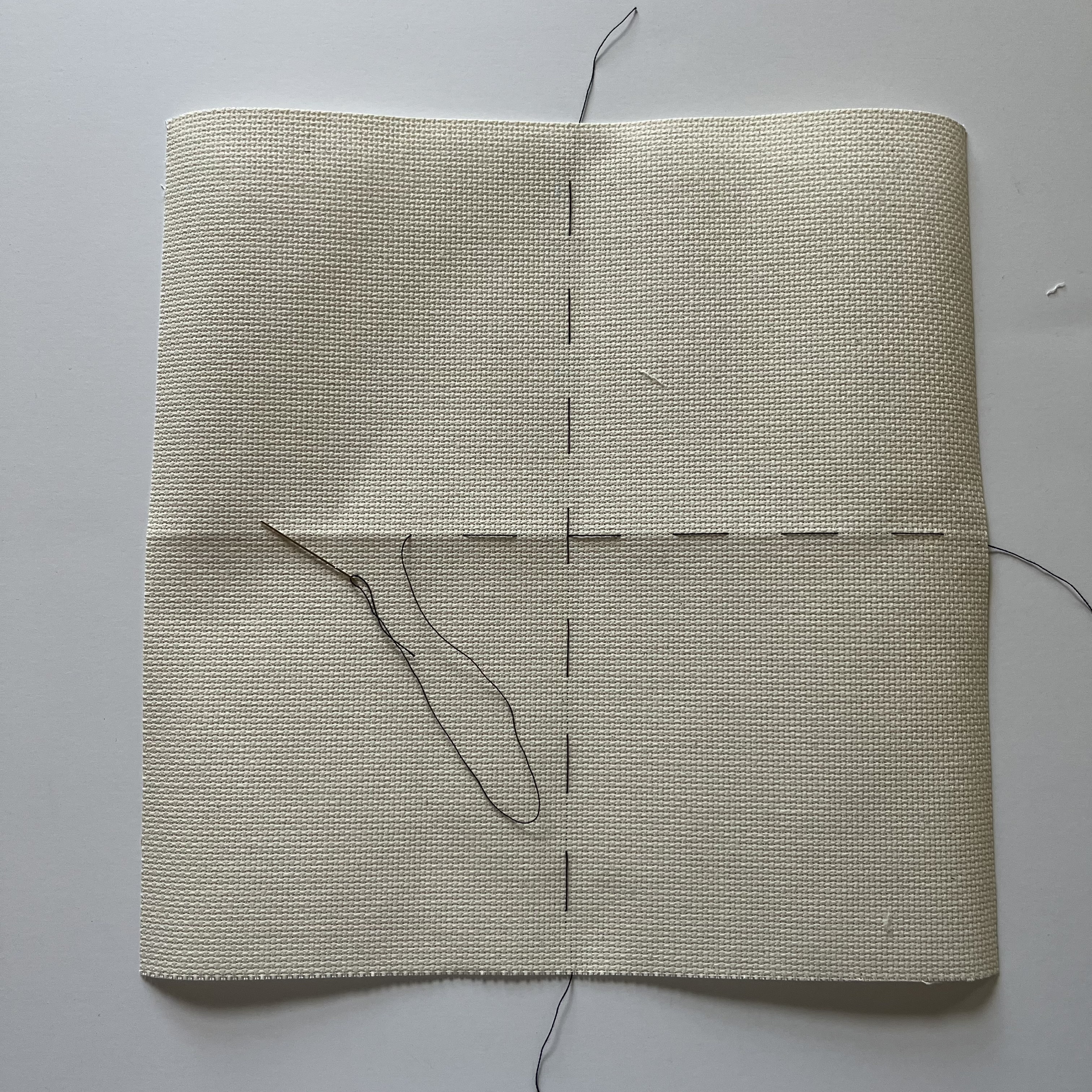
Simple lines of stitching make it easy to see the vertical and horizontal centers.

For the floss, I like to wind it onto bobbins, marking each bobbin with the corresponding color number. Then, I load them onto the ring. The plastic bobbins and ring were a set! I only put the colors for my current pattern on there.
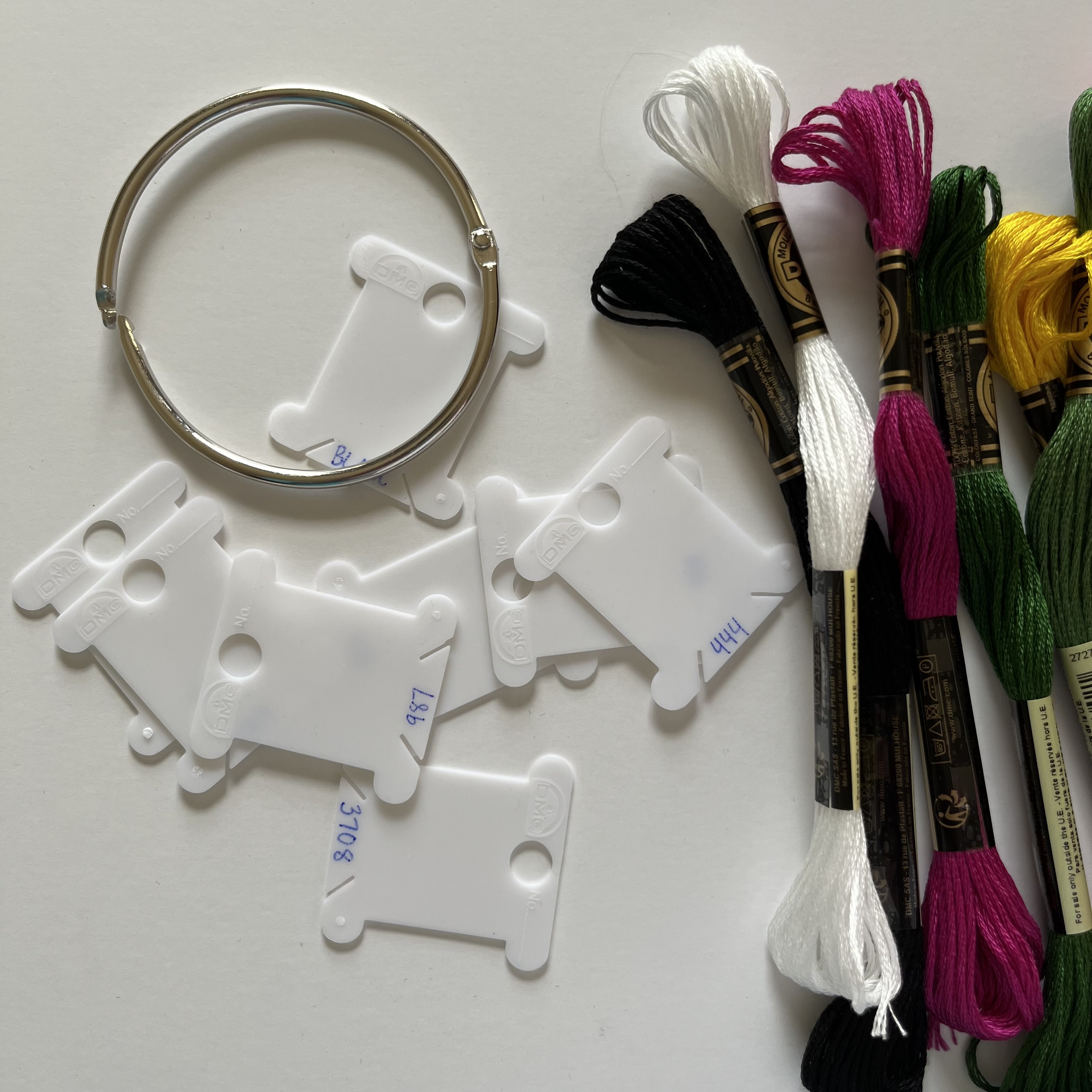
Bobbins make keeping floss tidy easy.

Next, I get a piece of cardstock paper, fold it in half (so it’s extra sturdy), and punch enough holes in it to hold a couple lengths of each floss. I write the color number above each hole and then I cut two lengths of each floss and simply tie them on. The floss is the length I like to work with. If you take nothing else from this post, do this. I find this is one of the most helpful things I’ve done. It makes starting on the pattern so easy. Sure, at some point I need to cut a new length of floss from the bobbin, but having this card makes accessing it so easy.

A card of pre-cut floss keeps the stitches flowing!

I keep everything in the same project bag: cut fabric, floss card, ring of floss bobbins, pattern, needles, and something to cut with. Bonus items are thread conditioner and needle threader. One unusual thing you see in my photo is nail clippers. Nail clippers are scissors alternatives. If you are unwilling to travel with your “good scissors,” take nail clippers! They trim floss just as easily and are small enough for project bags and traveling!

All the cross-stitch pattern supplies ready to go.

And, here’s a glamour shot of my completed crocodile:

It’s so satisfying to see a completed project.

Save this post for later and pin this image:

Sew an Easy Travel Toiletry Roll with a Hand Towel & Fabric Fat Quarter

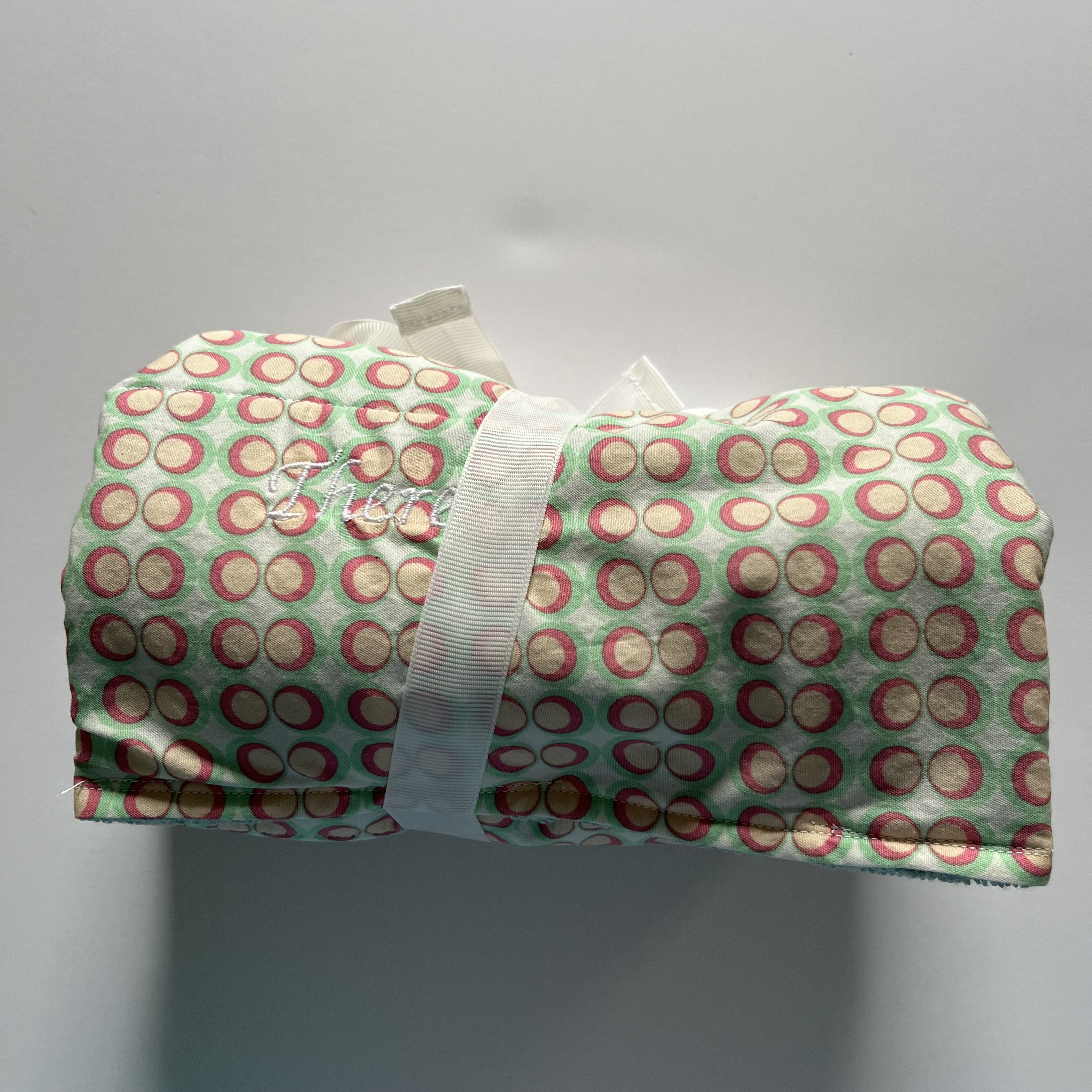
Using an online tutorial, I sewed a travel toiletry roll using a store-bought hand towel and fat quarter of quilting cotton.

I have had The Yellow Birdhouse’s “DIY Toothbrush Travel Wrap” blog post pinned on a Pinterest board for a few years now. With a trip on the calendar, I knew it was time to try it out. All it requires is a store-bought hand towel, a fat quarter of quilting cotton, some ribbon, and of course, thread, and a sewing machine. 

I bought some 100% cotton hand towels and dug through my stash for some fat quarter-size pieces of fabric. I also dug through my collection of ribbon and trim to find pieces that would match and be long enough to stitch on as tie closures.

Full disclosure: I didn’t measure anything! After getting the gist of how to make the toiletry roll, I let the hand towel and mini travel toiletries be my guide. It was an exercise in letting go of perfection. I mean, who is going to see this? Function over beauty, I say!

First, using my secondhand embroidery machine, I stitched my name into the fabric. I’m still learning the ins and outs of machine embroidery and try to use it when I can. It’s all practice, as you’ll see from the fact that the embroidery isn’t very visible. And, it’s off-center.

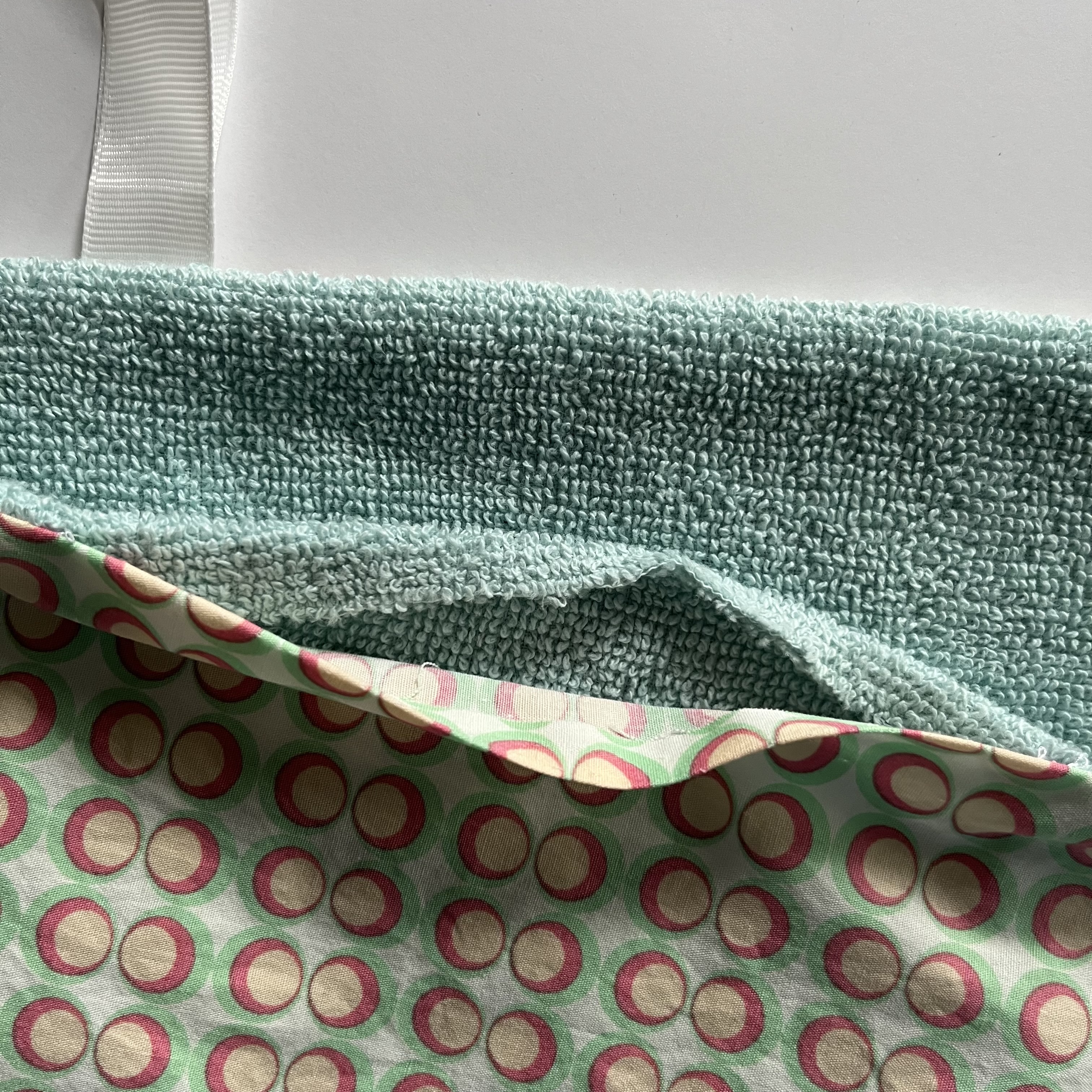
I trimmed the hems off all four sides of the hand towel. Then, I trimmed the fabric to match the size of the towel. I placed the wrong sides together, placed the ribbon in the center on one side so that it would be outside once flipped, and stitched around, leaving 3-4” open so I could flip it to the right side out.

I flipped it, and topstitched around the perimeter, closing up the hole I used to turn it around. 

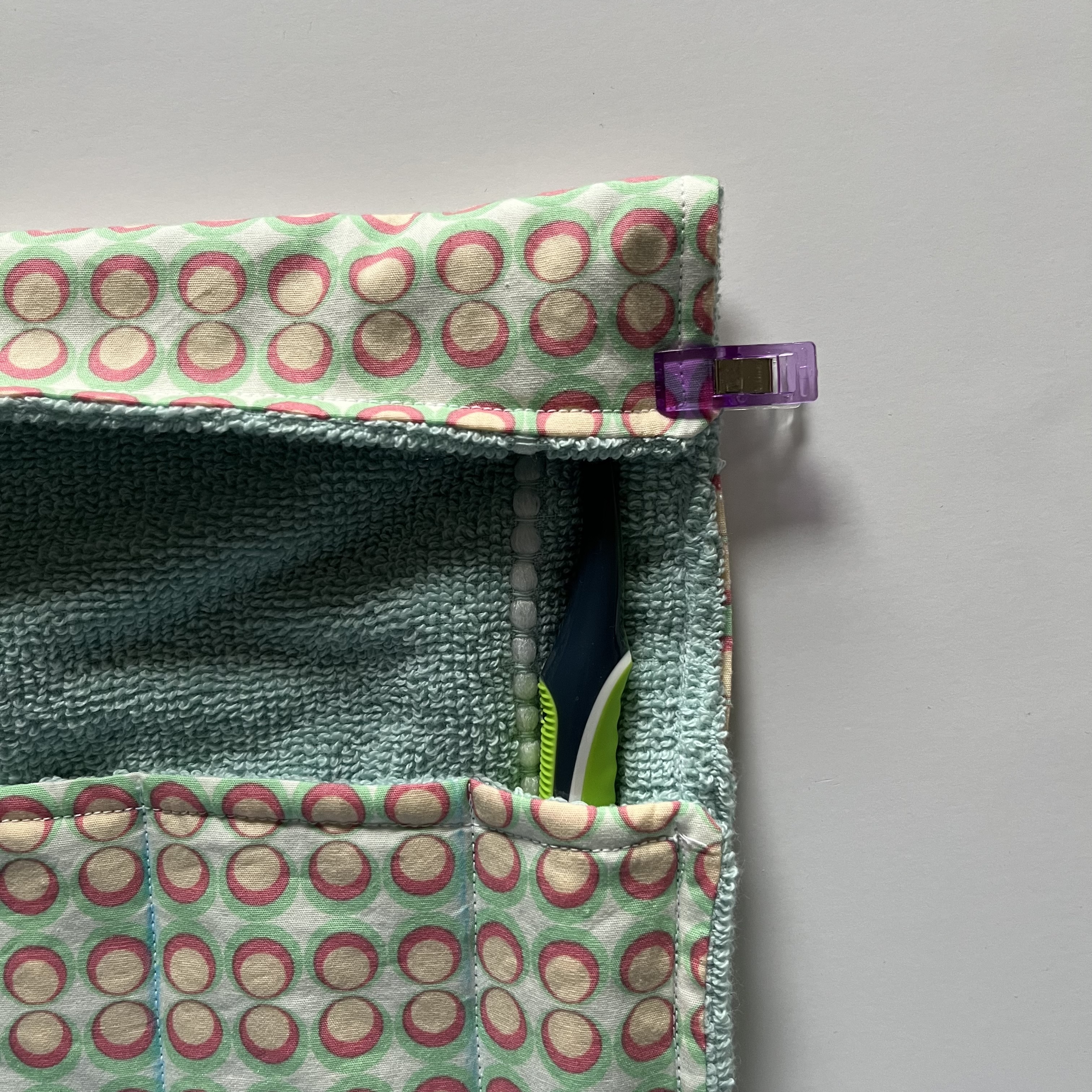
For the next part, I let the toothbrush be the guide. I set the toothbrush on the towel side and folded the bottom up far enough that it would hold the toothbrush. I also folded the top down enough so that it would protect the head of the brush. I clipped together the top and bottom folds down to hold it in place while I stitched each side down.

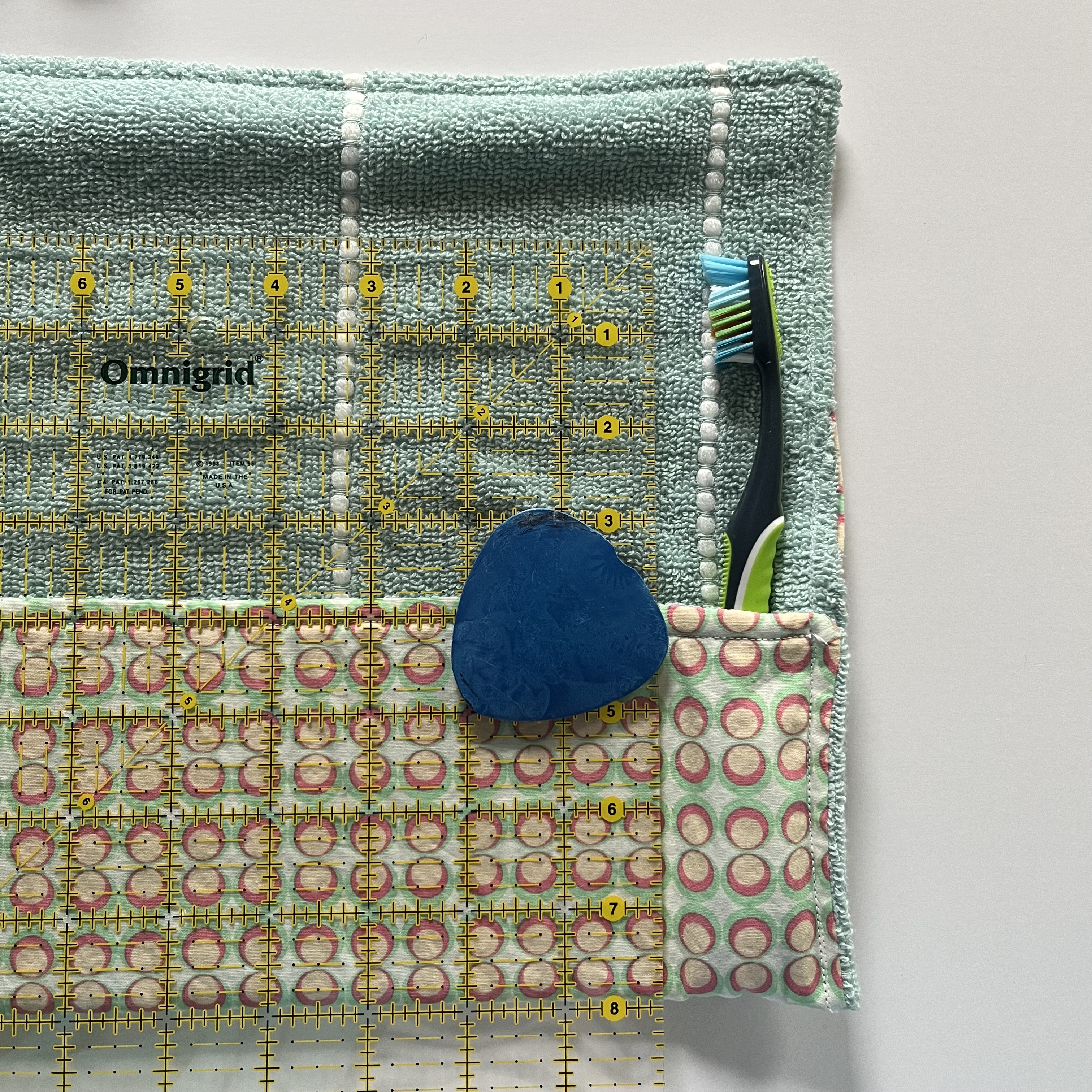
Now, using a ruler (but not for measuring!) and some tailor’s chalk, I placed each toiletry in, marked with the chalk where I needed to stitch to create a “pocket.” The ruler ensures a straight line. Then, I stitched along the marked line, and repeated this process for each toiletry I wanted this roll to hold. I was sure to leave a little wiggle room with each pocket, because toiletries don’t last forever and surely the next mini-bottle of shampoo will be larger/different shape and that wiggle room will ensure it’ll still slip in!

I’m happy with it! I stitched up a roll for each of my kids. It allows them to keep track of their own toiletries when we go on family trips. If you need a bit more detail on how this travel toiletry roll comes together, head on over to The Yellow Birdhouse’s tutorial here.

Happy sewing and safe travels!

Knowing When It’s Time to Throw Away Mended Clothing

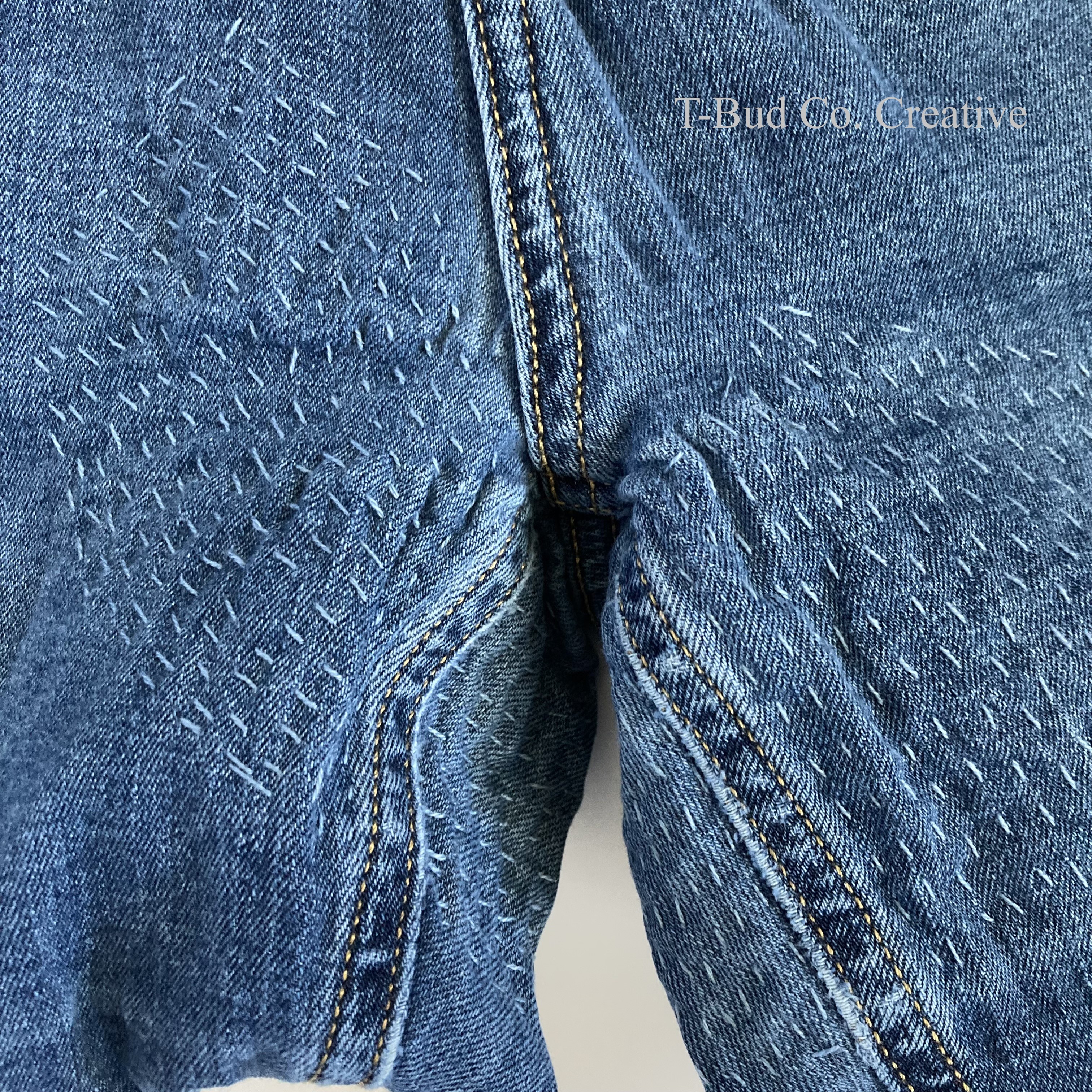
When my mended pair of jeans needed to be repaired again, I knew it was time to let them go. I patched them after a year of wear and then wore them for another year.

It’s time to let these jeans go.

Nothing lasts forever, unfortunately, and while I could have mended these jeans for a second time, I just wasn’t feeling comfortable wearing them. I tend to wear out my jeans in the crotch. So, visible repairs are in an awkward place and I certainly don’t want to draw attention to my crotch! The layered fabric in the crotch creates a different kind of discomfort—it’s physically uncomfortable.

Right after the mending a year ago.

I took photos of these jeans when I originally mended them. The date linked is March of 2022. I estimate that I wore them for a year before they needed repair. I wore them for two years: one year as-is and a second year patched. Full disclosure: I am on sabbatical from working outside the home. A lot of days I just don’t leave home—I can get away with wearing the same clothes every day, from week to week. I wore these jeans multiple days per week for two years straight. Conservatively, I’ll say I wore them only 2 days per week. Let’s do some math!

52 + 52 = 104 weeks in the 2 years I wore them

104 x 2 = 208 days worn

I do laundry once a week. They were washed 104 times.

208 days of wear. 104 washes. Now, they’re done.

That’s pretty good and beats NPR’s LifeKit’s suggestion that you wear an article of clothing 30 times.

I learned a lot from this pair of pants. First, there’s a lot of stretch in these jeans. Look at how they wore out. It’s amazing how much the wear looks like stretch marks on skin.

Denim wore right down to the patch material.

Second, I think the stitching frayed and broke because I mended these jeans while they were clean. There’s a difference in the fabric when it’s freshly washed and when it has been worn a couple of times.

I used a single strand of DMC Cotton Pearl thread in a medium blue to blend with the color of the denim as much as possible.

The next pair of jeans, I will wear them a day or two before mending. Then, I’ll be stitching on fabric at its maximum stretched size, not at a shrunken size.

Layers of fabric

Finally, I’m not sure I’ll heave the whole pair into the trash bin. I’m going to try part them out—I’ll try to take out the zipper and maybe cut out swatches of relatively unworn fabric on the legs for future mending or other projects. All in all, eventually everything has to go. While only having this pair of jeans for two years seems paltry, after doing the math, I realize that I actually got a lot of wear out of them. Now it’s time to put them to rest.

Pretty stitches.

Mended Buttonhole on Men’s Jeans

The buttonhole on my husband’s jeans frayed, so it was too large to securely hold the button. I was able to mend the hole, but it wasn’t without trial and error.

When the buttonhole on a pair of my husband’s jeans frayed so much that it could no longer hold the button securely, I offered to give mending them a try. I ran into some snags throughout the process, but I was able to do it.

First, I reinforced the area with a scrap of quilting cotton. I sewed a patch on the front and back of the waistband over the buttonhole. Then, I put in a few rows of running stitches where the frayed hole was since this area really only had the two layers of cotton fabric. 

Next, I popped my buttonhole foot onto my sewing machine and threaded it with heavy duty thread. I set the size of the buttonhole, positioned the waistband under the needle, and pushed the pedal. Fail! The reinforced denim waistband was too thick for my machine to scooch along under the needle. The fabric pretty much remained stationary and all I got was a mess of thread. So, went back to the drawing board. Or should I say that I went running to Google.

I searched how to hand sew a buttonhole. There are plenty of really good tutorials that showed me the way. So, I broke out the pearl cotton thread and a touch of Dritz Fray Check (I dabbed the cut edges of the buttonhole with the Dritz Fray Check to help prevent fraying…and recreating the original problem!).

It worked! My husband has put these jeans back into rotation, which is the whole point, right—to get at least one more wear out of them?

Necessary Sewing: A Couple of Projects That Fulfill a Need

Sewing is mostly a hobby for me, but sometimes it’s a necessity—I need to create something I need to use now.

Masks in-progress.

Sewing isn’t always glamorous. Sometimes, sewing is necessary. It’s not all hobby and unicorns and rainbows. For me, the last month or so has consisted of necessary sewing, mainly making masks for my school kids to wear at school. I also made a couple of L’il Knot Bags by indigobird, because I thought I might use them to hold used masks.

Masks! Masks! Masks!

Here’s the deal: my kids have to wear masks at school. If they have to wear masks, well, they should have fun masks to wear. So, before the beginning of the school year when it was s—l—o—w—l—y becoming apparent that they should be wearing a mask at school, I rifled through my fabric stash and pulled fabrics they could choose from for their masks. (They enjoyed picking the fabric.)

Halloween Masks

I then decided I’d make them a set of Halloween-themed masks. And, while I’m way over sewing masks at this point, I have already acquired fabric to make winter-themed masks. (There is no way I am going to waste time and fabric on holiday-themed masks that they’d only wear a couple of weeks. Winter masks can be worn December and January. Maybe February.)

The worst part of making the Halloween masks? When I cut out 24 ear straps and realized that I cut them in the wrong direction along the knit fabric. Bah! It happens. Side note: I’ve found that cutting an old t-shirt into 1” strips creates ear straps that are comfortable.

D’oh! Knit fabric ear strips cut in the wrong direction against the grain.

I’ll refrain from telling you all the details about my masks. At this point, everyone should have found a mask pattern and materials that works for them. If you just gotta know, leave a comment or send me a message via my contact page.

Medium L’il Knot Bag

The L’il Knot Bags came together easily enough. I made a small and medium-size bag. Originally, I thought one would work well to hang on a hook and have my kids deposit their mask into at the end of the school day. But, ends up the hook I have by the front door works well for this purpose. (They hang their mask by its lanyard on the hook.) The bags are functional and fun so I’m sure I’ll find a purpose for them. Another side note: that small bag is made from the fabric I used to mend my M&M’s Quilt and Yellow Quilt (that’s its official name, y’all—ha!). I was pleasantly surprised these two fabrics coordinate so well!

It’s hard to see the lining fabric–peep the green lining near the handle.

Necessary sewing can be fun. I mean, it’s great to be able to justify sneaking off to my sewing machine because I have to get these masks done before school starts! But, sometimes it’s sluggish. When it was feeling like that, I promised myself that once I was done, I could move on to something more fun, like working on the next quilt in my queue.

Here are more examples of what I consider to be necessary sewing: visibly hemming jeans, making handkerchiefs, and sewing baby bibs.

What having you been sewing lately because you have to, not necessarily because you want to?