Unfussy Instructions for Sewing a Standard Pillowcase

My easy instructions for making pillowcases means you can have a lot of different designs to choose from every time you change sheets. It’s fun for everyone, especially kiddos.
One of my favorite things is having fun pillowcases to choose from every time I change the sheets. I recently made pillowcases for my older kiddos for Christmas (yes, I had to get started this early). Because they’re easy to make, why not have a lot of different patterns or give in to your kids’ 6-month obsession with whatever television character?

I’m not fussy about my home décor and how I make my standard pillowcases is equally unfussy. Admittedly, I inherited my “lots of fun pillowcases” philosophy from my quilter-sewist mom. (She started my collection.) So, I had a sense of how to make one myself since I’ve watched her make them before. But, the instructions I’m providing are my own—made from simply measuring whatever pillow was on my bed at the time, measuring one of her pillowcases, and doing my best with limited space for cutting large swaths of fabric!

First and foremost, per Google, a standard pillow measures 26”L x 20”H. The pillowcase should be a wee bit higher and a wee bit longer. A Google search shows that a standard pillowcase is 30”L x 20”H. But, remember we are working with pillows. Pillows are squishy. Standard pillows are for sleeping, not for decoration (like a throw pillow). So, if your pillowcase ends up a bit too small, you can just squish the pillow in. If they pillowcase is a bit too big, well, it’ll just be a bit loose on the pillow.

To start, select 2 coordinating cotton woven fabrics about 45” wide. One will be for the main part of the pillowcase (Fabric A) and one for the accent (Fabric B). Fabric A needs ¾ yard. Fabric B needs 1/3 yard. Honestly, just get 1 yard of Fabric A and ½ yard of Fabric B. Any extras you can just toss into your scrap pile or add to your stash—who doesn’t want extra fabric to play with? Plus, while 25” + 11” = 36”, a yard, you must remember that a yard is not a yard of fabric. One of the reasons I prewash is that it helps to show just how un-square the cut is. Washing fabric will shrink it, even slightly. Once you fold the fabric straight, you’ll see that the cut edges are not square and that once you square the fabric, you’re most definitely not left with whatever length you asked for. You’ll lose a few inches.

Cut Fabric A 25” by the width of the fabric (WOF). Cut Fabric B 11” by the WOF. Trim off the selvedge.

Fold Fabric B in half with wrong sides together (so the right side is showing) and press.

Pin and stitch Fabric A and B together along the WOF, right sides together, raw edges together. Finish the seam with a zigzag stitch or a French seam. (See below for YouTube French seam tutorial video.)
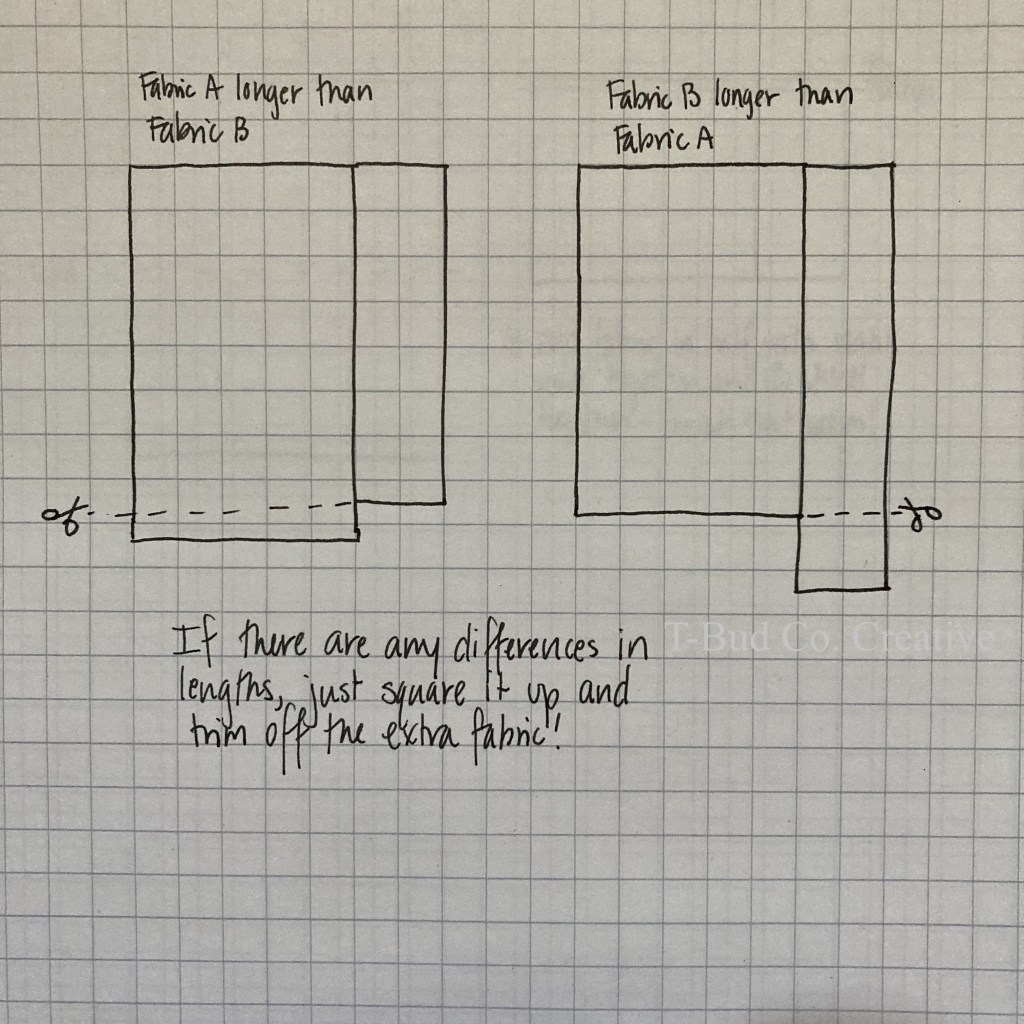
Here’s where the unfussy comes in: if there are any differences in the lengths between Fabric A and B, just square it up and trim off the extra fabric after they’re stitched together. This is where you’ll get your little bit too small or little bit too big measurements. It’s okay! Trust me! Perfection is overrated anyway.
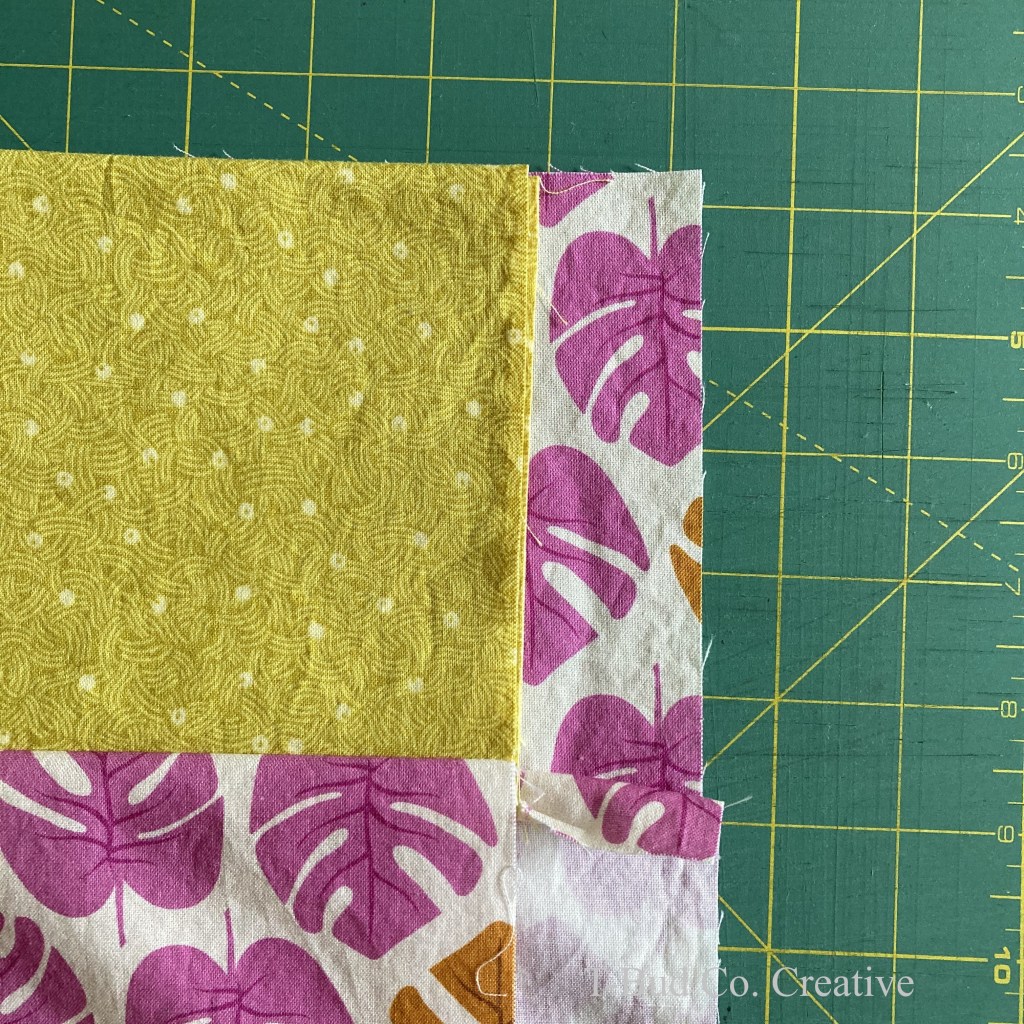
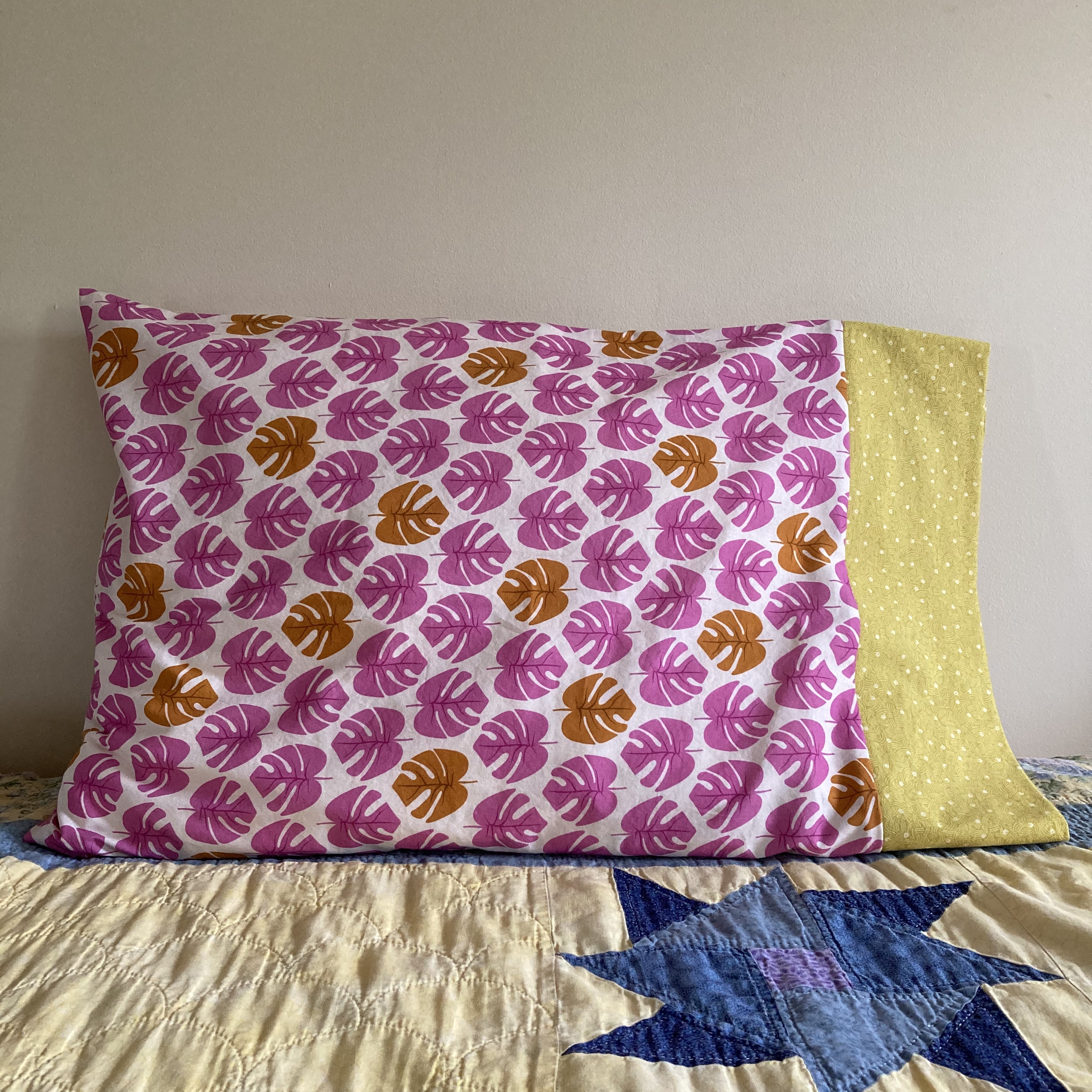
What the length difference looks like in real life. Notice the pink leaf fabric is longer than the accent fabric.

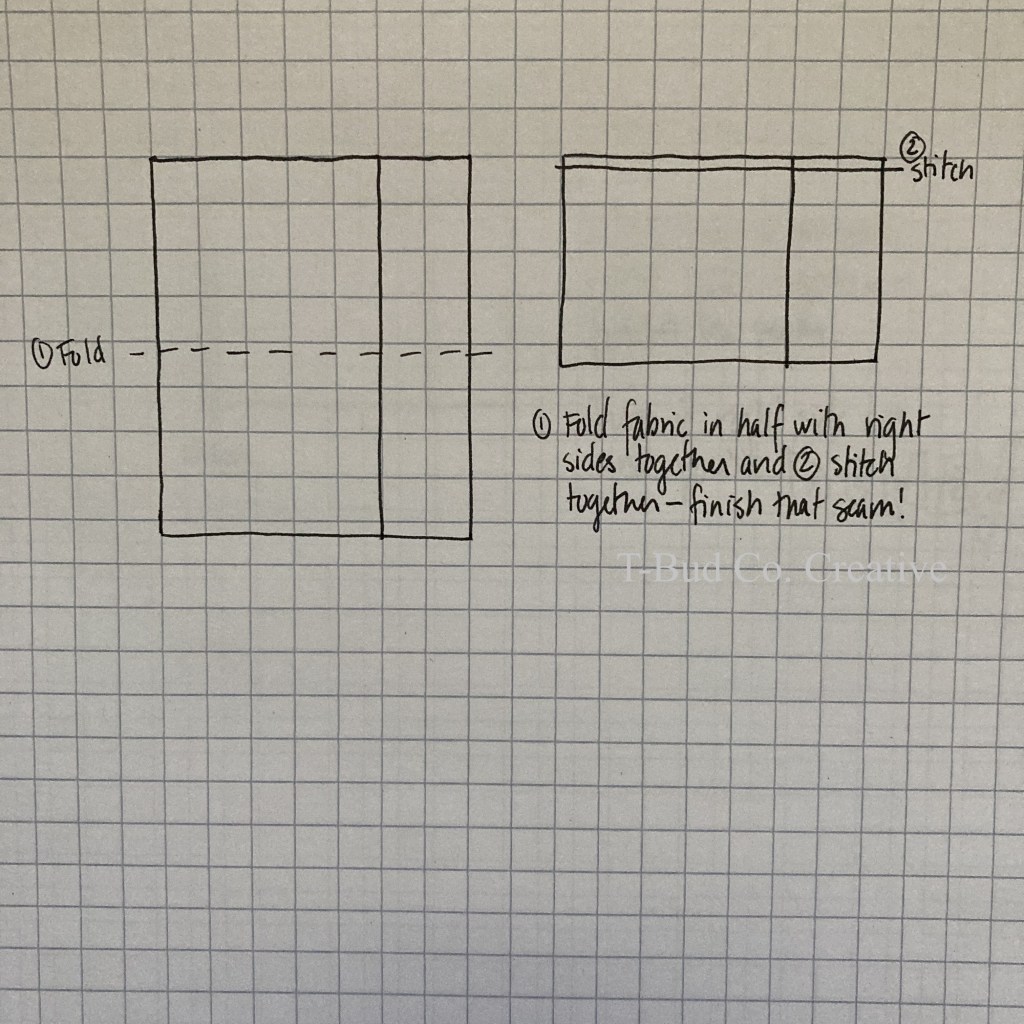
Next, fold the fabric in half with the right sides together and then stitch the long sides together and finish that seam (zigzag stitch, French seam).

Finally, stitch the short sides together with the right sides together and finish that seam. Turn it right side out and you’re done!

You have my permission to put it on your pillow immediately and just take a short little snooze to test it out.

Here is the French seam tutorial I watched to learn how to do them. It’s a nifty technique that’s great to have in your sewing repertoire.
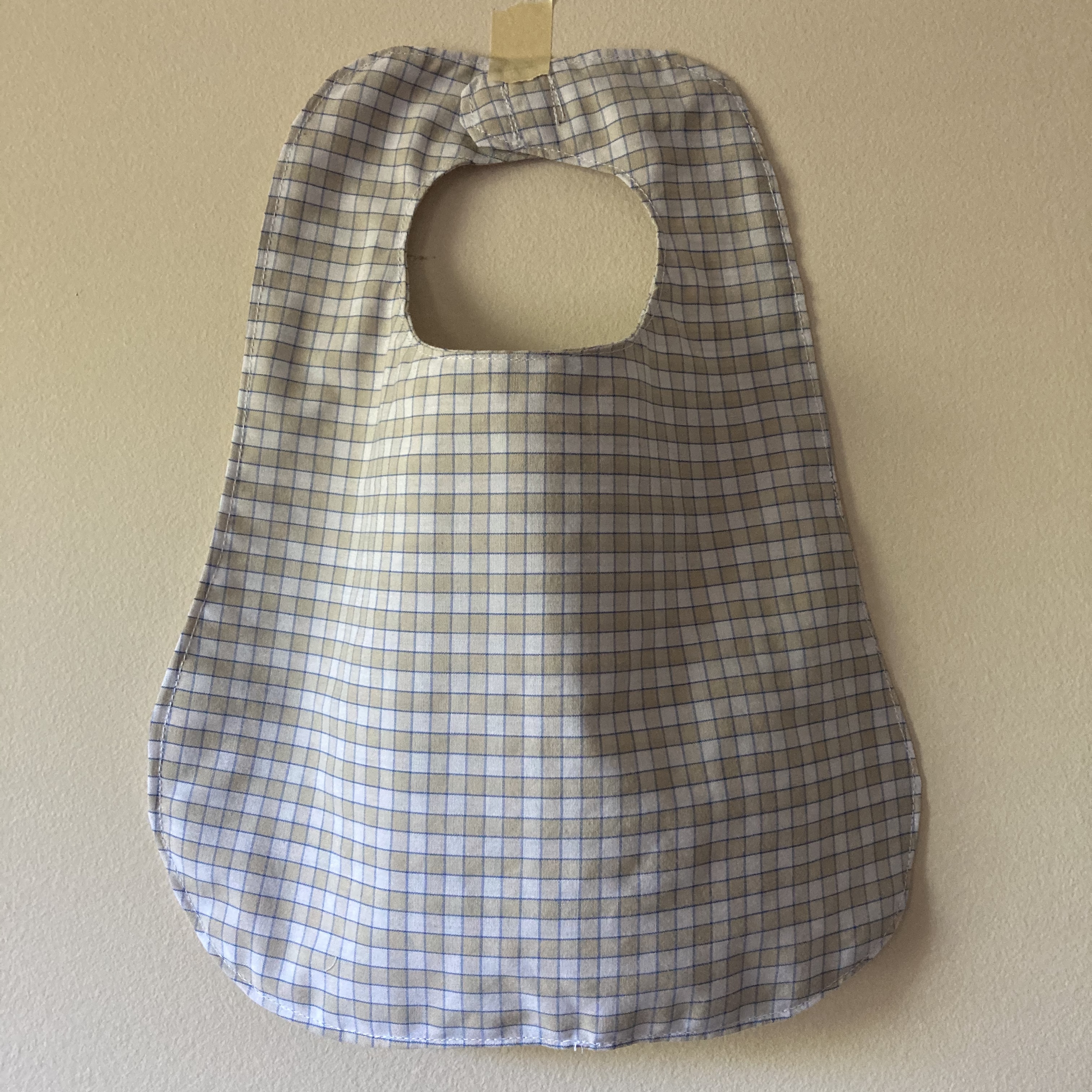
Baby Bibs from Repurposed Button-Up Shirts

I made quick and easy baby bibs with fabric from repurposed button-up shirts and snaps from outgrown, stained baby bodysuits.

Baby bib from upcycled shirts.

I just had my third baby in November. So, he just started eating solids a little over a month ago. Now, being my third, I have some tired bibs leftover from my older two. But the hook-and-loop closures are worn and don’t stick very well, and they’re very vinyl-plastic-y feeling, which I don’t like.

In my fabric stash I have a few button-up shirts from my husband that he no longer can wear because of holes in the elbows. Usually, I would be all about mending, but we’re not at the point where a mended elbow is considered a professional look in the workplace. And, yes, those things do matter. Alas, I did the best I could and stashed the shirts in my fabric bins until the perfect project came along. Enter my need for several bibs for a new human sloppily learning to eat.

The only new thing I used was thread. There’s no interfacing in these bibs! The snap closures came from outgrown baby bodysuits that were stained just enough to bypass the donation bin and went straight to the rag bin (after I snipped off the snaps, of course).

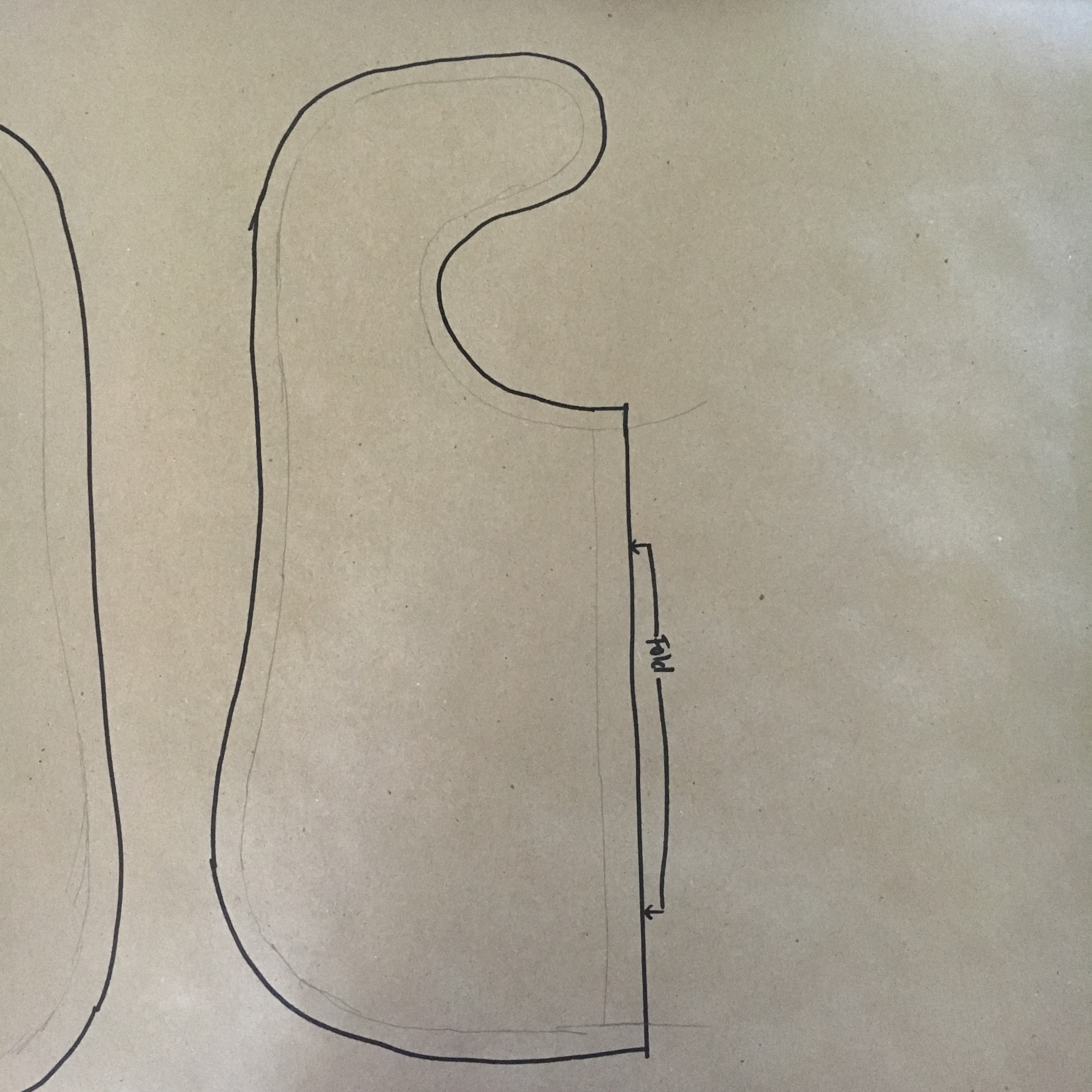
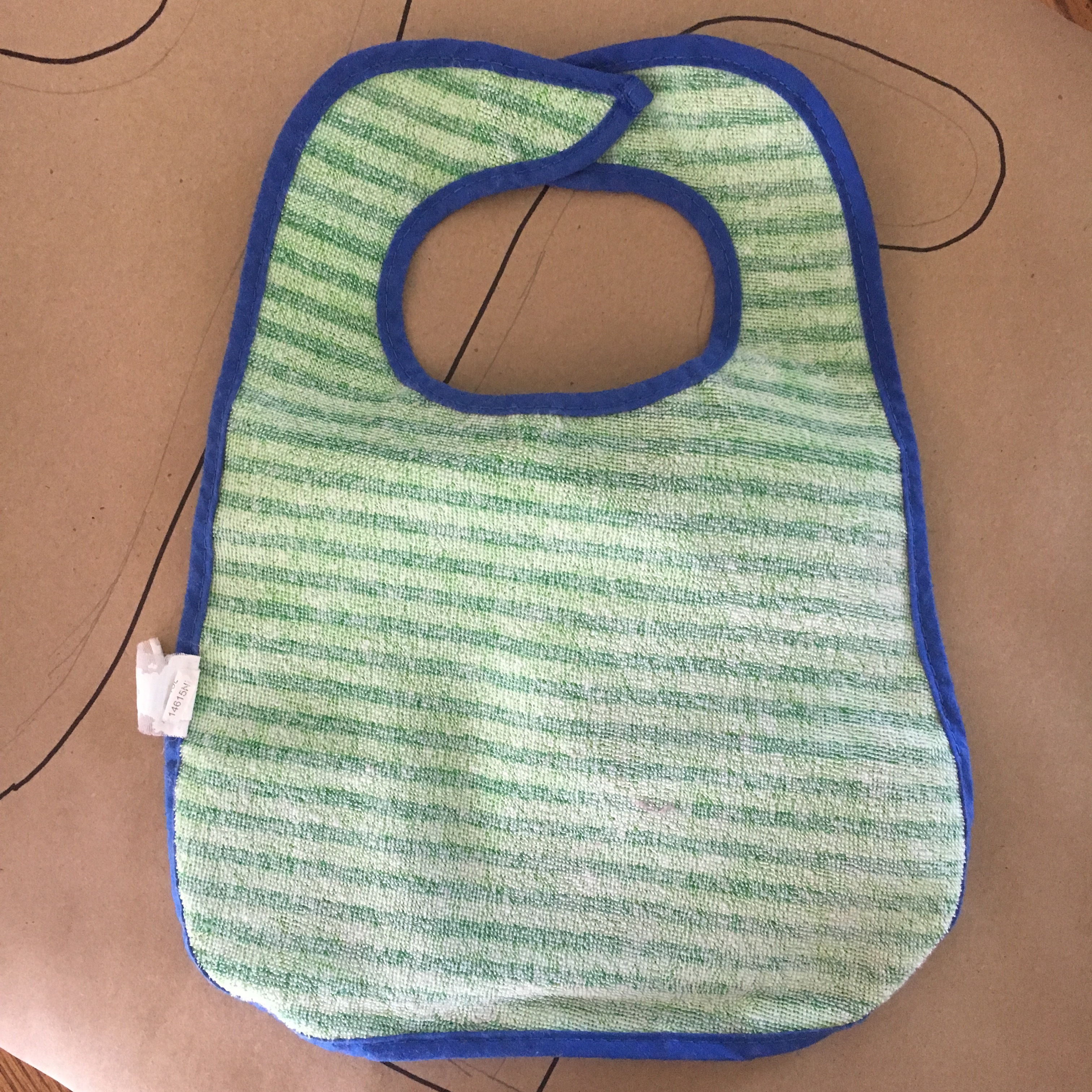
First, I took one of the old bibs I had and made a pattern. I simply folded the bib in half and traced it on some paper, marking the side where the fold goes. I added a ¼” seam allowance line freehand. Hey, these are bibs, not something that needs to fit just right!

Old bib.
New bib pattern.

Next, I cut up the shirts to have a decent amount of fabric. Each bib needs two of the pattern piece cut out of fabric. With some creative folding, I was able to get two bibs out of one shirt: one out of the back and one out of both sleeves.

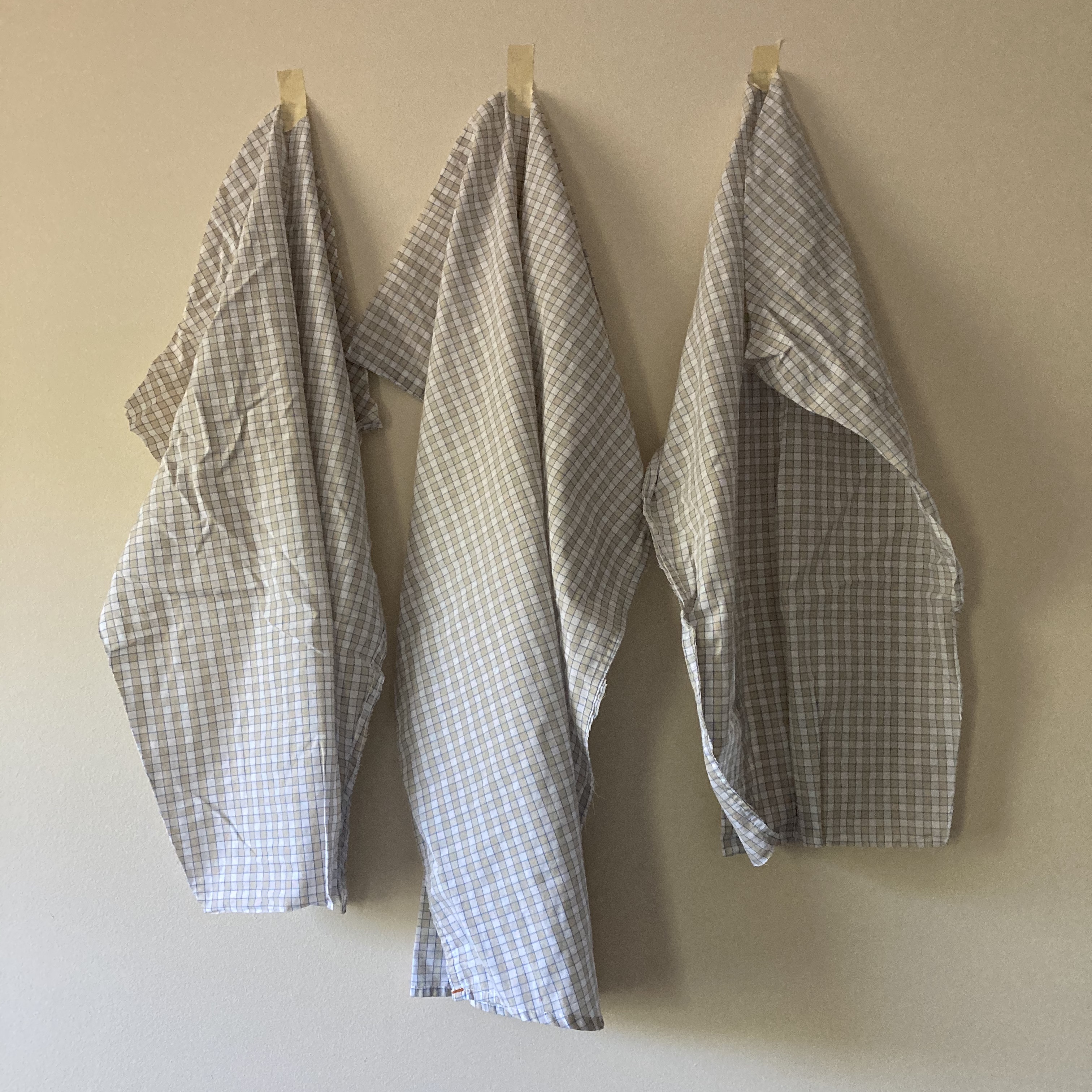
The back and two sleeves of a shirt cut into flat pieces.

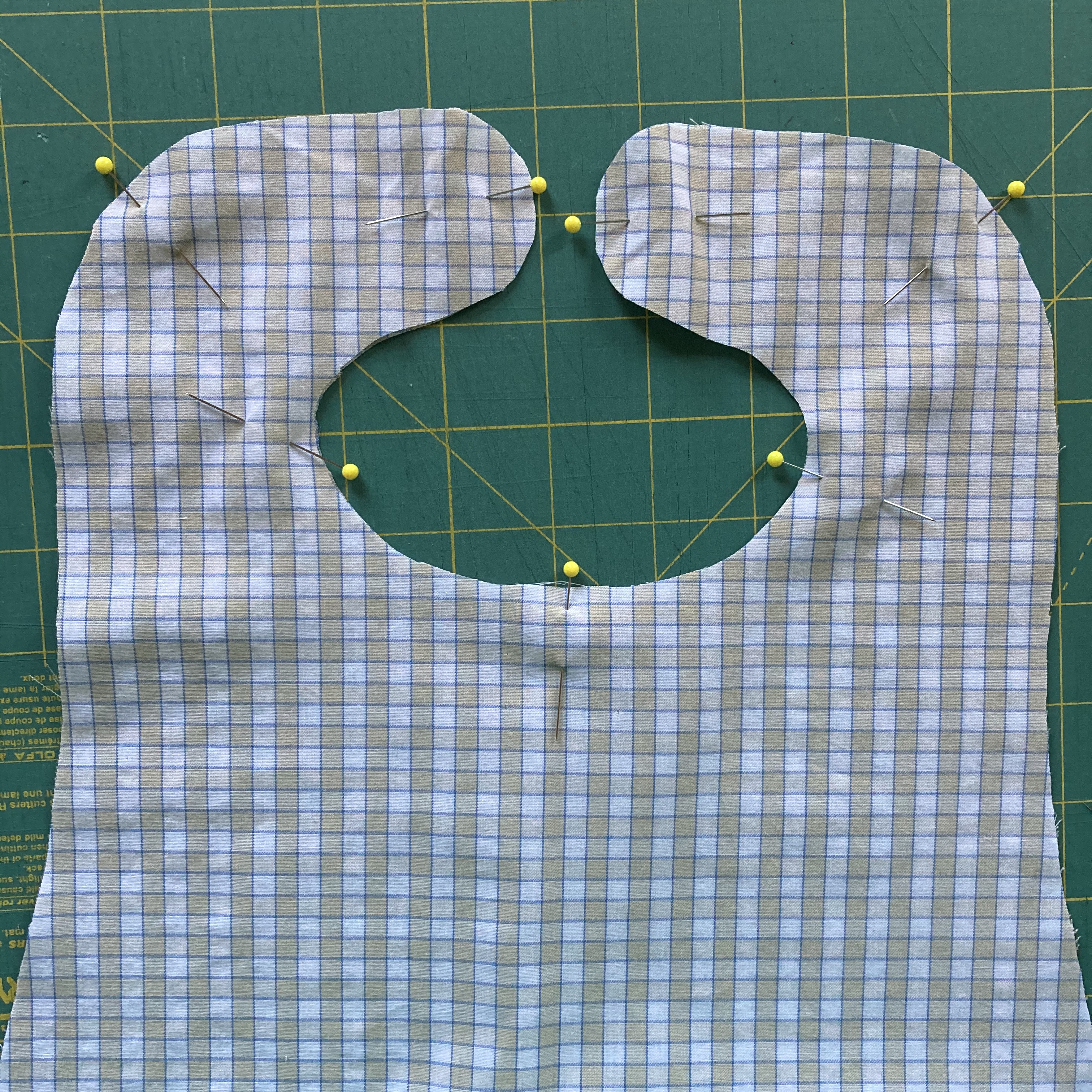
Then, I pinned the two sides together. Here’s the great thing about using woven plaid shirts: I didn’t have to worry so much about wrong and right sides of the fabric. Obviously, if you’re using fabric that has a wrong and right side, pin the right sides together. I stitched around the perimeter of the bib, leaving a space at the bottom for it to be turned right side out.

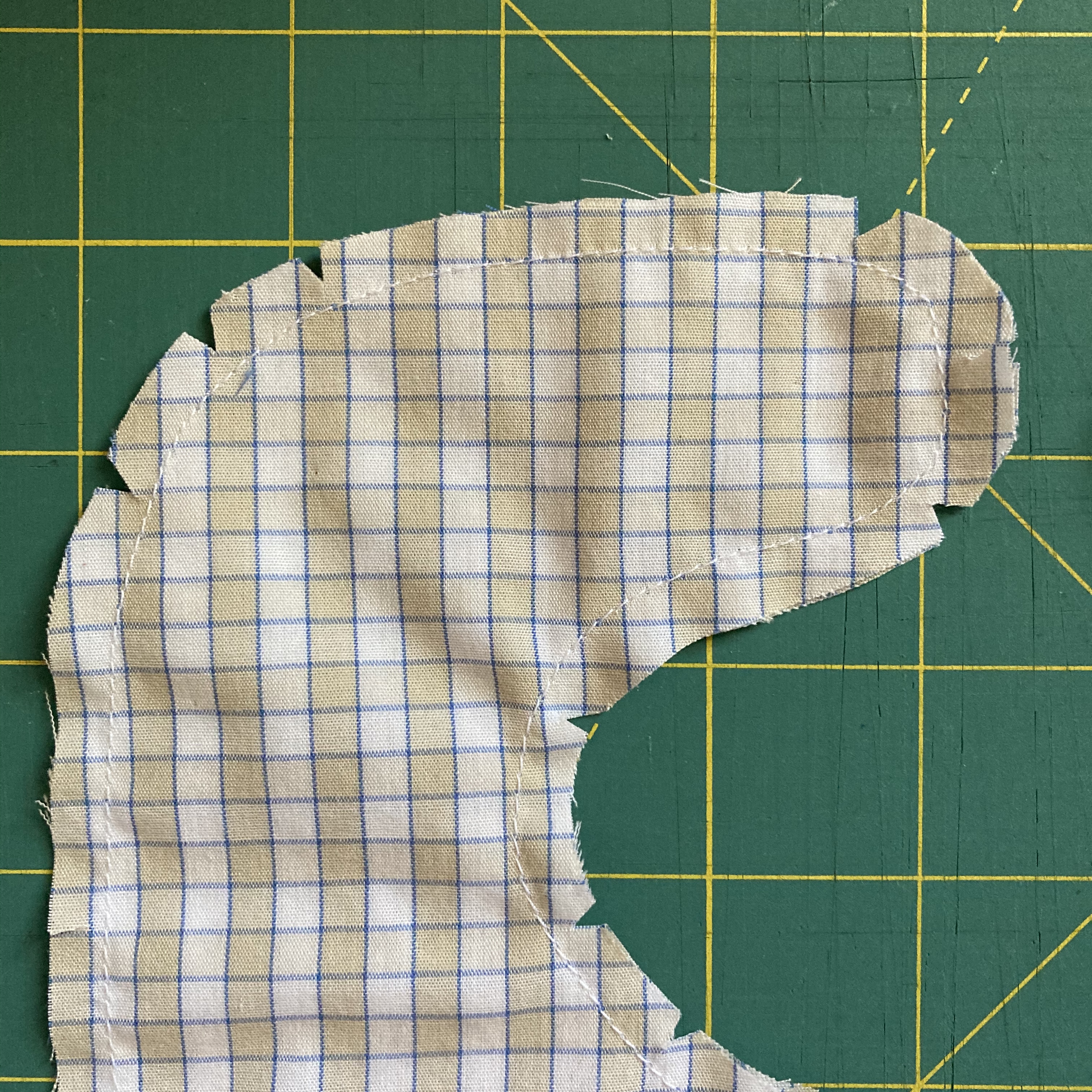
Before flipping the bib out, I made some clips on the seam allowance around the curves. This helps with getting the seam to lay flat.

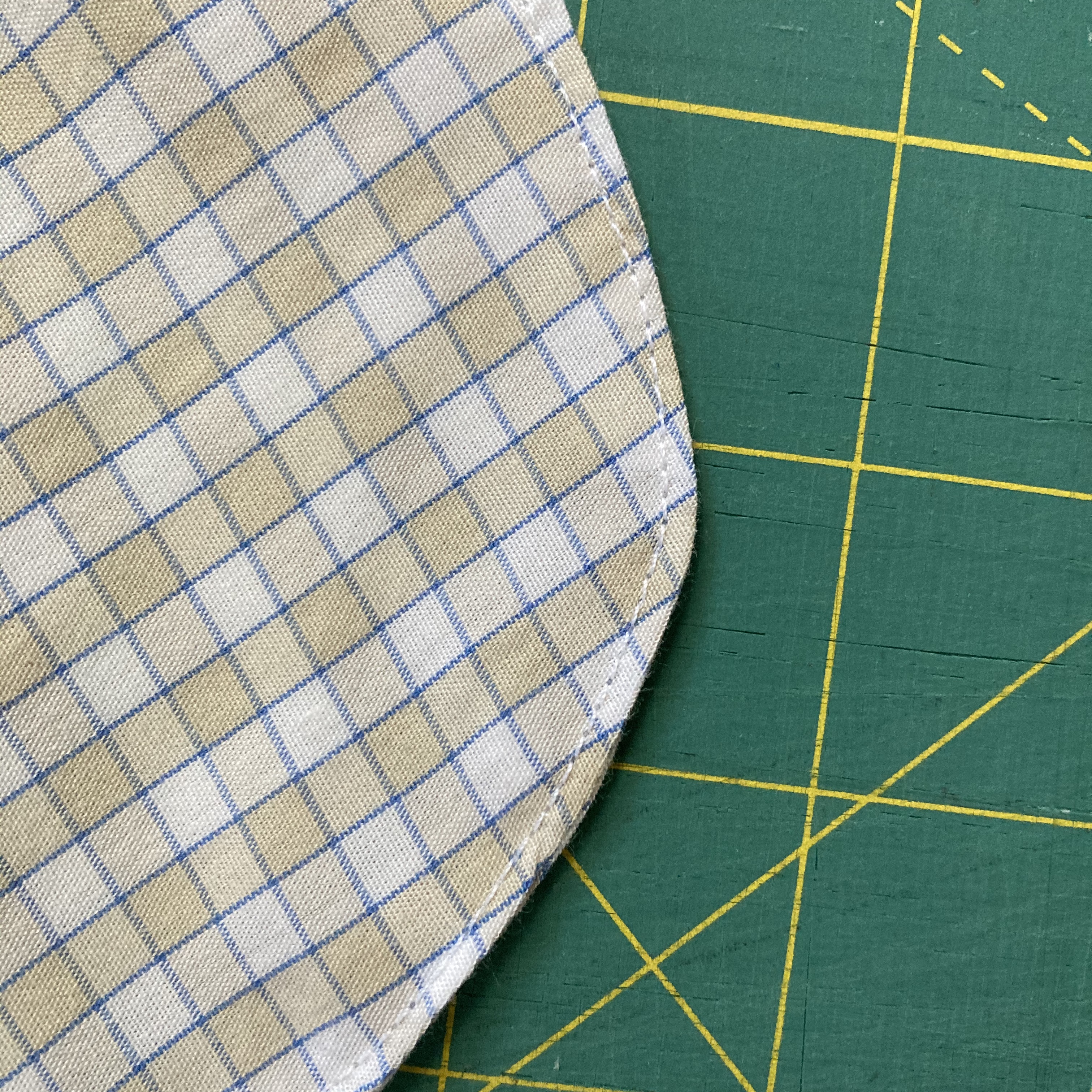
After flipping the bib, I gave it a quick press under the iron and then topstitched around the perimeter.

Nothing fancy. Just topstitching in all-purpose thread.

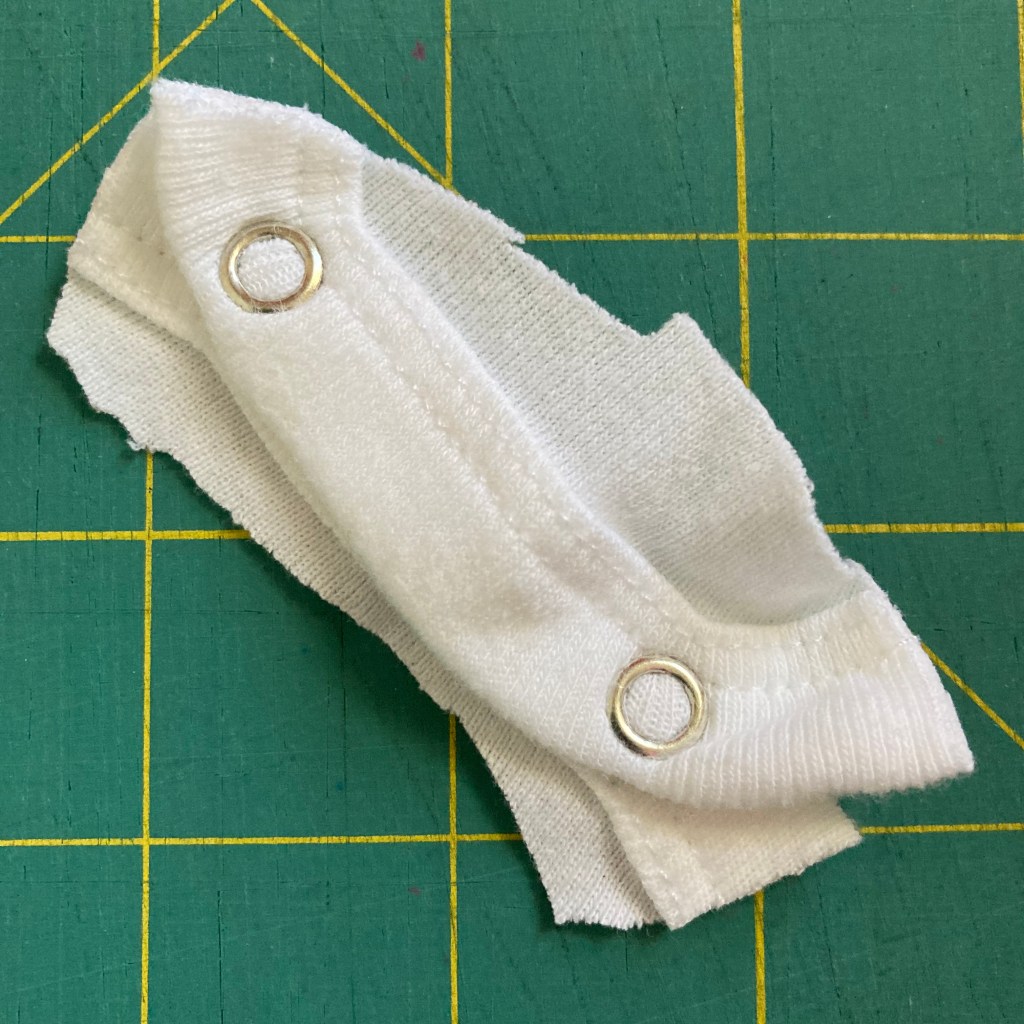
Next up, I trimmed my upcycled snaps. I left just enough fabric on each side so that there would be room to stitch them down. I stitched each snap piece three times on either side of the snap, going back and forth to create a sturdy hold. Eyeballing where the snaps went on the bib ends worked fine. Again, these bibs are going to get messy; there’s no need to be fussy about the construction!

Snaps saved from a baby bodysuit.

A NOTE ABOUT CLOSURES: THESE BIBS, AND ANY BIBS, GO AROUND A BABY’S NECK. EXERCISE CAUTION! USE A BREAKAWAY CLOSURE. WATCH YOUR BABY WHEN THEY’RE WEARING THE BIB. MAKE SURE THEY DON’T GET THE BIB SNAGGED ON ANYTHING AND CAN’T GET FREE. KEEP YOUR BABIES SAFE! SAFETY FIRST, CLEANLINESS SECOND. Goodness, I don’t want any babies to get hurt!

It’s not pretty or precious, but it works!

Okay, so the stitching on the snaps isn’t pretty. Alright, so bibs made out of old business casual shirts aren’t necessarily cute. But, that’s the beauty of having a third baby! I value function over form! Most of these bibs (I made seven total) are 100% cotton. So, they wash up like a dream! They’re soft, pliable, and so far, have caught the slop.

When I put it on my baby, it looks like he’s about to head to office. Ha!

How to Make an Iron-On Transfer Using an Image Printed with a Toner Printer or Copier

A quick, easy (and cheap!) way to create an iron-on transfer is to use an image printed on a toner printer or copier. Learn how I did it with no special supplies.

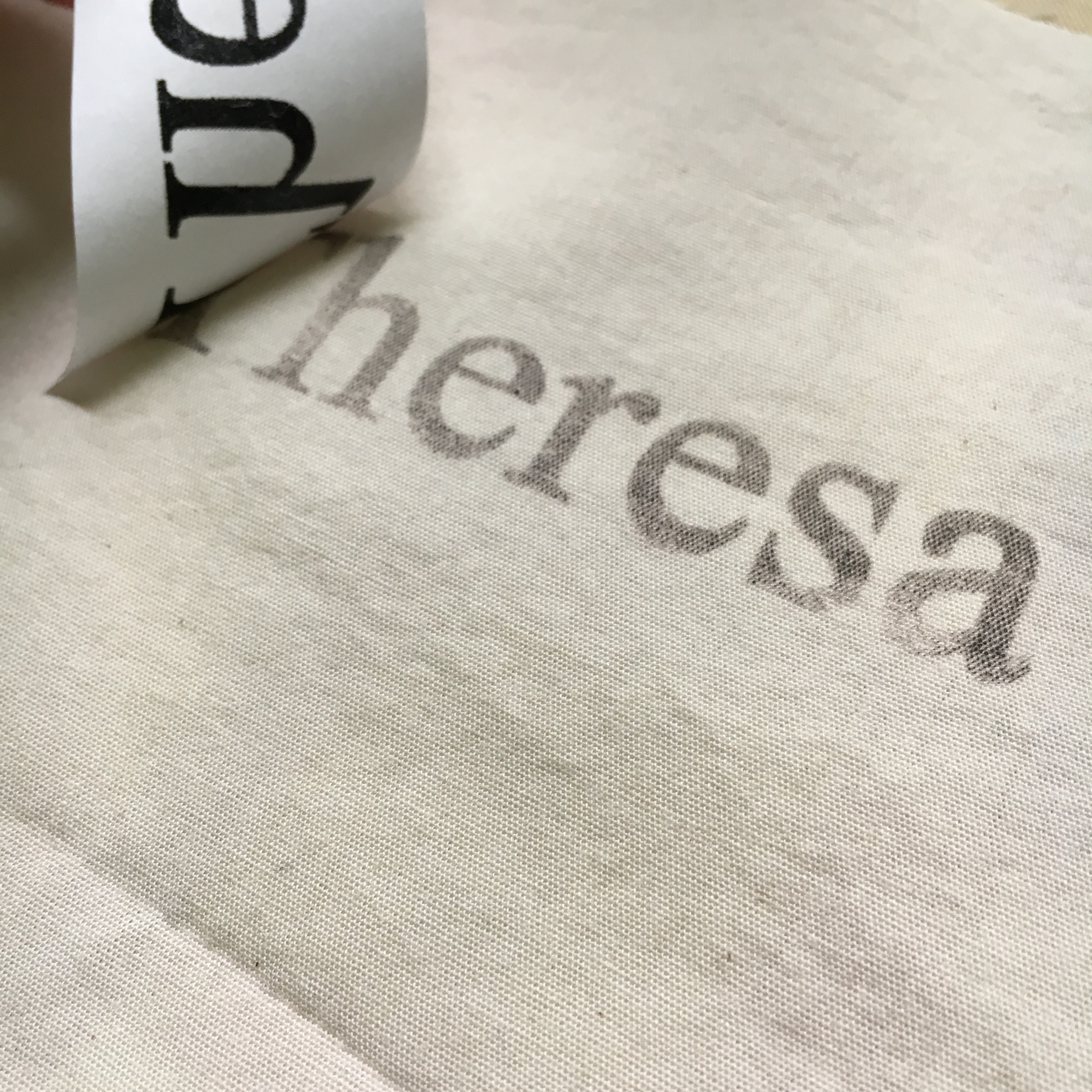
Peeling off the paper to reveal the image.

Back in May, my quilt guild challenged its members to sew name tags to wear to meetings. I was all on board since I appreciate the members who wear name tags because we only meet once a month and I’ve only been attending for about a year and a half now. (I still feel like I don’t know everyone!)

I didn’t know exactly how to put my name to fabric. My handwriting isn’t fancy and embroidery would require extra needlework I didn’t have time for. Alas, buried in the depths of my memory was a 5th grade project my mom helped me with, where we ironed a photocopied image onto a piece of fabric. While I can’t remember the specific requirements of the project, we had to create something about a book we just read (and, no, I can’t remember what book it was). I decided to embroider the image used at the beginning of each chapter onto fabric and then (with a lot of my mom’s help) make it into a pillow. I don’t even know why, but the technique for creating an iron transfer has stuck with me.

Here’s what we did: we simply photocopied the image from the book. We enlarged it and darkened it, too. The more toner the better. Then, my mom ironed the image onto fabric. Voilà! I then had an outline to follow as I embroidered. I’m pretty sure this pillow no longer exists, so while my classmates and teacher seemed impressed, I question my 5th grade handiwork.

It was with that knowledge, that I started on my name tag. I first pulled up Microsoft PowerPoint, because it seems like the most “designy” program in the Microsoft Office suite. I wrote out my name (and my nickname—I wasn’t sure what I’d want fellow quilters to call me). Then, I searched the “Help” section for mirroring text. Instructions for that quickly popped up and I followed them. It’s here I’ll note that you have to mirror the image if it matters, as it does with text. Because you ultimately flip the printout over and iron it to the fabric. I made a couple of sizes to see which I liked best and then printed the sheet using the darkest setting I could. Remember, more toner creates a darker transfer.

IronOnTransfer_01
I mirrored the text (image) and played with the size.

I cut out several pieces of the text and practiced ironing it to 100% cotton muslin. I put my iron on high heat and I pressed really hard. I suggest practicing. And, depending on what you plan on doing with your transfer, you may not need it to be perfect. My plan was to leave the transfer as-is, so I wanted it relatively dark. If I was embroidering it, I wouldn’t have needed it as dark, just dark enough to see where to put my needle and thread.

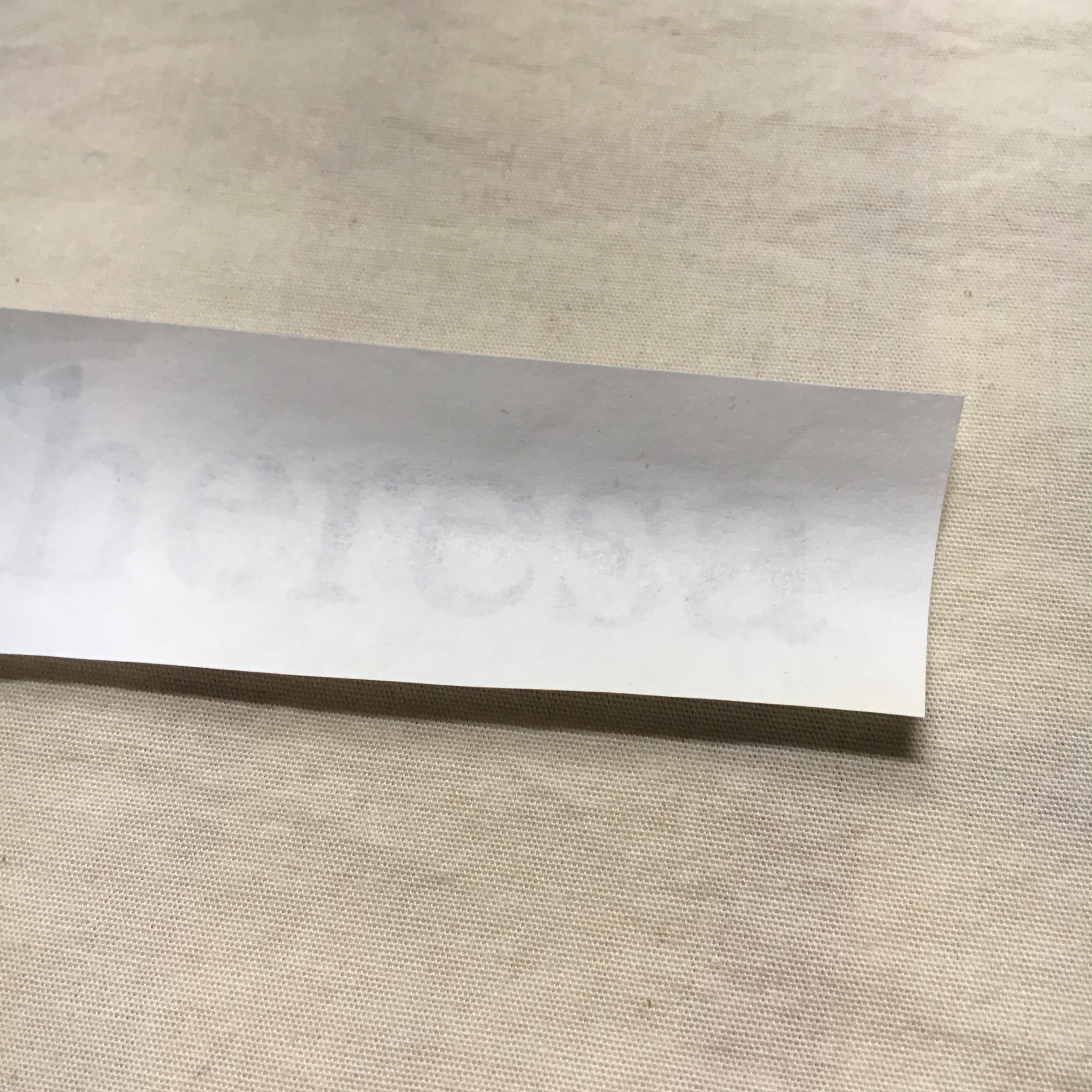
Post ironing. The regular ol’ printer paper (no need to buy anything fancy!) curls with the heat.
Carefully peeling off the paper. As you can see, even though it’s dark, it still has a nice distressed look, which I like.

After transferring my name, I stitched it into a name tag, and put a pin back on it.

The finished name tag.

Here’s the kicker. I don’t love it! The thing I like most about this name tag is the lettering. I’m not crazy about the other fabrics or the size of the whole thing. In fact, I don’t like it so much that I’ve never worn it to a quilt guild meeting! But you know what? That’s how making goes. You’ve gotta make a whole lot of “meh” to get to some good stuff. And, that’s alright with me, because I always enjoy the process.

In a nutshell: How to Make an Iron-On Transfer with an Image Printed with a Toner Printer or Copier

1. Make sure the printer or copier you’re using uses toner. I’ve never tried this with an inkjet printer and I don’t know what a space-age copier uses these days. As far as paper goes, I just used what is in my printer, that is, nothing fancy. Ditto with the copier we used in the 5th grade. Whatever was loaded in there, we used.

2. Select your image and mirror it. If you’re printing from a computer, see if the program you created the image in allows for this. (Search the “Help” menu or Google it.) If you’re using a copier, see if there’s a setting that allows you to mirror.

3. Print the image, cut it out, and select your fabric (I’m thinking 100% cotton probably works best). Turn your iron to a high heat (another reason 100% cotton works—synthetics may melt!).

4. Press really hard and iron the entire image. Play around with what gives you the best results for your purpose. Embroidery outlines may not need to be very dark, but if you’re not doing anything else to the image, you may want it darker.

Now, don’t ask me how this transfer holds up to washing, because I’ve never washed one! But, if you know, by all means, drop a comment below and let us know.

Zipper Pouches Made from Repurposed Clothes

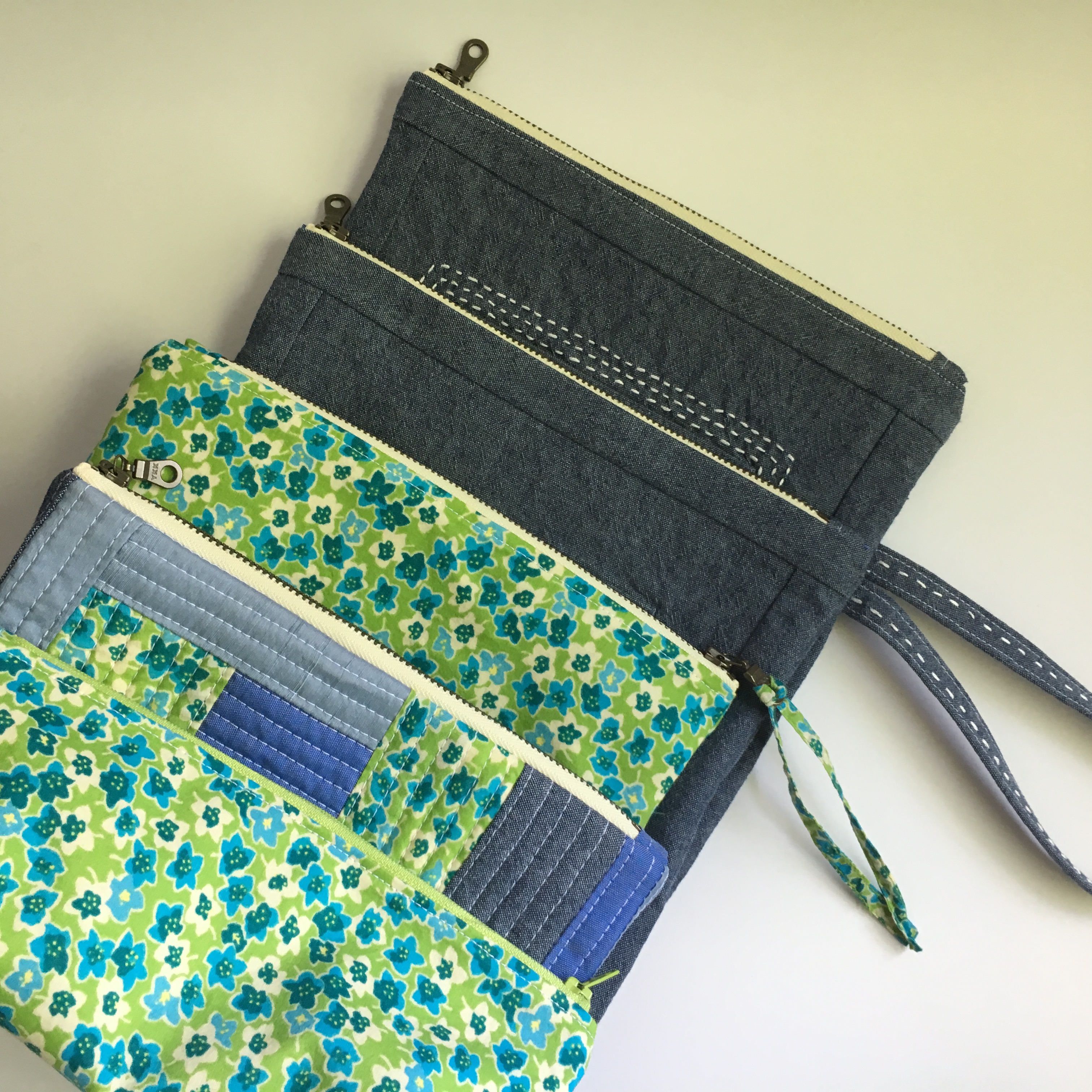
Completed pouches from upcyled clothing.

The pouches I had planned to make in April are finally finished! I’m happy with how they turned out and I’m excited that the only new material and notions I used was a bit of batting, some interfacing, and zippers. All of the fabric came from 2 thrifted men’s shirt, a thrifted dress, and a shirt I’ve had in my closet for over a decade (that I never really wore).

Chambray shirt, silk dress, pinpoint oxford shirt, cotton wrap shirt.

I’ve been visiting the thrift store often this year, and when I see the amount of clothing, I can help but to wonder, what if all the clothing and fabric I need already exists? As in, I don’t need to buy new clothing and I don’t need to buy new fabric for my sewing and quilting projects. There are a few things that don’t mesh with this idea. It’s hard finding the exact piece of clothing you’re looking for in your size (and in good condition!). Also, if using clothing for sewing, the fiber may not be what you want. I purposely stuck to natural fibers. I didn’t want polyester. But, I think it’s a good goal to keep in mind, or at least to make it a goal to always start your shopping with a secondhand retailer. This is especially true for clothing. With online secondhand retailers, you can filter by size, brand, color, and more. So, if you don’t have time to go through the racks at a thrift store, online is a good option with the same outcome.

I digress! Let’s take a look at these pouches I made.

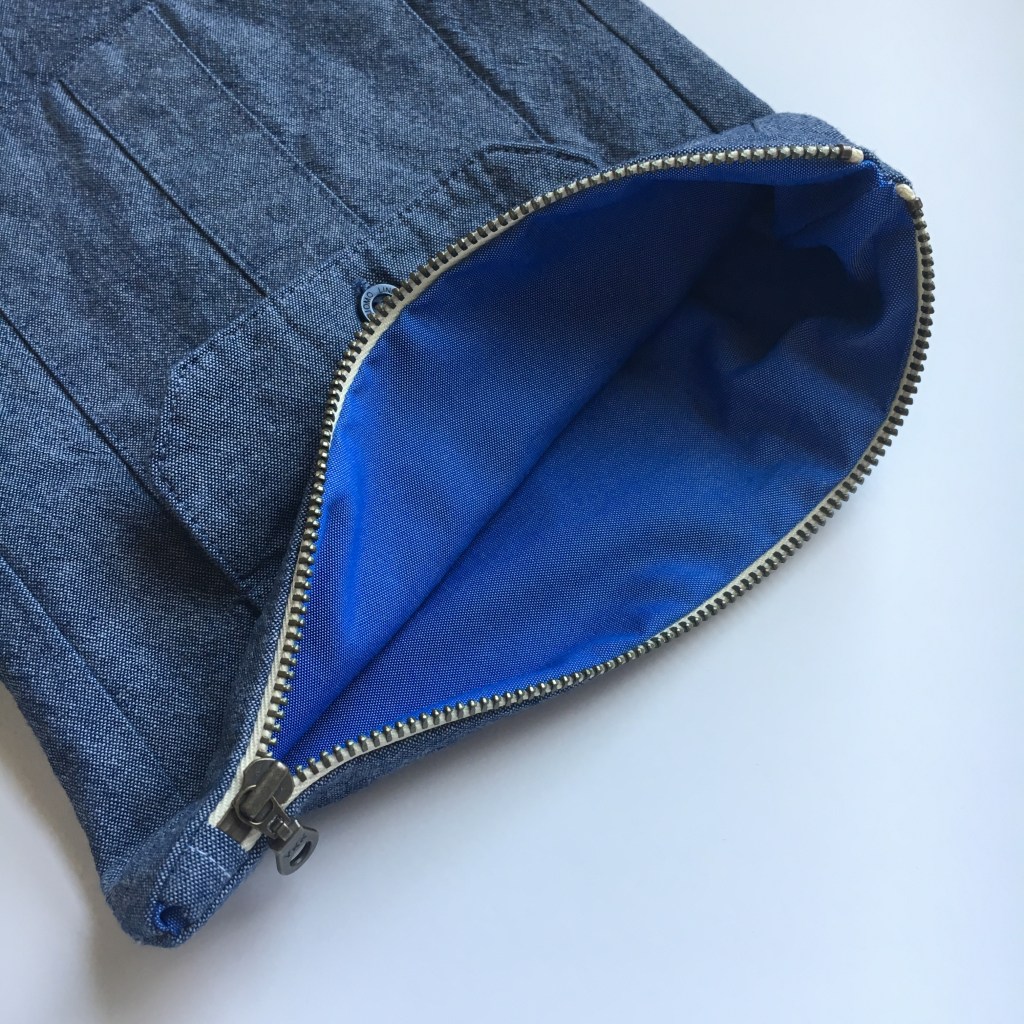
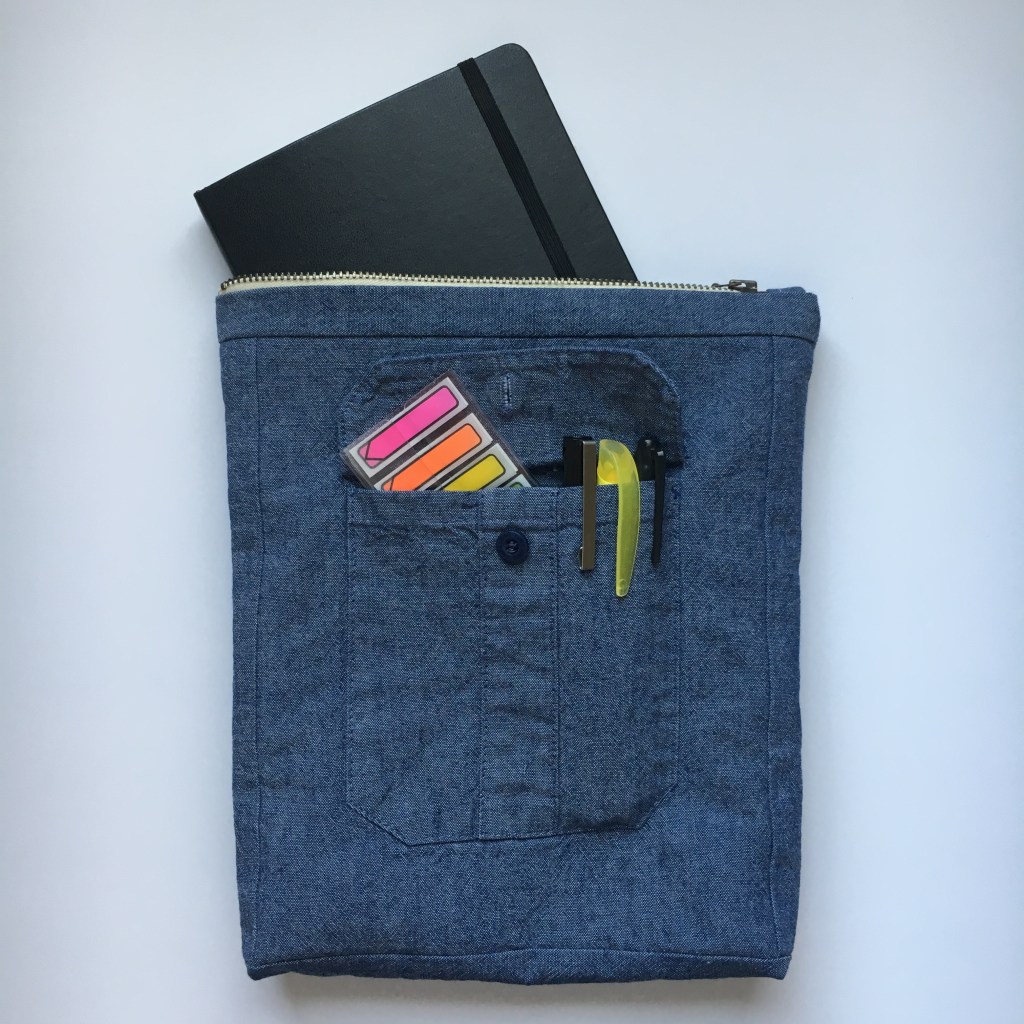
I loved using the chest pockets to create larger pouches. I added some handstitching and a wrist strap to one. I just love the idea of using that chest pocket for pens and pencils, note flags, needle books, maybe a dollar or two.

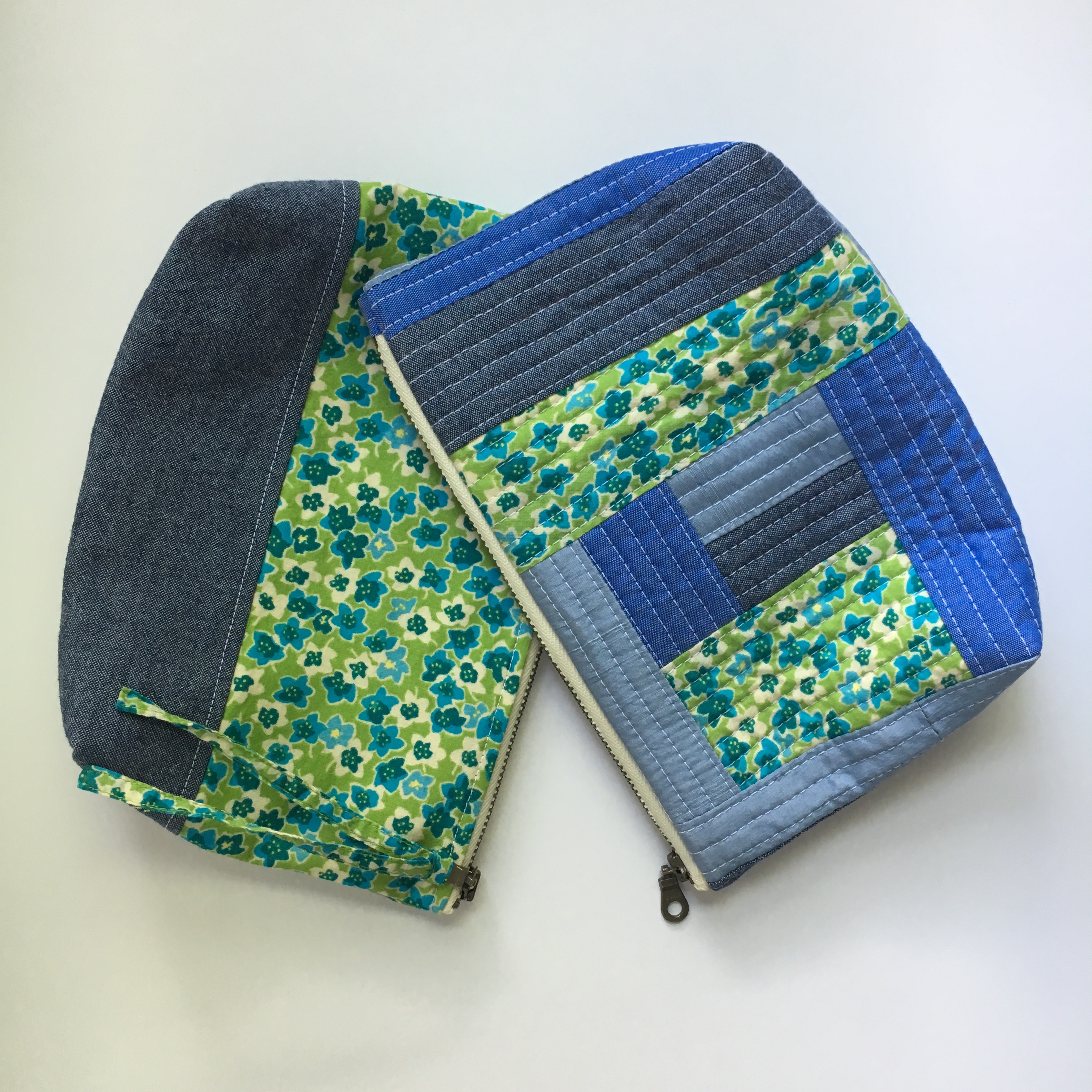
I tried my hand at the quilt-as-you-go technique. I was pretty loose with my fabric selection and didn’t cut with a ruler. This is probably the closest I’ve come to improv ever. Because it’s quilted, this pouch is thick and stable.

Right is quilt-as-you-go pouch with fabric from all 4 pieces of clothing. Left is the Essential Pouch from the chambray shirt and floral wrap top.

Using the Essential Pouch pattern from Sotak Patterns, I paired the chambray with the green floral fabric from that shirt I’ve had forever. It was a wrap-style top, so I cut off the ties and used one as a zipper pull.

Pencil-size pouch from a shirt I kept FOREVER. I think I kept it for so long not because I wore it, but because I loved the fabric!

Finally, I made a pencil-size pouch with the floral top. The lining (which you can’t see here) is the lining from the shirt. I love it!

At some point, I’ll get these listed on Etsy. I had so much fun making them, they deserve to be enjoyed. Plus, who couldn’t use another pouch. I love having one in my purse. I keep to-go sewing supplies in another. Give me a pouch and I’ll find a use for it! Surely there are other pouch enthusiasts out there!

How to Make an Ohio Star Cardinal Quilt Block

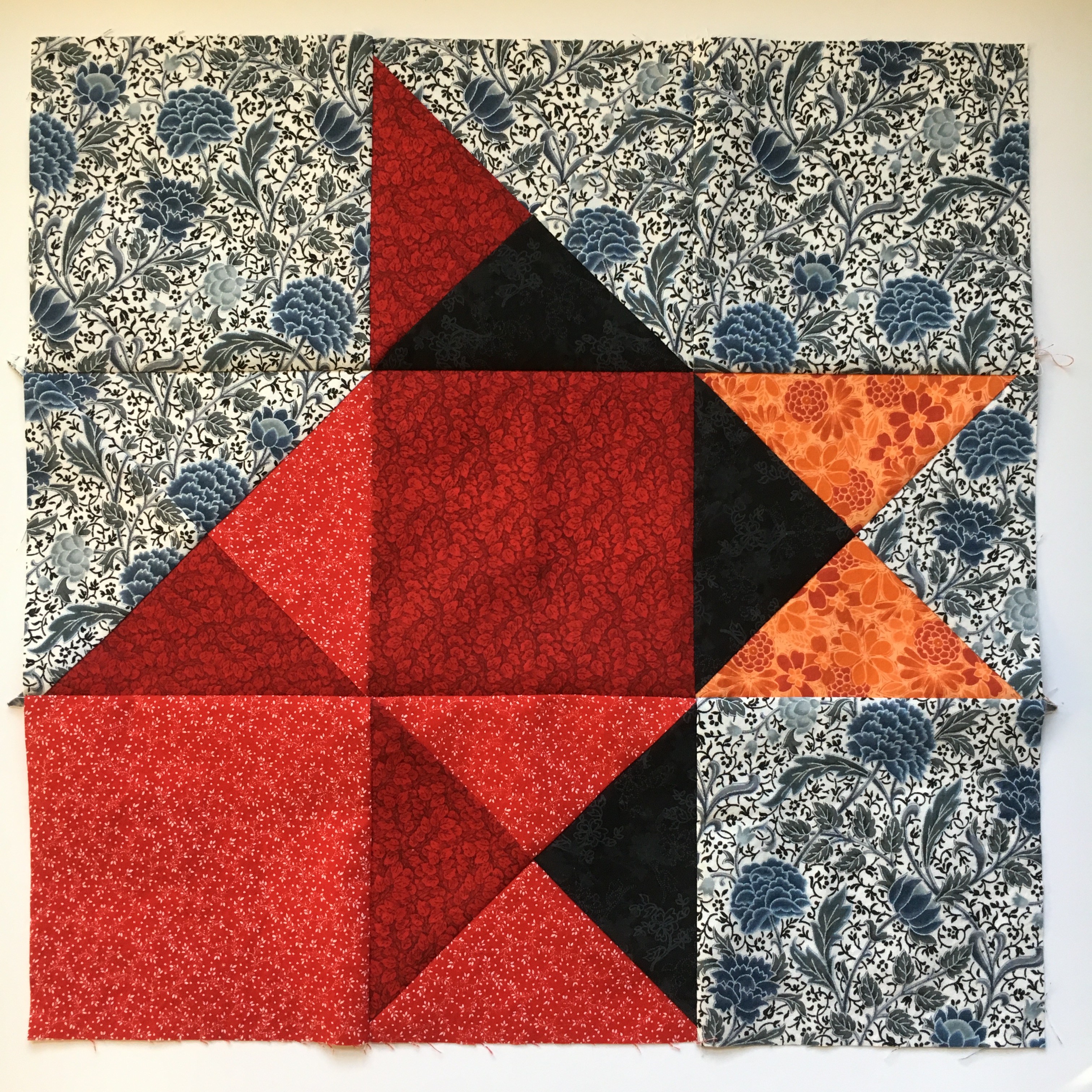
Ohio Star quilt block made to look like the profile of of a cardinal, Ohio’s state bird.

The cardinal block of my Ohio Star Quilt is one of my favorites, so I wanted to improve the design, make it larger, and turn it into a pillow cover. The cardinal is Ohio’s state bird and I love spotting them. It makes sense to me to sew a traditional Ohio Star quilt block to look like the iconic bird.

When I first made my Ohio Star Cardinal block for my Ohio Star Quilt, I used this tutorial. It’s a really good tutorial, but because the cardinal colors don’t fit into the traditional pattern, I had to unpick a lot of pieces to make it work. This time, I wanted to make a larger block (16” vs. 12”) to fit a pillow form I had on hand, and I didn’t want to unpick anything. It’s important to me to maintain the Ohio Star piecing. That is, to have 4 blocks that are made from quarter square triangles. In my block, you’ll see that there is an opportunity to make 2 sky QSTs into one larger triangle, but this would break the traditional pattern.

Let’s get started!

Ohio Star Cardinal 16” Quilt Block

Fabric:

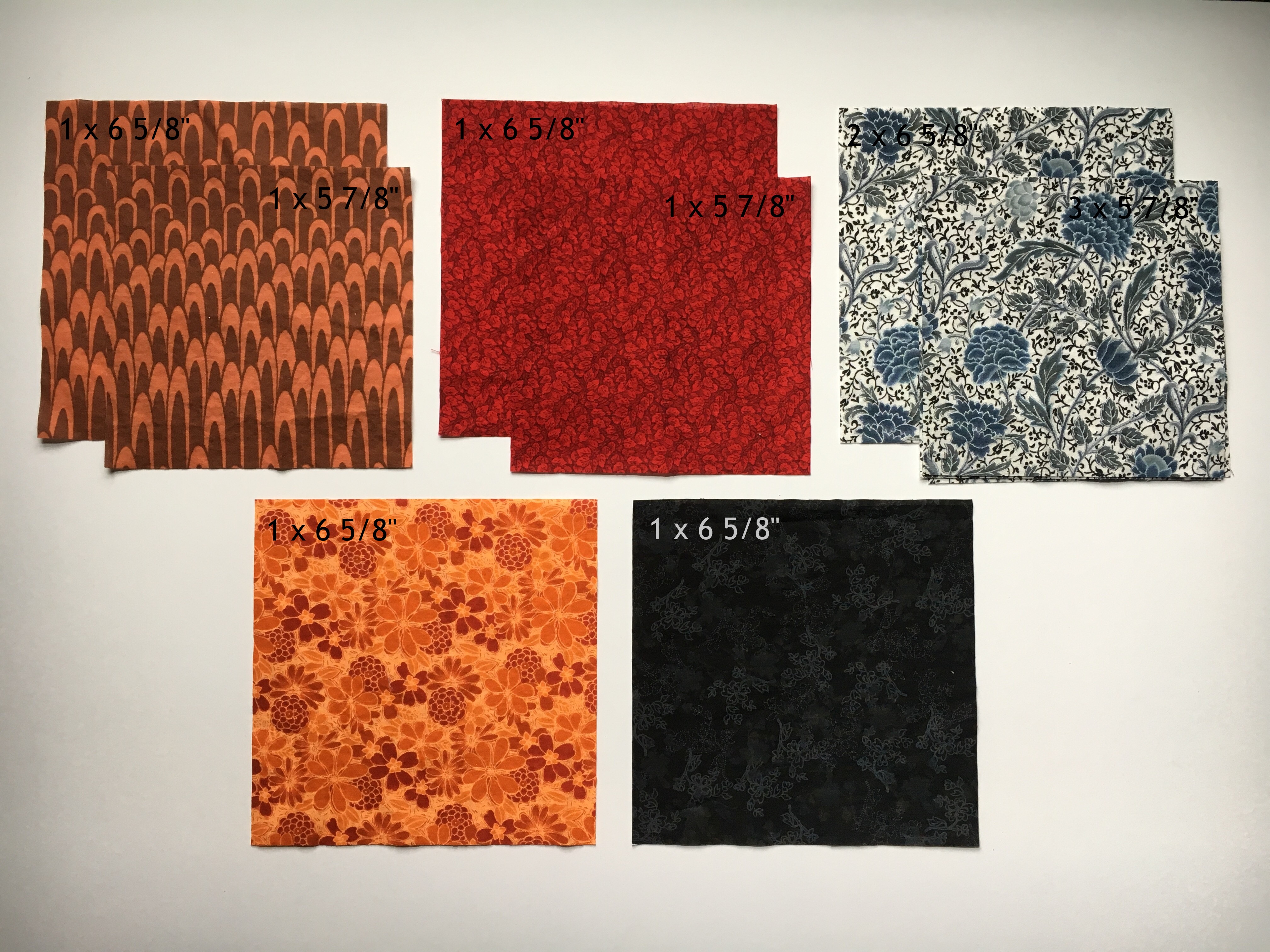
Sky: 3 x 5 7/8” squares & 2 x 6 5/8” squares

Black: 1 x 6 5/8” square

Orange: 1 x 6 5/8” square

Red 1: 1 x 5 7/8” square & 1 x 6 5/8” square

Red 2: 1 x 5 7/8” square & 1 x 6 5/8” square

OhioStarCardinal_01WM
Fabric needed for one 16″ block.

Seam allowances are ¼”.

1. Cut all of the 6 5/8” squares diagonally twice so that you have 4 triangles from each square.

OhioStarCardinal_02WM
Cut larger squares diagonally into 4 triangles each.

2. Arrange the triangles and 5 7/8” squares as shown to create a cardinal profile. You’ll have some spare triangles.

OhioStarCardinal_07
Layout of Ohio Star Cardinal block
OhioStarCardinal_06
Leftover triangles. Save them for a future cardinal or add them to the scrap pile.

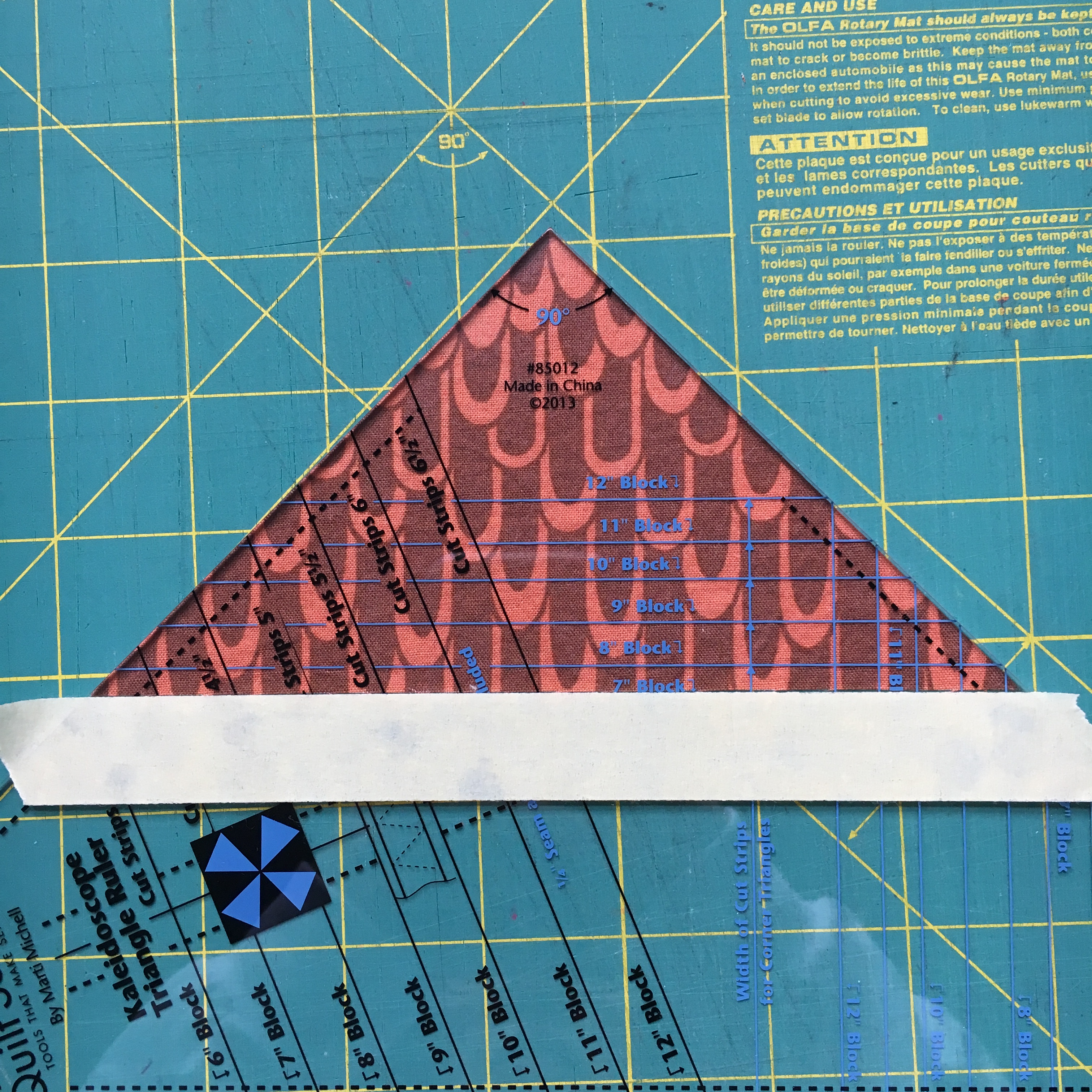
Side note: I didn’t have enough of one of my preferred red fabrics to cut a full 6 5/8” square. I thought that orange-brown, feather-like print would work. Nope. I didn’t like it at all once I cut it out. I MacGuyvered a template by laying a triangle ruler I have (with a 90-degree angle) over one of the triangles I had cut, and placing masking tape where the bottom of the triangle was. I then moved the template over to my preferred fabric and lined the masking tape up with the edge of the fabric. I was able to fussy cut all of my Red 2 triangles. Give it a try if you need to fussy cut your fabric!

OhioStarCardinal_04
I lined up the template on the triangle, then placed the masking tape. I put the tape on the side opposite of the printing, just in case it would remove it.
OhioStarCardinal_05
I lined up the tape with the edge of the fabric and fussy cut the triangle.

3. Sew the first set of triangles together as shown below. Press the seams

OhioStarCardinal_07WM
If you align all of the sewn triangles the same way and press the seams in the same direction, they’ll nest nicely in the next step.

4. Sew the larger triangles together as shown below. Press the seams.

OhioStarCardinal_08WM
Nest the seams if possible for nice center points.

5. Sew the squares together as shown below. Press the seams.

OhioStarCardinal_09WM
This is the point when things start to really come together!

6. Sew the rows together. Press the seams.

OhioStarCardinal_10WM
So close to seeing the final block.

7. Look at you! You have an Ohio Star Cardinal!

OhioStarCardinal_11
So pretty! Pat yourself on the back!

Bonus! To make it into a quilted pillow cover with an envelope closure:

1. Baste the block using your preferred batting and backing and method. I’m a fan of pin basting. I used cotton batting here because it is what I had on hand, plus, it is thin. I used natural muslin for the backing, which I use for a lot of my quilts, but note that your backing here will not be visible once the cover is completed.

OhioStarCardinal_12
Pin-basted Ohio Star Cardinal block

2. Quilt it! I machine quilted it along the 9-patch and then on the inside of the star. Since I maintained the traditional Ohio Star piecing, outlining the star with quilting emphasizes the pattern.

OhioStarCardinal_13
I used a fabric pencil to mark 1/4″ inside the star.

3. Trim it up!

4. Cut 2 panels of fabric that measure 10 ¼” x 16 ½”. I chose to use my sky fabric for the back.

5. Hem one 16 ½” end of each of the back panels by pressing ¼” down and then over again and stitching down.

OhioStarCardinal_14
Hemmed back panels

6. Align the 16 ½” unfinished ends of the back panels with the top and bottom of the block. The correct sides of the back panels and the cardinal block should be facing each other, as if the pillow cover is inside out. The panels will overlap by a few inches, which will create the envelope closure.

OhioStarCardinal_15
Envelope closures are simple to stitch.

7. Stitch around the entire block using a ¼” seam allowance.

8. Turn that thing inside out and stuff it with a pillow form!

OhioStarCardinal_16
Finished front
OhioStarCardinal_17
Finished back. Slipping the pillow form in is easy peasy.

9. Admire your fancy, made-by-you throw pillow.

There is such satisfaction in making something with your hands.