How to Make an Ohio Star Cardinal Quilt Block

Ohio Star quilt block made to look like the profile of of a cardinal, Ohio’s state bird.

The cardinal block of my Ohio Star Quilt is one of my favorites, so I wanted to improve the design, make it larger, and turn it into a pillow cover. The cardinal is Ohio’s state bird and I love spotting them. It makes sense to me to sew a traditional Ohio Star quilt block to look like the iconic bird.

When I first made my Ohio Star Cardinal block for my Ohio Star Quilt, I used this tutorial. It’s a really good tutorial, but because the cardinal colors don’t fit into the traditional pattern, I had to unpick a lot of pieces to make it work. This time, I wanted to make a larger block (16” vs. 12”) to fit a pillow form I had on hand, and I didn’t want to unpick anything. It’s important to me to maintain the Ohio Star piecing. That is, to have 4 blocks that are made from quarter square triangles. In my block, you’ll see that there is an opportunity to make 2 sky QSTs into one larger triangle, but this would break the traditional pattern.

Let’s get started!

Ohio Star Cardinal 16” Quilt Block

Fabric:

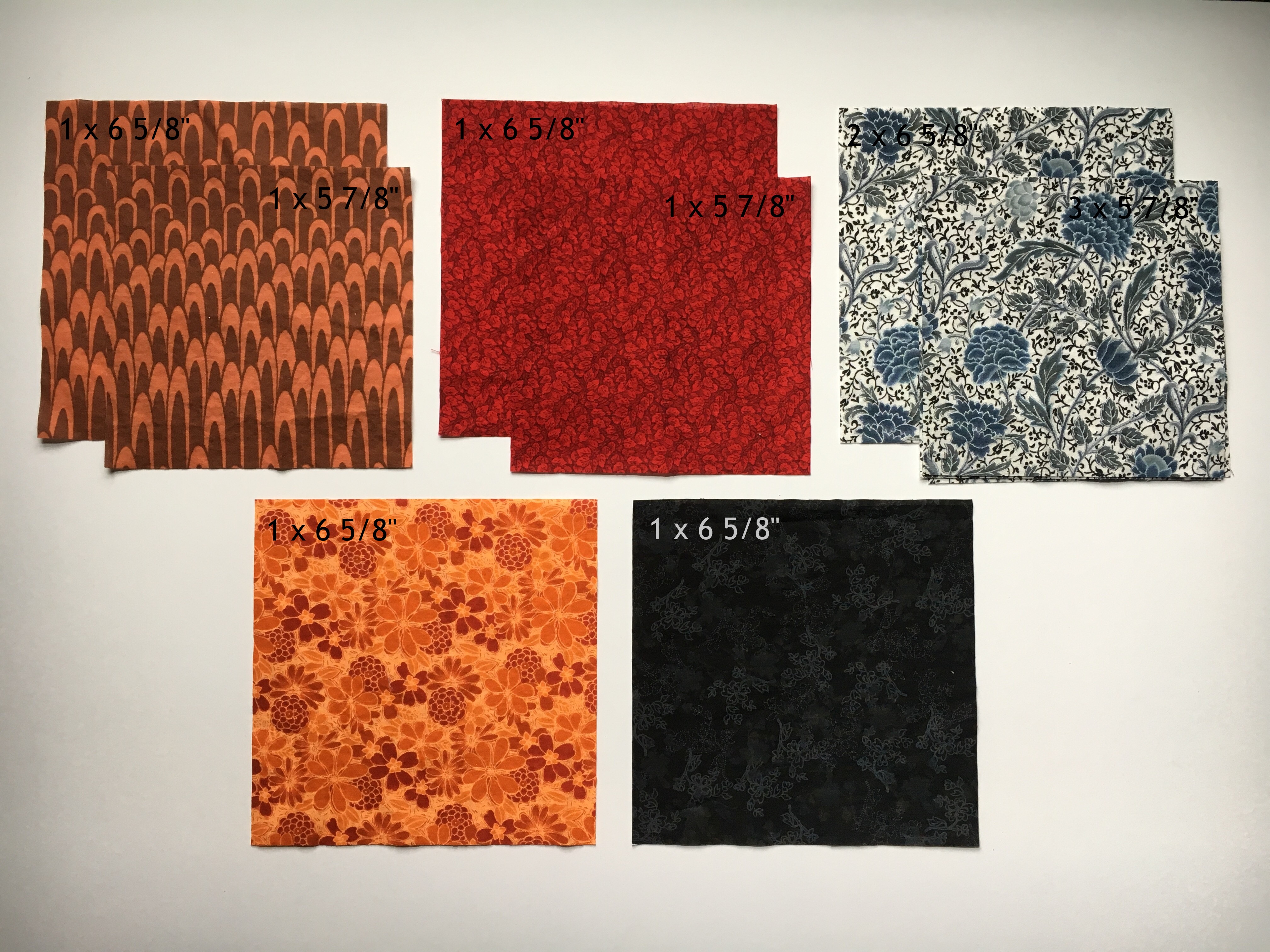
Sky: 3 x 5 7/8” squares & 2 x 6 5/8” squares

Black: 1 x 6 5/8” square

Orange: 1 x 6 5/8” square

Red 1: 1 x 5 7/8” square & 1 x 6 5/8” square

Red 2: 1 x 5 7/8” square & 1 x 6 5/8” square
OhioStarCardinal_01WM
Fabric needed for one 16″ block.

Seam allowances are ¼”.

1. Cut all of the 6 5/8” squares diagonally twice so that you have 4 triangles from each square.

OhioStarCardinal_02WM
Cut larger squares diagonally into 4 triangles each.

2. Arrange the triangles and 5 7/8” squares as shown to create a cardinal profile. You’ll have some spare triangles.

OhioStarCardinal_07
Layout of Ohio Star Cardinal block
OhioStarCardinal_06
Leftover triangles. Save them for a future cardinal or add them to the scrap pile.

Side note: I didn’t have enough of one of my preferred red fabrics to cut a full 6 5/8” square. I thought that orange-brown, feather-like print would work. Nope. I didn’t like it at all once I cut it out. I MacGuyvered a template by laying a triangle ruler I have (with a 90-degree angle) over one of the triangles I had cut, and placing masking tape where the bottom of the triangle was. I then moved the template over to my preferred fabric and lined the masking tape up with the edge of the fabric. I was able to fussy cut all of my Red 2 triangles. Give it a try if you need to fussy cut your fabric!
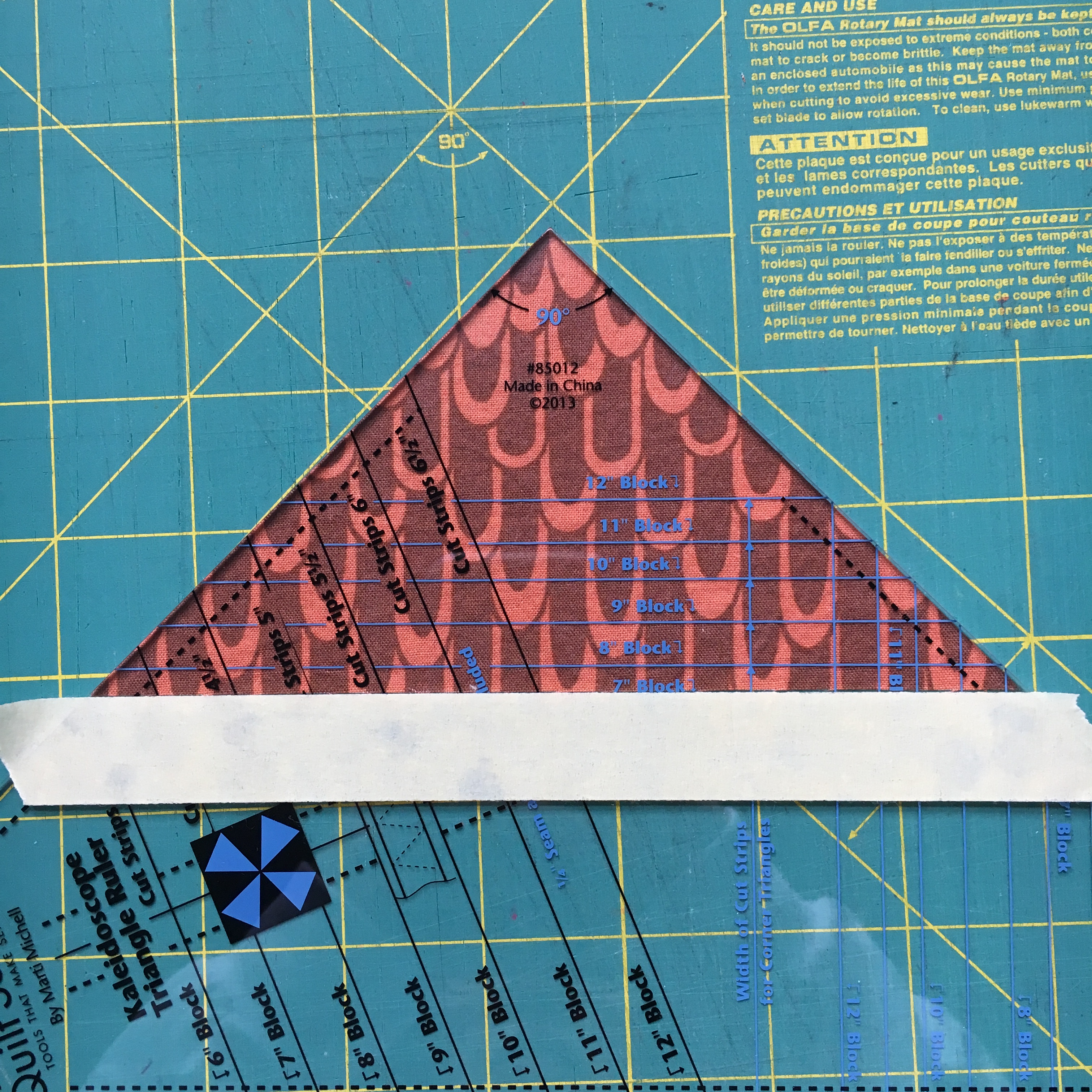
OhioStarCardinal_04
I lined up the template on the triangle, then placed the masking tape. I put the tape on the side opposite of the printing, just in case it would remove it.
OhioStarCardinal_05
I lined up the tape with the edge of the fabric and fussy cut the triangle.

3. Sew the first set of triangles together as shown below. Press the seams

OhioStarCardinal_07WM
If you align all of the sewn triangles the same way and press the seams in the same direction, they’ll nest nicely in the next step.

4. Sew the larger triangles together as shown below. Press the seams.

OhioStarCardinal_08WM
Nest the seams if possible for nice center points.

5. Sew the squares together as shown below. Press the seams.

OhioStarCardinal_09WM
This is the point when things start to really come together!

6. Sew the rows together. Press the seams.

OhioStarCardinal_10WM
So close to seeing the final block.

7. Look at you! You have an Ohio Star Cardinal!
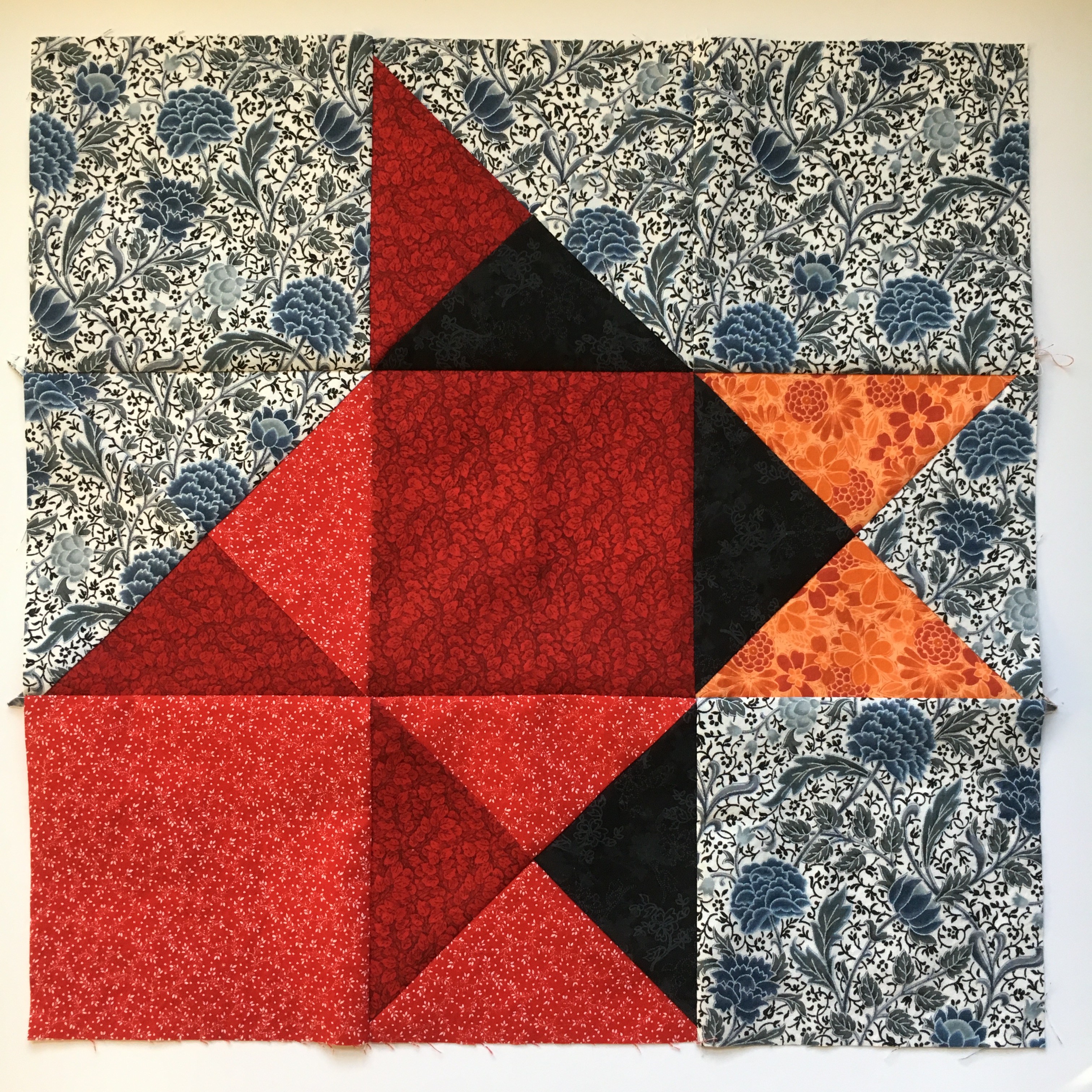
OhioStarCardinal_11
So pretty! Pat yourself on the back!

Bonus! To make it into a quilted pillow cover with an envelope closure:

1. Baste the block using your preferred batting and backing and method. I’m a fan of pin basting. I used cotton batting here because it is what I had on hand, plus, it is thin. I used natural muslin for the backing, which I use for a lot of my quilts, but note that your backing here will not be visible once the cover is completed.

OhioStarCardinal_12
Pin-basted Ohio Star Cardinal block

2. Quilt it! I machine quilted it along the 9-patch and then on the inside of the star. Since I maintained the traditional Ohio Star piecing, outlining the star with quilting emphasizes the pattern.

OhioStarCardinal_13
I used a fabric pencil to mark 1/4″ inside the star.

3. Trim it up!

4. Cut 2 panels of fabric that measure 10 ¼” x 16 ½”. I chose to use my sky fabric for the back.

5. Hem one 16 ½” end of each of the back panels by pressing ¼” down and then over again and stitching down.

OhioStarCardinal_14
Hemmed back panels

6. Align the 16 ½” unfinished ends of the back panels with the top and bottom of the block. The correct sides of the back panels and the cardinal block should be facing each other, as if the pillow cover is inside out. The panels will overlap by a few inches, which will create the envelope closure.

OhioStarCardinal_15
Envelope closures are simple to stitch.

7. Stitch around the entire block using a ¼” seam allowance.

8. Turn that thing inside out and stuff it with a pillow form!

OhioStarCardinal_16
Finished front
OhioStarCardinal_17
Finished back. Slipping the pillow form in is easy peasy.

9. Admire your fancy, made-by-you throw pillow.
There is such satisfaction in making something with your hands.

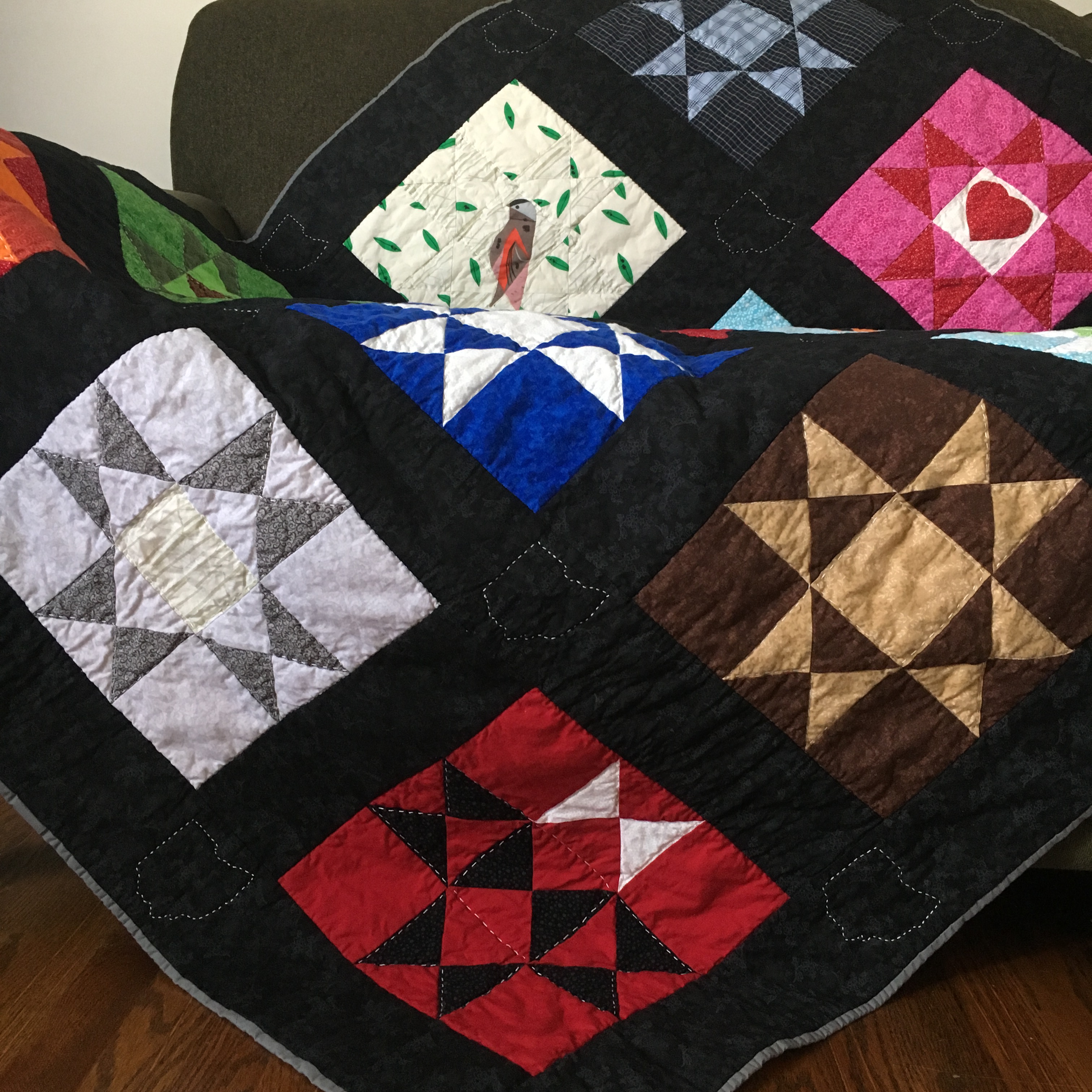
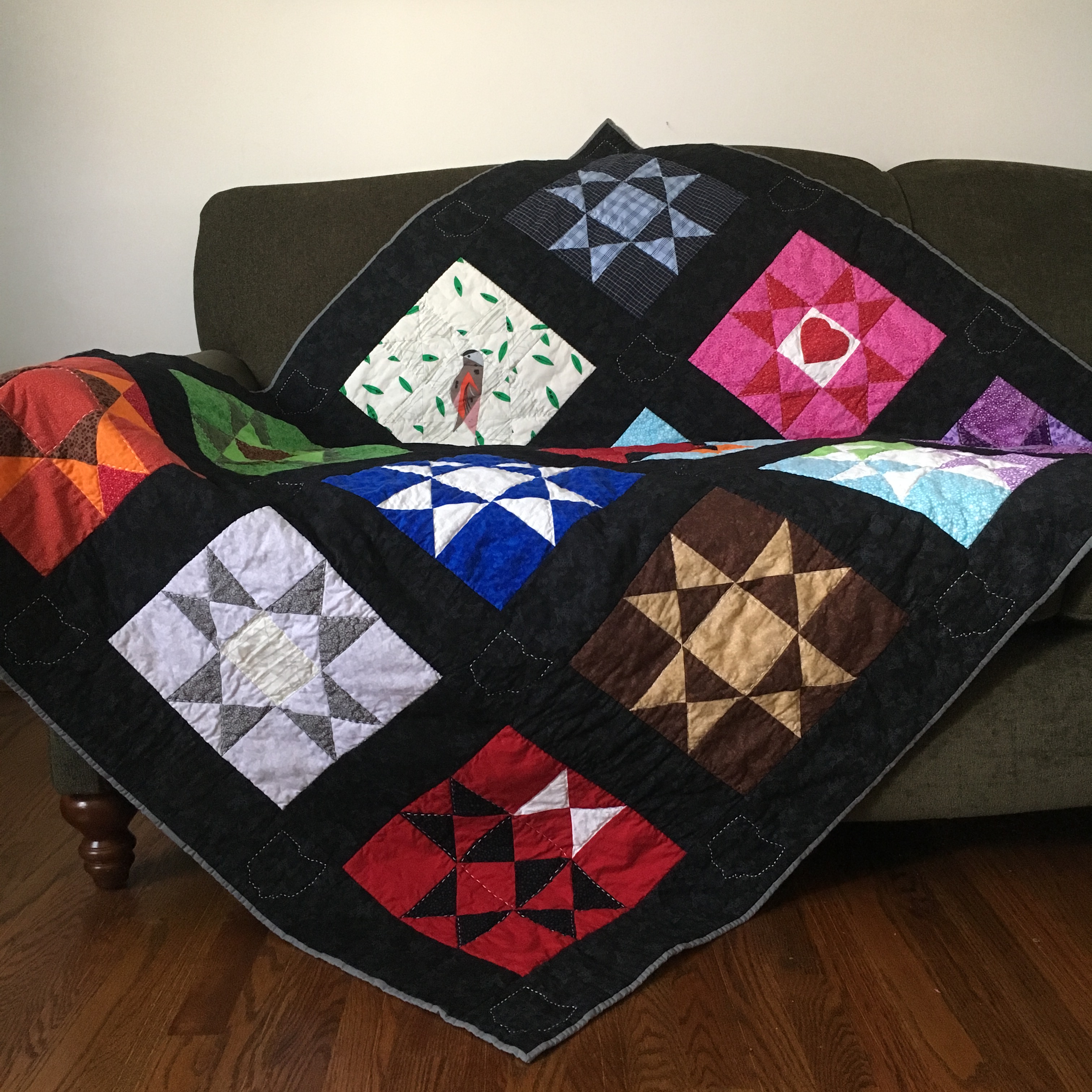
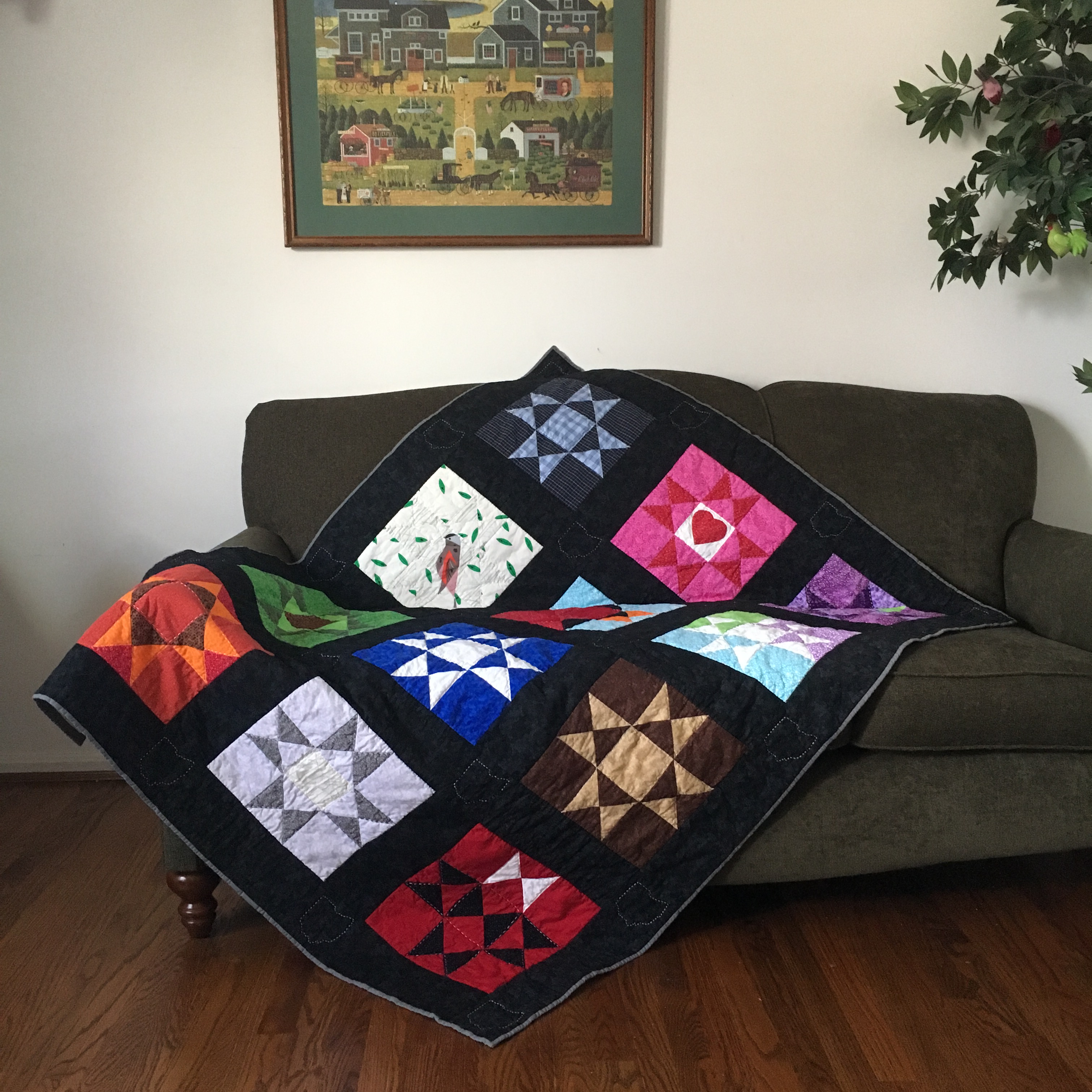
Completed Ohio Star Quilt

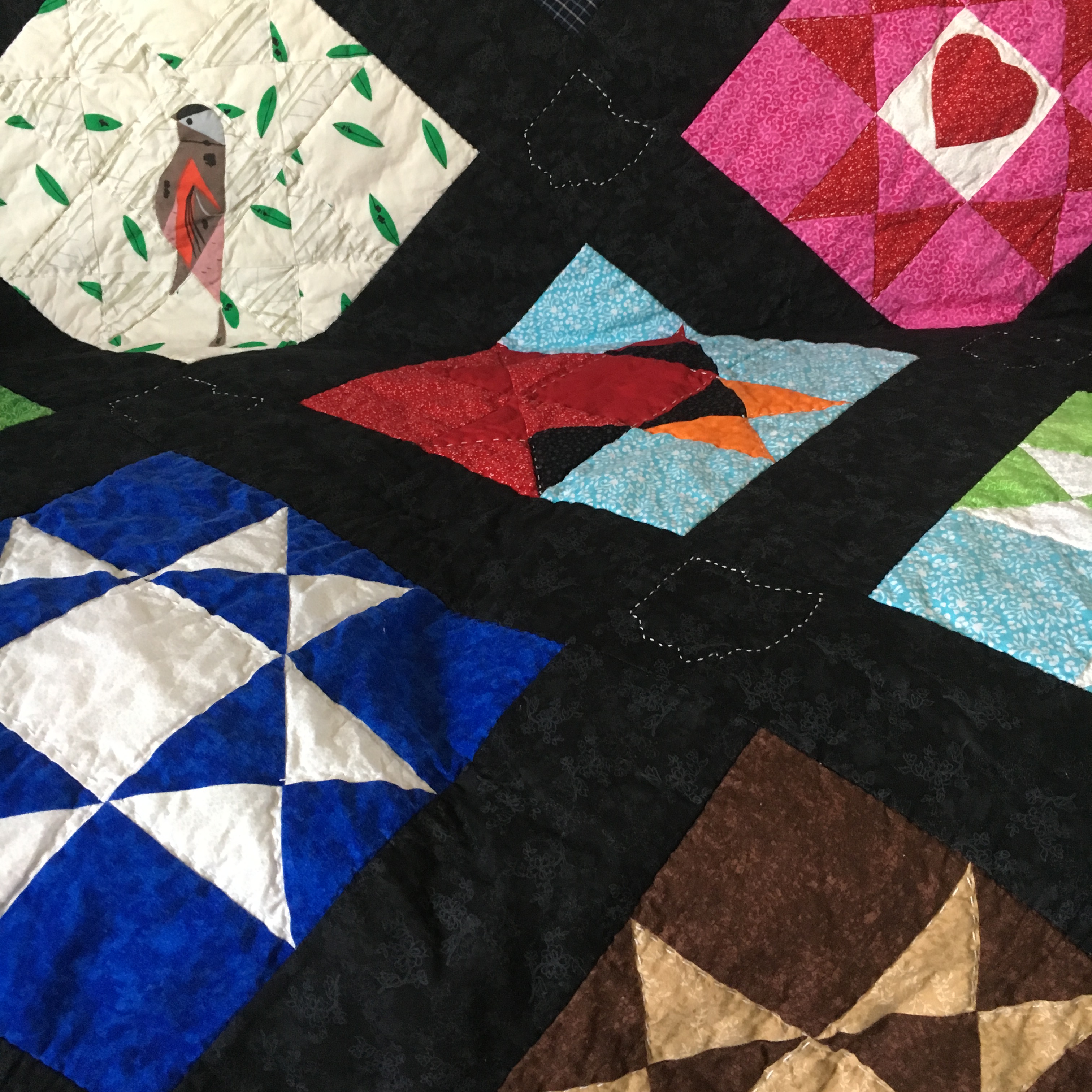
My completed Ohio Star Quilt

It gives me great satisfaction to write that my Ohio Star Quilt is DONE!

I made a block for each month of 2018 to celebrate my 10th anniversary of living in Ohio.

I don’t know what else to say about this quilt! I’m so happy it’s done. I wrote a lot about this quilt over the last year. Maybe I’m also happy that I’m not going to write about it anymore? I finished the quilt this month a lot sooner than I thought I would. That final knot in the binding is so satisfying. Stitching on the label? My favorite part. I love how the fabric and the batting and the stitches seem to settle into each other after a spin in the washer and dryer.

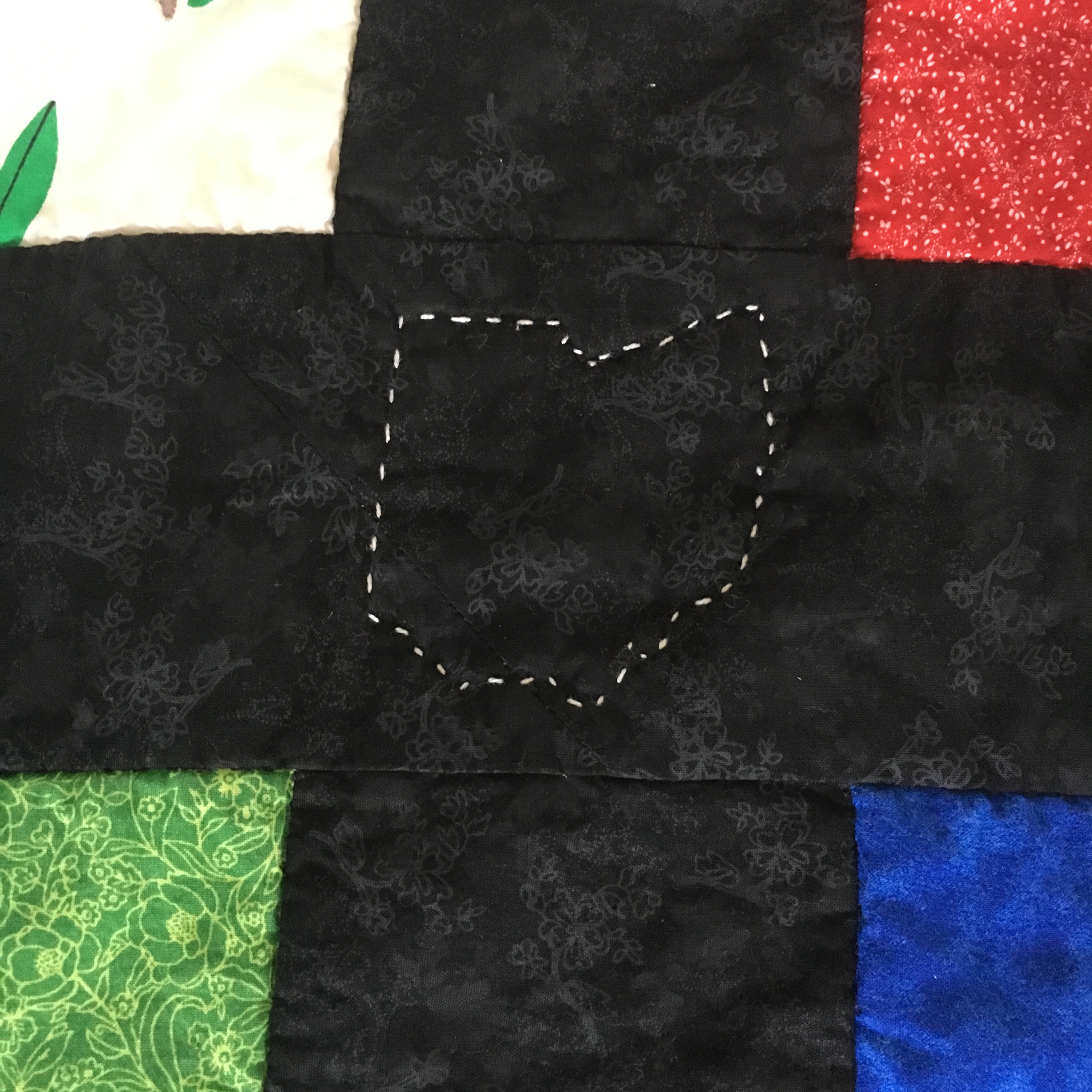
I machine-pieced the top and hand quilted it. I stitched in the ditch around each block, stitched around the outline of each star, and added outlines of Ohio in the sashing.

The little Ohio outlines are one of my favorite details. There’s no denying that this quilt is about Ohio!

Teeny hand-stitched Ohios! I love them!

Overall, I’m very happy with this quilt. There are a lot of personal stories in this quilt. I learned a lot and practiced new skills. Here’s to more years in Ohio and many, many more quilts!

My Ohio Star Quilt

Easy Upcycled Valentine’s Day Sweater

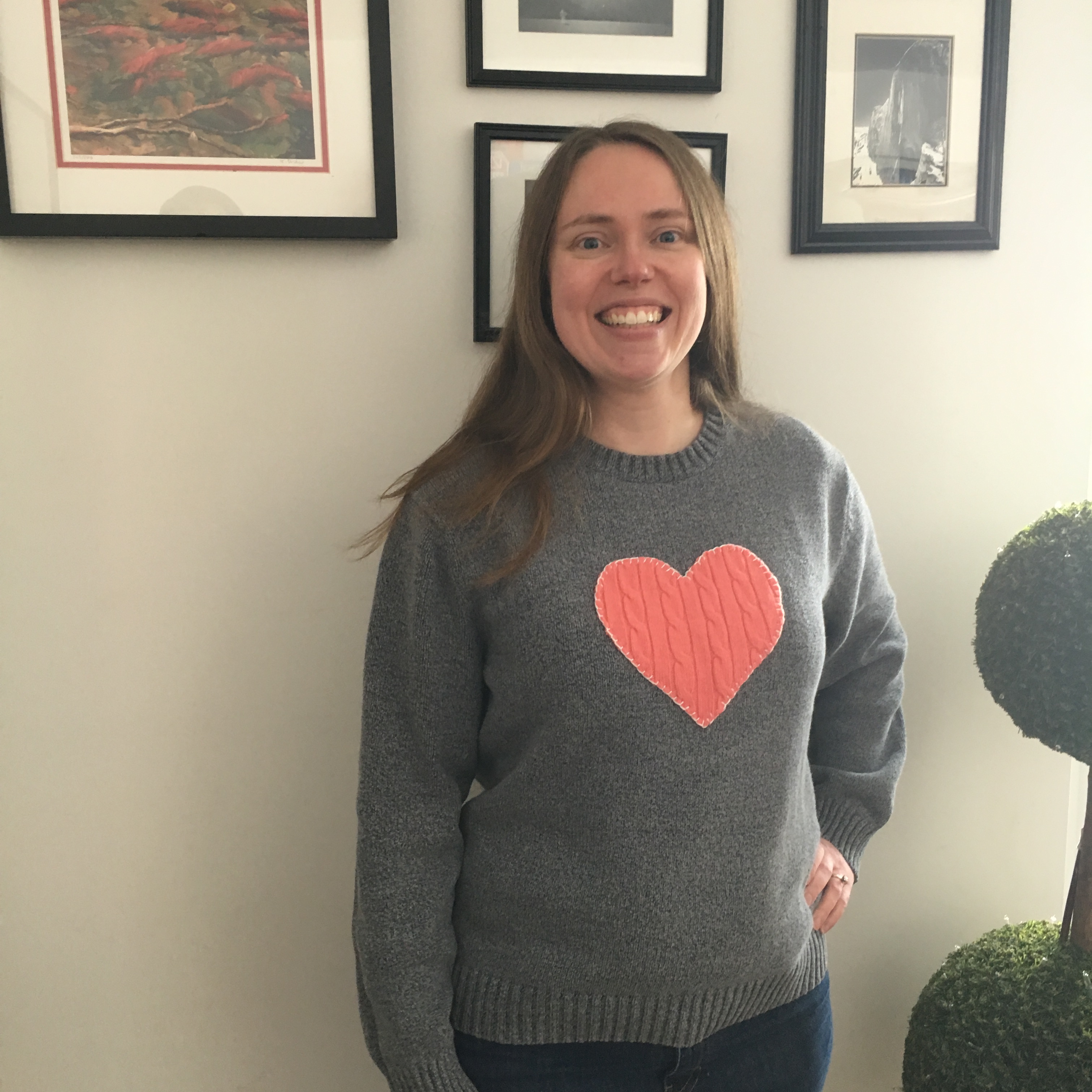
My new Valentine’s Day sweater made from thrifted/upcycled sweaters!

It recently dawned on me that if I can have a festive Christmas sweater, why can’t I have an equally festive Valentine’s Day sweater? I love my Lands’ End red and white Fair Isle Christmas sweater and have been wearing it since I purchased it in college. (I’m fully aware that it’s corny. I love what I love and can’t help it!) Because I’ve been dabbling in making my own clothes and repurposing/upcycling clothes, I set out to create my own design with thrifted sweaters.

My quest started at the thrift store and my stash of material. First, I found a sweater at the thrift store. I specifically was looking for sweater in a neutral color, made from natural fibers. I scored a dark gray, 100% cotton sweater—perfect! Then, I hit my stash for material for a heart appliqué. For my daughter’s first birthday, I made her stuffed chicken toys from a pinkish-orange, cable-knit thrifted sweater. I knew I had scraps leftover, and dug them out.

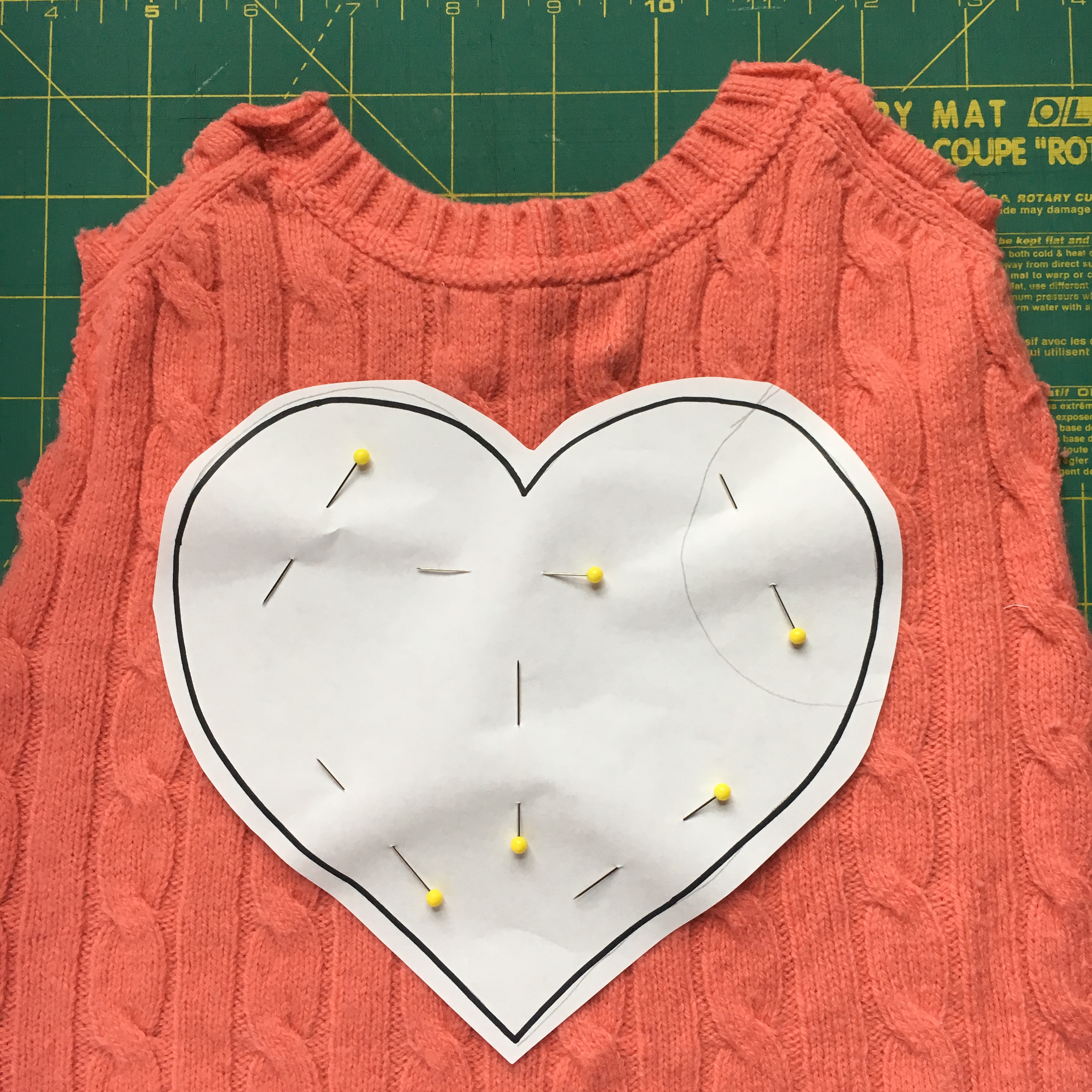
I traced a heart onto a sheet of computer paper. (I could have gotten fancy with tissue paper, but the shape was so simple, a plain sheet of paper worked fine.) I trimmed around the heart leaving a little bit of paper around the edges. I did this because I wanted to make the cut of the heart from the sweater scrap itself.

I used paper from my printer to trace a heart shape, trimmed it, and pinned it to the sweater scrap to cut out the appliqué.

I was careful to line the pattern on the sweater scrap so that the cable knit pattern was somewhat symmetrical. After the pattern was pinned on, I carefully cut the heart out.

I used a ruler (and a lot of fussing) to place the heart on the gray sweater.

Placement is always tricky—I wanted to have the heart in a good place vertically and centered horizontally. I tried the sweater on, placed the heart where I thought it looked good, and marked the sweater so I could see where I had placed the heart after taking off the sweater. I folded the sweater in half (shoulder to shoulder) so I could find the horizontal center and placed a pin to mark it. Really, I just fussed with the heart until I was happy.

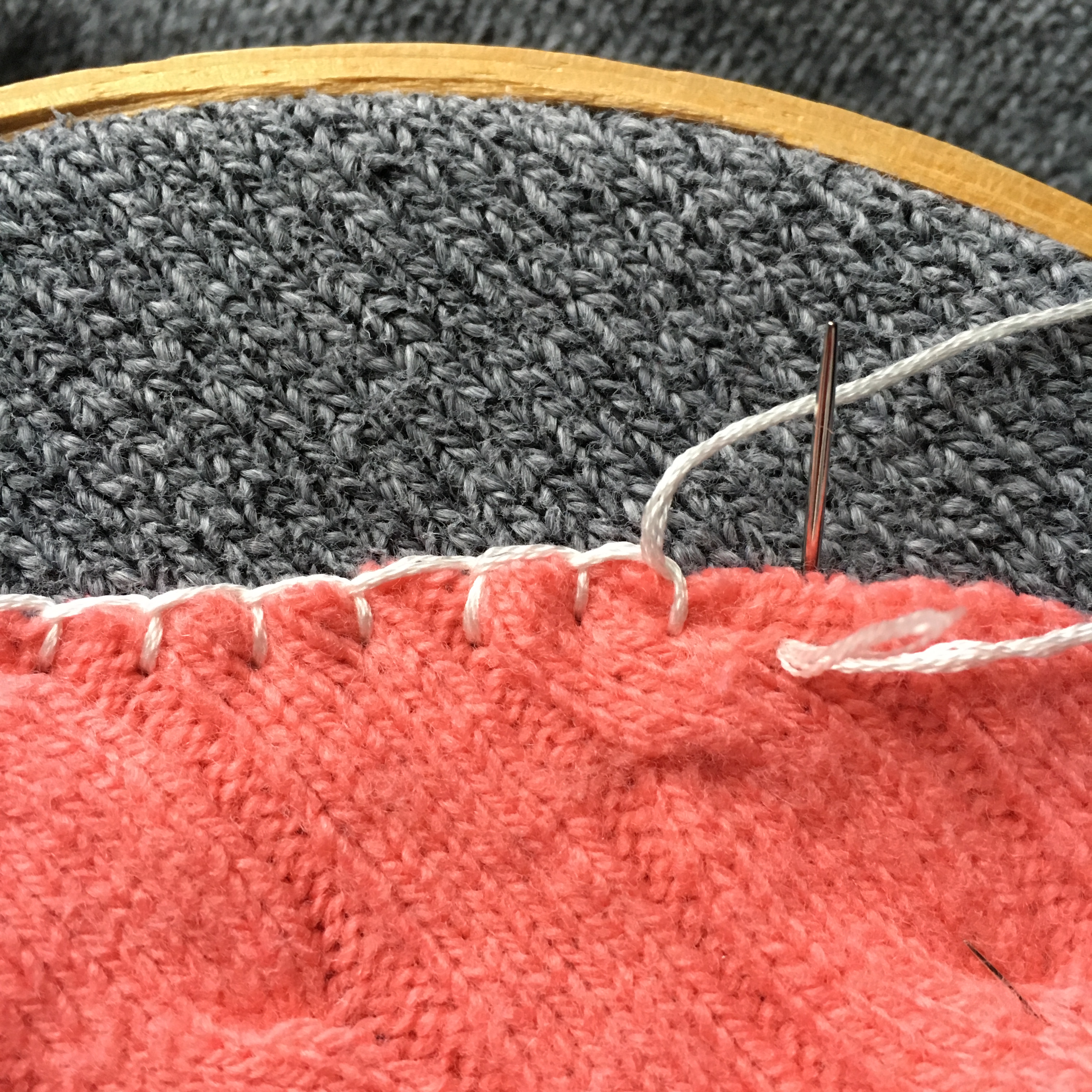
A blanket stitch is pretty simple (once I remembered how to do it) and creates a crafty style.

A little bit of washable glue stick and several pins later, I was ready to stitch! I used a blanket stitch with white embroidery floss I had on hand to secure the heart to the sweater. (Side note: it’s not until I actually have needle to fabric that I can remember how to do a blanket stitch. I have such a hard time visualizing it in my head. I think this is why I can’t parallel park. Haha!)


Detail of the completed heart.

Voilà! I now have a cheery Valentine’s sweater to wear in the weeks leading up to the big day! I love it! One of my favorite things about it is the contrast of the smooth, plain knit of the gray sweater and the textured, cable knit of the appliquéd heart.

Oh, say! This is a nice sweater. I just may wear it all winter long!

Full disclosure: I haven’t washed it yet. Eeep! So, I don’t know how it will fare. But! If the heart starts to come off, I have confidence that I can fix it or redecorate the sweater altogether.

Now, if you’ll excuse me, I have some Valentine’s Day cheer to spread!

My new Valentine’s Day sweater made from thrifted/upcycled sweaters!

The 7 Quilting & Sewing Projects I Finished in 2018

In January of 2017, I started a block of the month quilt and while it is still in progress, I haven’t looked back. In 2018, I started streamlining my crafts and focusing on quilting and sewing. I get a lot of energy and joy from sewing and so I naturally want to share, even though I know my work isn’t particularly special. I enjoy seeing other’s work, too. So, how about a roundup of the things I finished in 2018. (There is still plenty that was started.) Some of my finishes will look familiar, others I’m sharing here for the first time.

Dazzling Pineapple Block Study

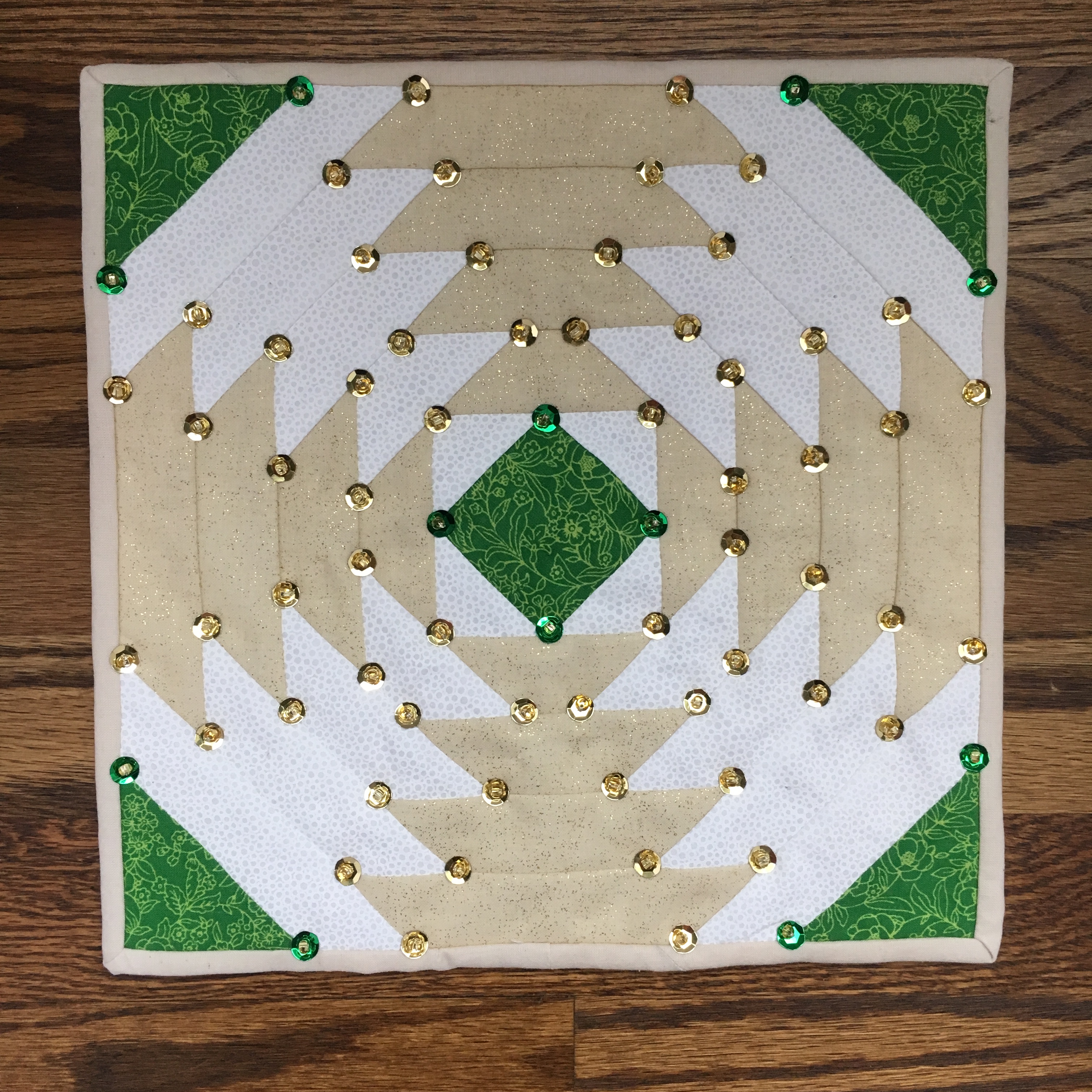
Dazzling Pineapple Block Mini Quilt

I made this one to see what tying a quilt with sequins and beads would look like. It was an itch that I had to scratch. I like it! I started a larger pineapple quilt, but chose such snazzy colors, I don’t want to finish it with sequins—it would be too much. That quilt top is completed, but it needs to be basted, quilted, and bound. See my post about the mini quilt here.


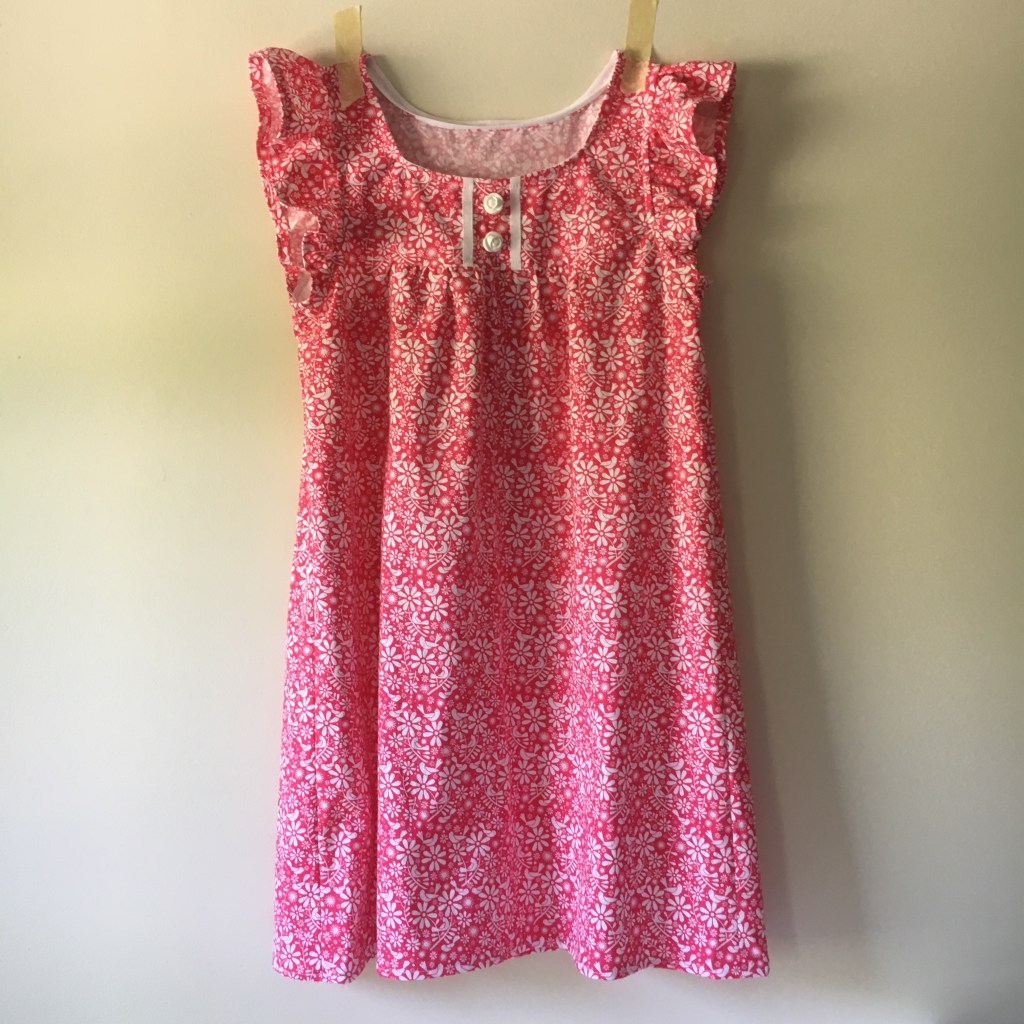
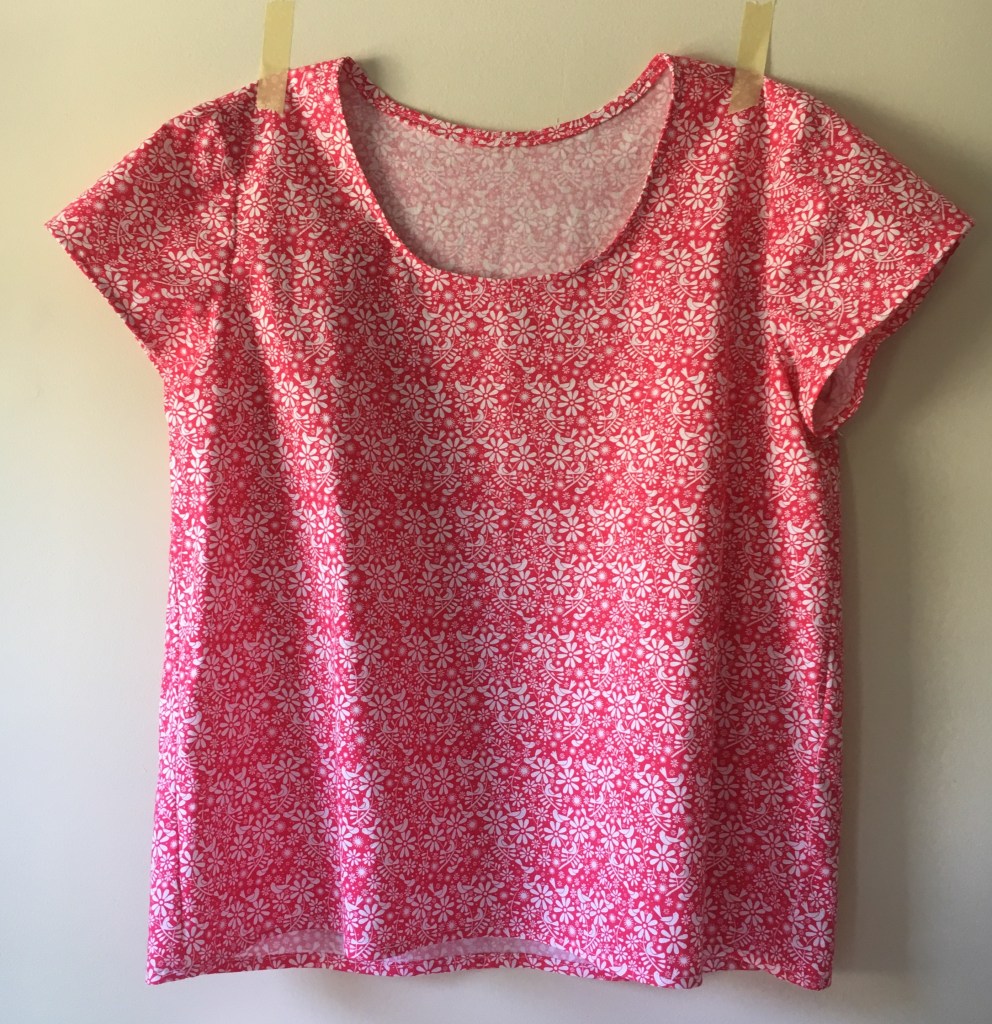
Daughter & Mom Matching Dress & Shirt

This one has been on my “to do” list since my daughter was born. I loved how they turned out and I especially love the fit of my Grainline Scout Tee, which I’ve worn several times. However, my daughter wore her dress for the first half of a day before changing into something else. What can I say? Kids are fickle, but I’m still glad I made these! See my full post on this project here.


Welcome Blanket Quilt

Welcome Blanket Quilt

This quilt was the quickest I think I’ve ever made anything of this size (approximately 45″ square). I couldn’t dawdle, though, because there was a deadline to participate in the Welcome Blanket project. I love how this quilt came out and how simple it was to make. The hardest part of giving away a quilt anonymously is that you don’t know if it’s being used and if it’s bringing the comfort you imagine and hope it will. Read more about this one here.


Repurposed Handkerchiefs

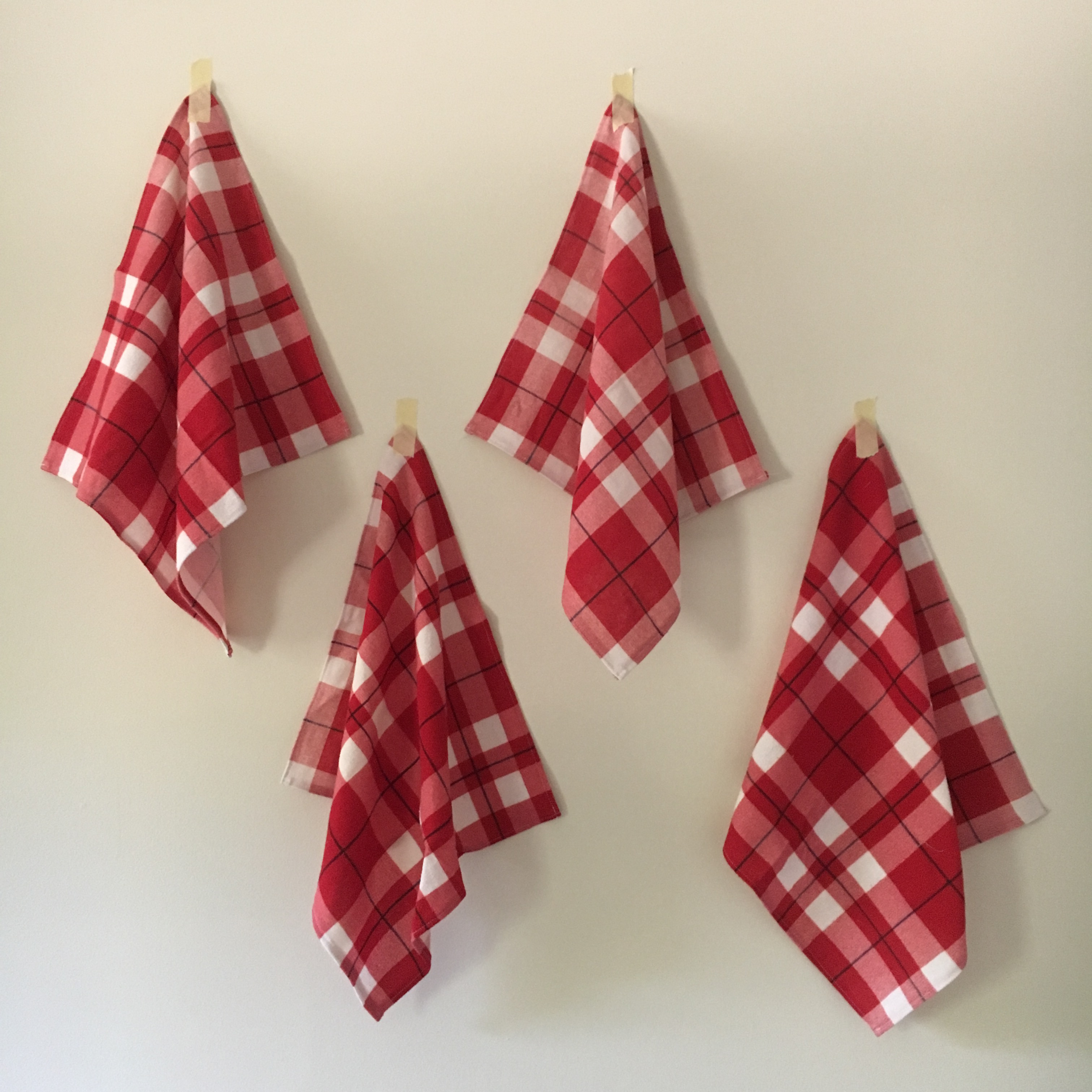
Handkerchiefs made from an old flannel bedsheet.

I don’t know if this one really belongs on this list, but it took me just about a whole day to stitch up these handkerchiefs fashioned from an old bedsheet. And, I was just hemming each side! It’s a reminder that not all sewing is glamorous, but it still has purpose and is enjoyable. Read more about the “why” and “how” here.


Sea Glass Pop Mini Quilt

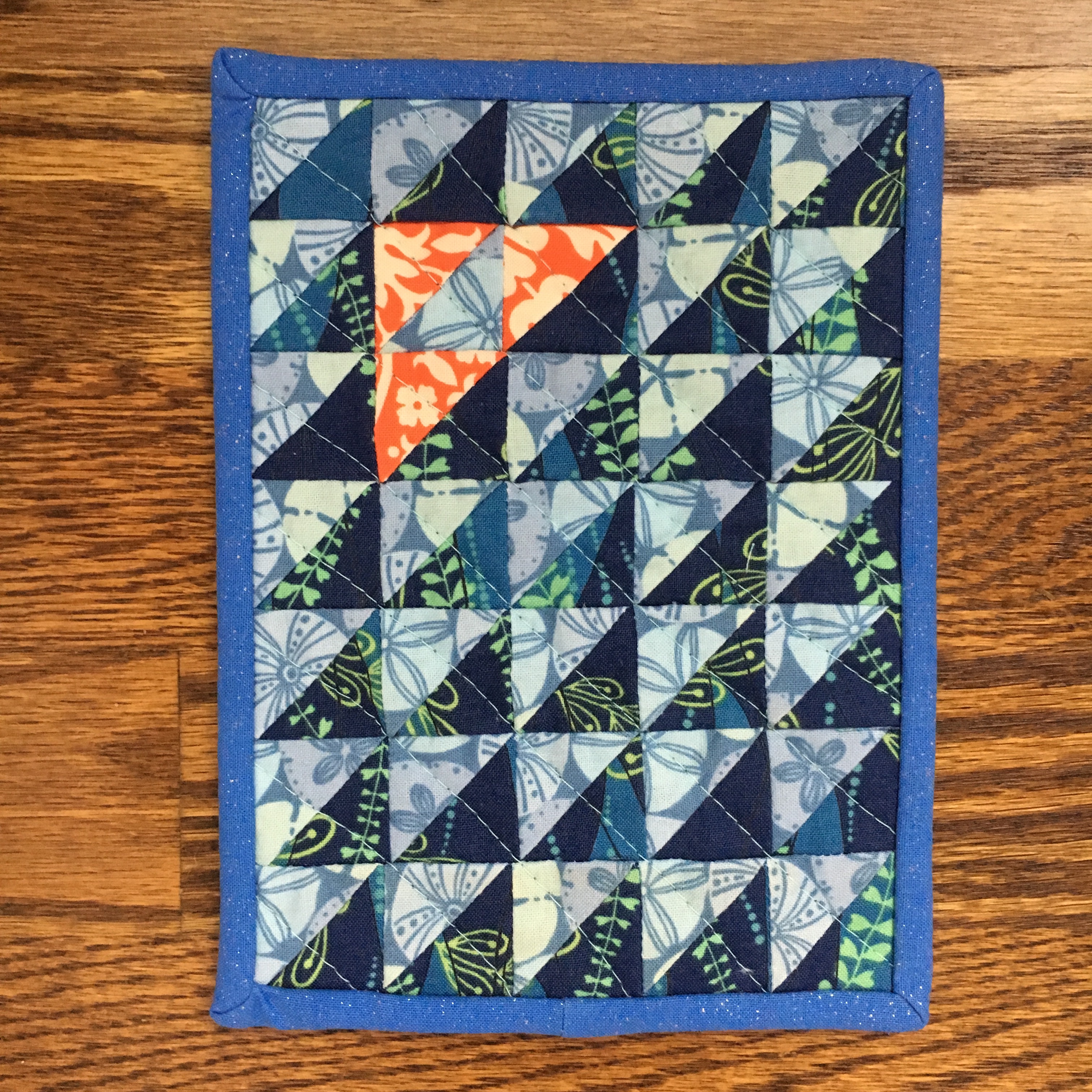
Sea Glass Pop Mini Quilt

This 5” x 7” quilt went to the 2018 Secret ArtWorks fundraiser that raised funds for ArtWorks, a local organization that promotes arts in this area. The title came after a brainstorming session with my sister and expresses how the trio of orange triangles pop like pieces of sea glass on a beach. (If you look closely, the light blue fabric has a sand dollar print and the dark blue fabric has a seaweed-inspired print.) Again, this quilt I gave away and I have no idea how it was received!


Library Totes

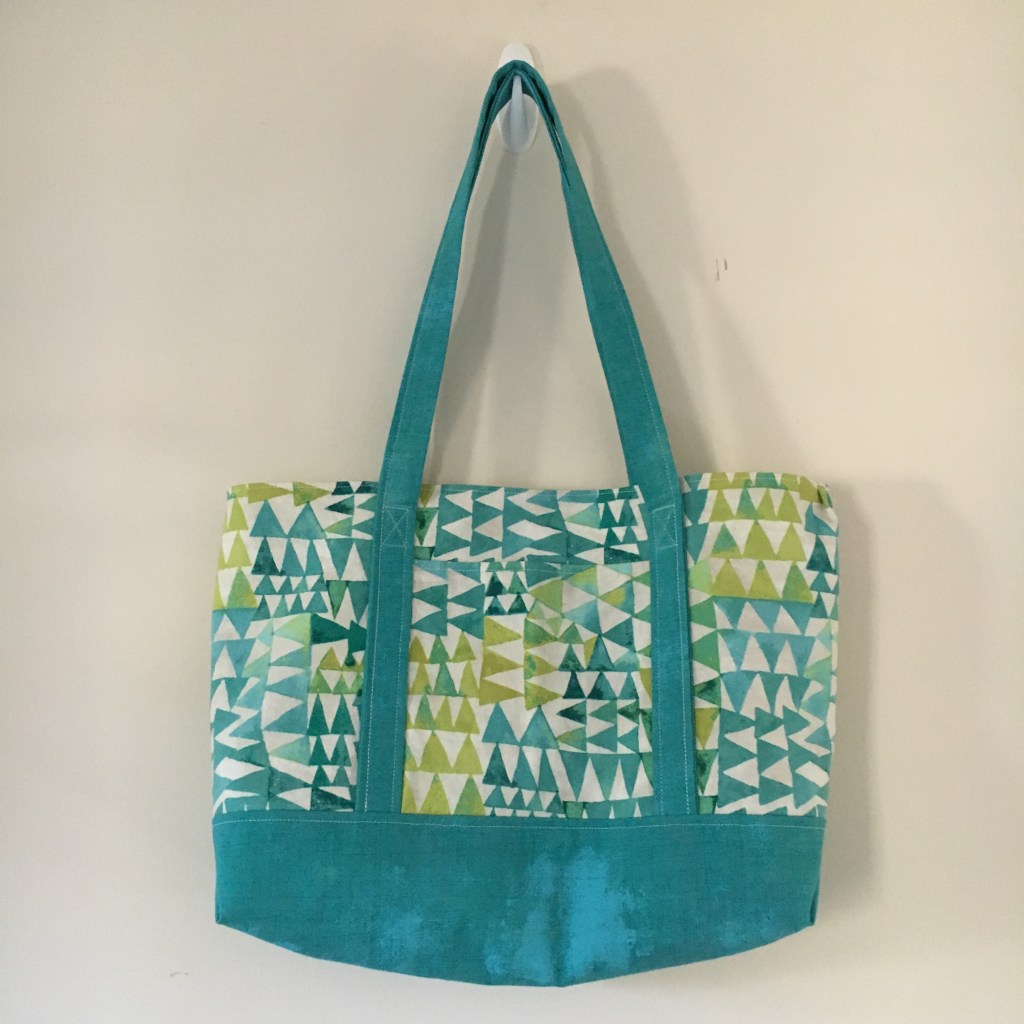
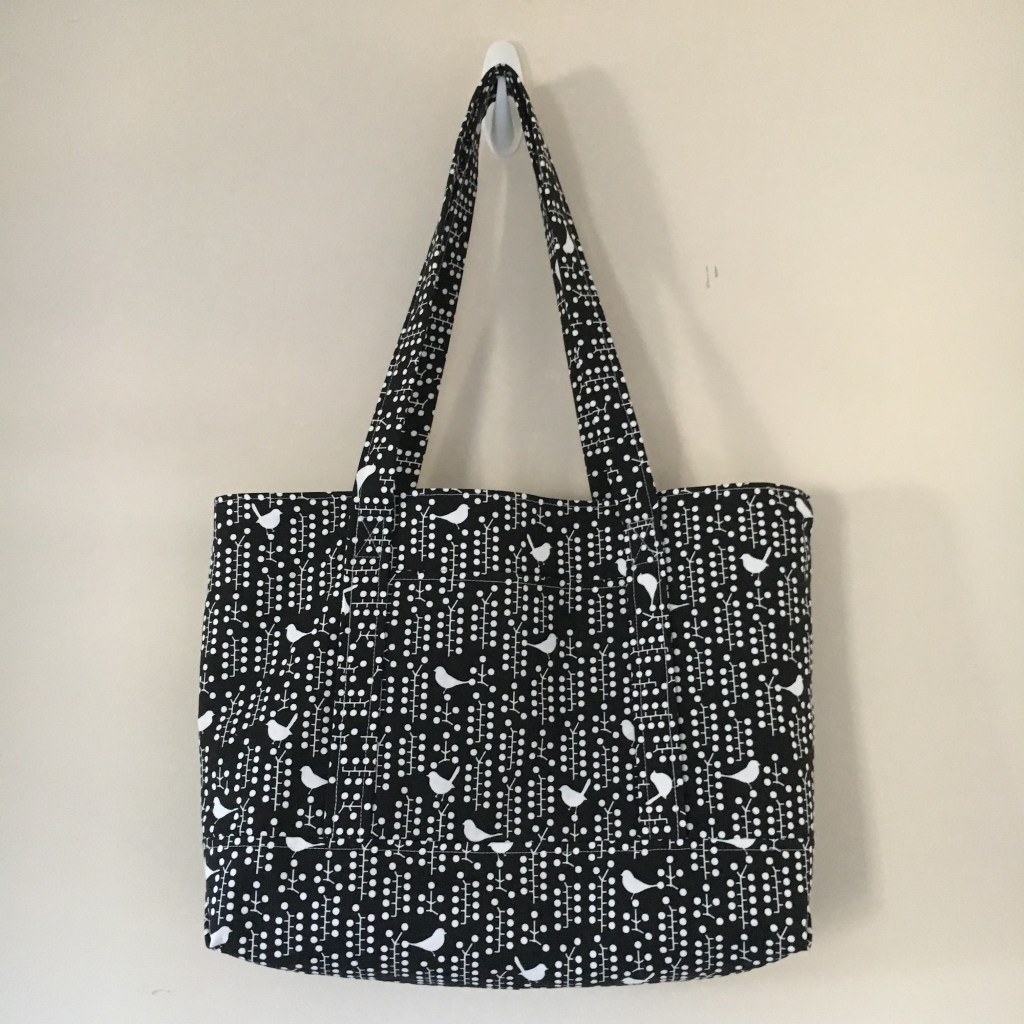
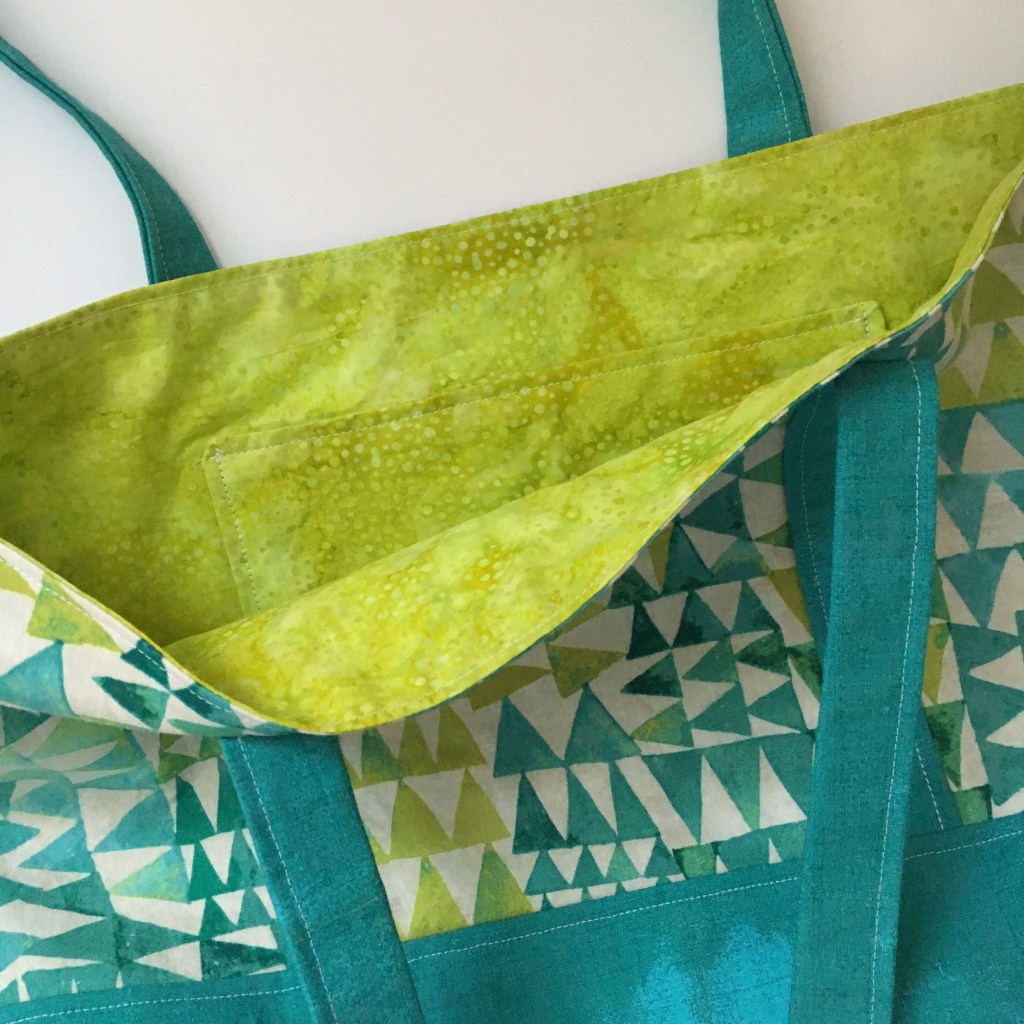
This year, I joined my local chapter of the Modern Quilt Guild. In November, we exchanged names for a gift swap. I decided to make a tote—um, my first one! I purchased another member’s pattern from Craftsy. (Unfortunately, I can’t find the pattern anymore. Craftsy just went through some major changes.) I decided to make two simultaneously. This project highlighted the fact that I am very much a batch sewist. If I’m going to take the time to sew up one thing, I might as well make two, because, really how much more effort will it require? I have the supplies and tools already out! Ha!

I loved making these. I gave the green/blue triangle tote to my fellow member and kept the bird one for myself. It works very well and I see myself doing more bag making.


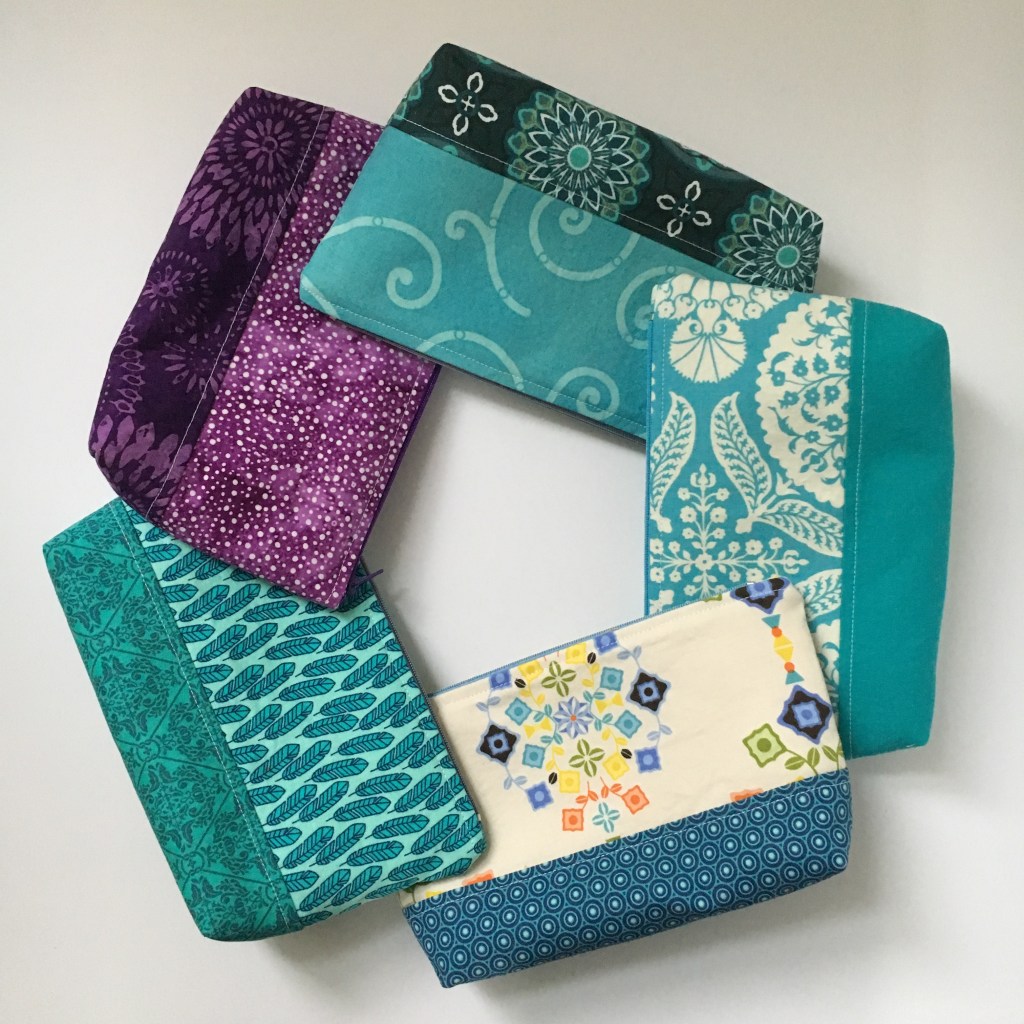
Zipper Pouches

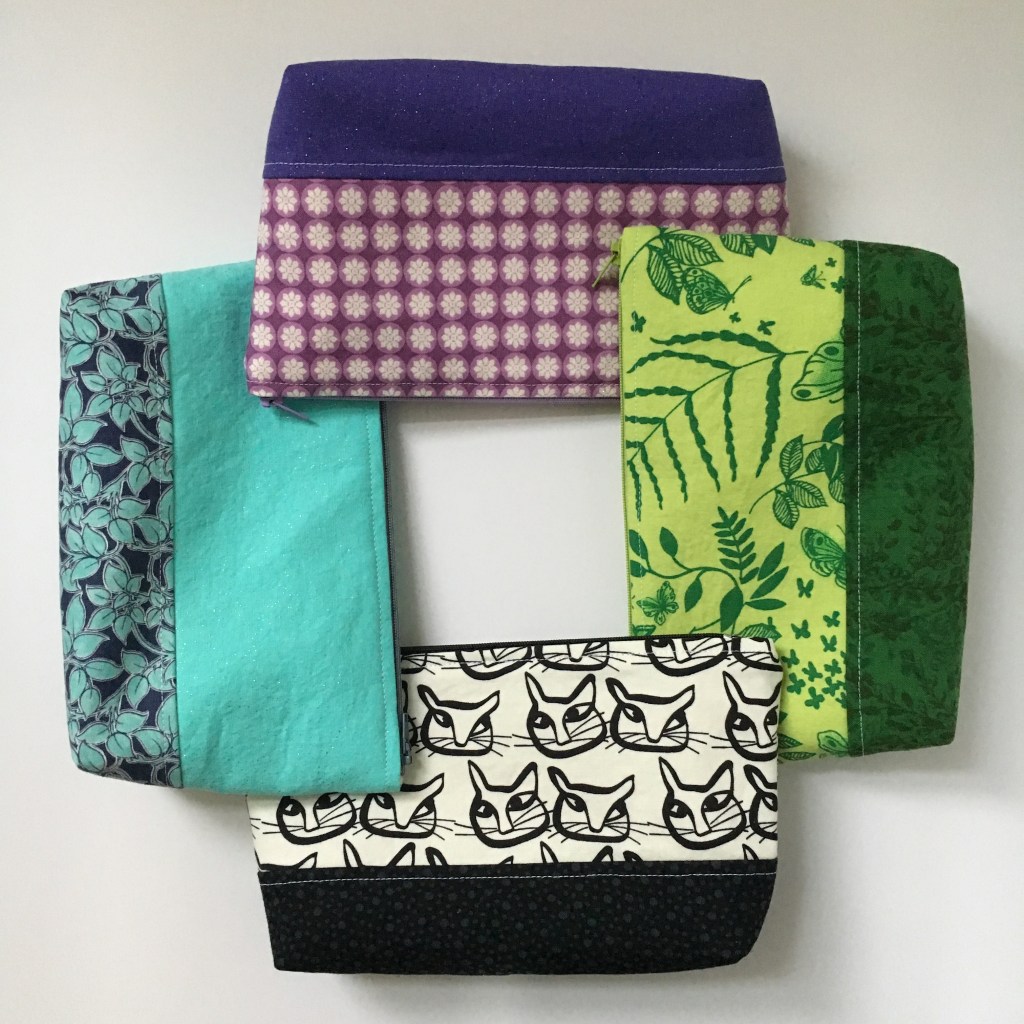
In fact, I’ve already done more bag making! After finishing the totes, I had a little bit more time dedicated for sewing, so I whipped up a zipper pouch using a pattern by Sotak Patterns. I was amazed at how easy it was! So, I decided to make 10 more. Batch sewist, indeed! I had my young daughter help pick out fabrics and choose who got each pouch for Christmas. It was a fun project and, again, I see myself making more bags!

Now, on to tackle my 2019 to-make list!

Mending a Fast Fashion T-Shirt

Mended fast fashion t-shirt.

I recently patched a hole in a t-shirt I purchased at Target this past summer. Sure, the shirt only cost about $8, but it was new: I didn’t want to pitch it or toss it into the rag pile.

I’ve become interested in mending and repairing clothing, but it’s rare that I wear a garment until it starts to come apart. (I’ll make an exception for the “chub rub” holes that appear in my well-loved jeans!) I figure it’s probably rare for a lot of people to wear their clothes until they need mending. Also, in some settings, it’s gauche to wear mended clothing. I don’t think wearing patched clothes would be a professional look at work. It may not be right, but it’s where we are.

So, my new t-shirt was laying on the floor of the closet and came into contact with the vacuum, ripping a hole. I wasn’t ready to let the shirt go—I had just bought it! I had another fast fashion t-shirt that I had worn for several years, but it was pilling and it didn’t fit well anymore because of, ahem, some weight gain. That shirt became my patch material.

The first step I skipped was researching how to properly repair a hole in a knit fabric. From my memory of what reverse appliqué looks like and works, I decided to use that method—or at least how I figured the technique works! Instead of using a circle or square just large enough to cover the hole, I went with a heart shape.

Heart shape drawn; patch pinned; needle threaded.

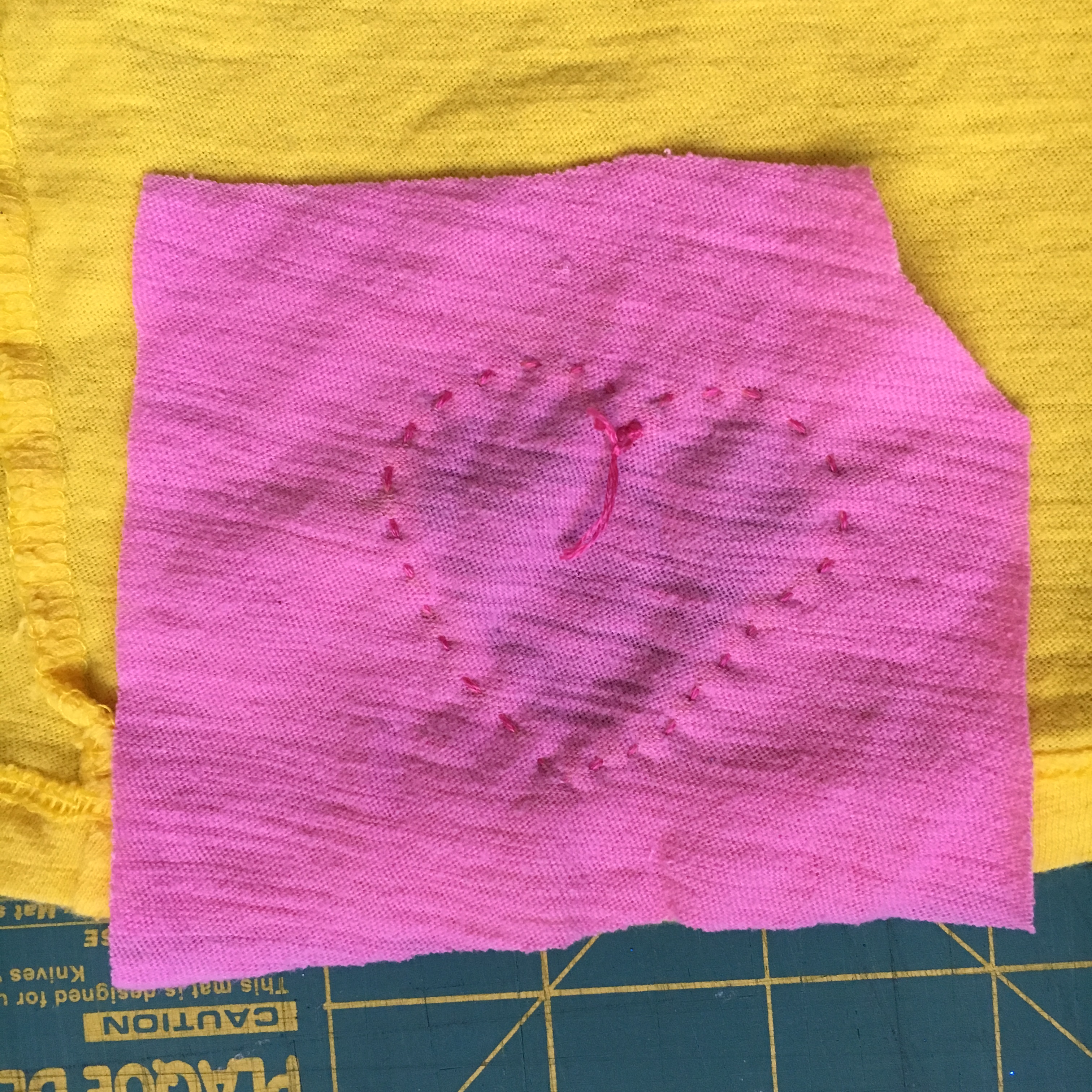
I drew a heart around the hole with a water-soluble pencil and then pinned the patch to the wrong side of the shirt. Using embroidery thread of a complementary color, I stitched around the heart through both the shirt and the patch.

Stitching finished.
The wrong side of the patch, before trimming.

I trimmed the patch about ¼” outside the stitching. Then, I trimmed the shirt about ¼” inside the stitching.

Shirt and patch trimmed. Ready to wear!

The heart lands on the hip.

Not the best place for a contrasting patch, but hey! I didn’t choose where the vacuum tore a hole!

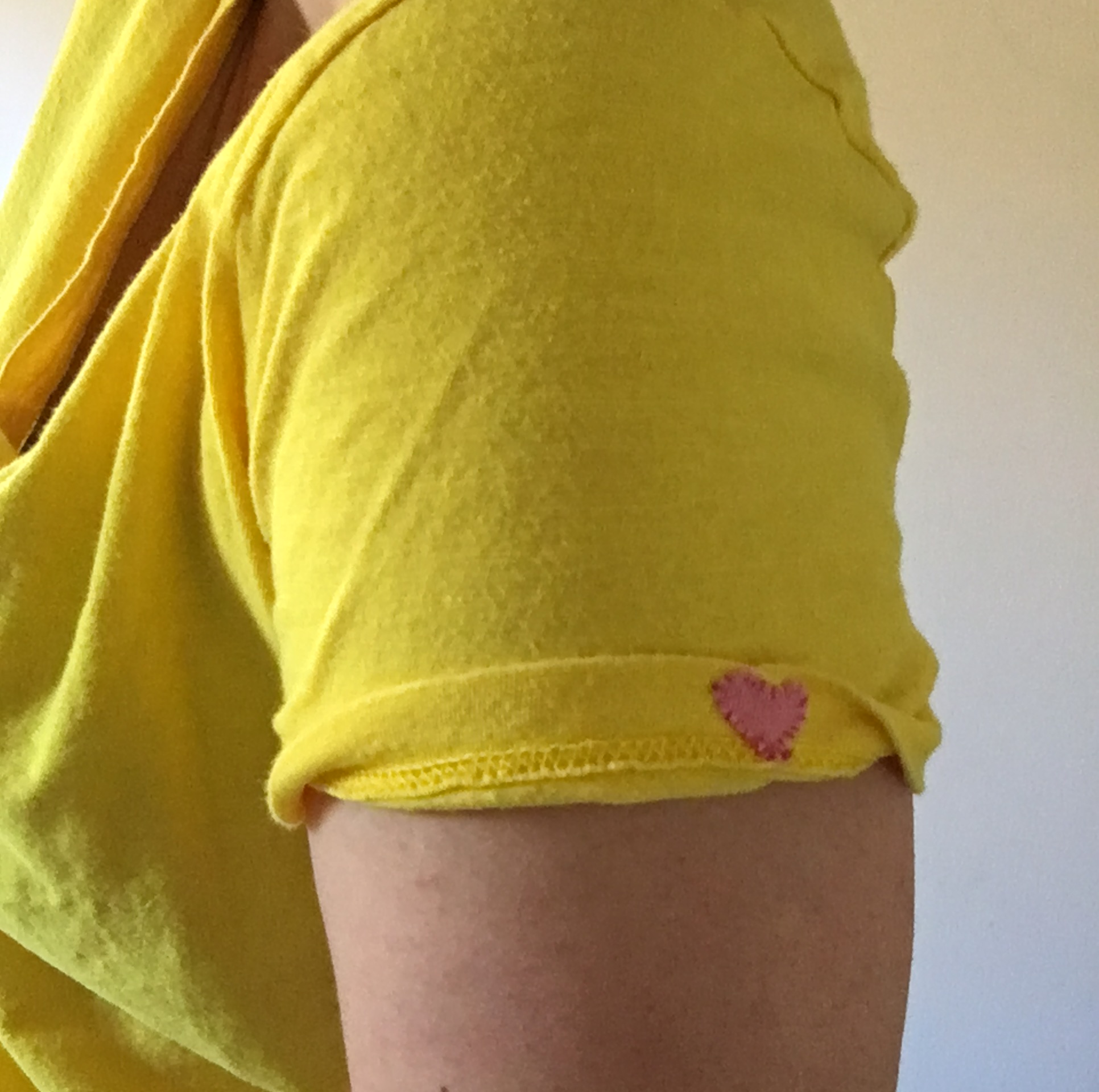
And, just for funsies, I appliquéd a tiny heart on the inside of the left sleeve so that when I flip it up, the heart is visible. Get it? Get it? I’m wearing my heart on my sleeve!

Fun! I want to do something similar with other shirts.

I don’t plan to wear the shirt anywhere fancy. It’s a weekend-type shirt. But, that’s what it was before I patched it anyway. I’m just happy I can still get some wear out of it!