Creating a tidy grid of quilt blocks and sashing is easy with a simple trick using tailor’s chalk and a quilting ruler.
Lining up quilt blocks across sashing can be tricky. Pinning a row of quilt blocks sewn together to the sashing before stitching is necessary, but with some simple tools, you can get a neat and tidy grid.
Line the ruler up with the side seam and the seam along the sashing you are stitching the next row to.
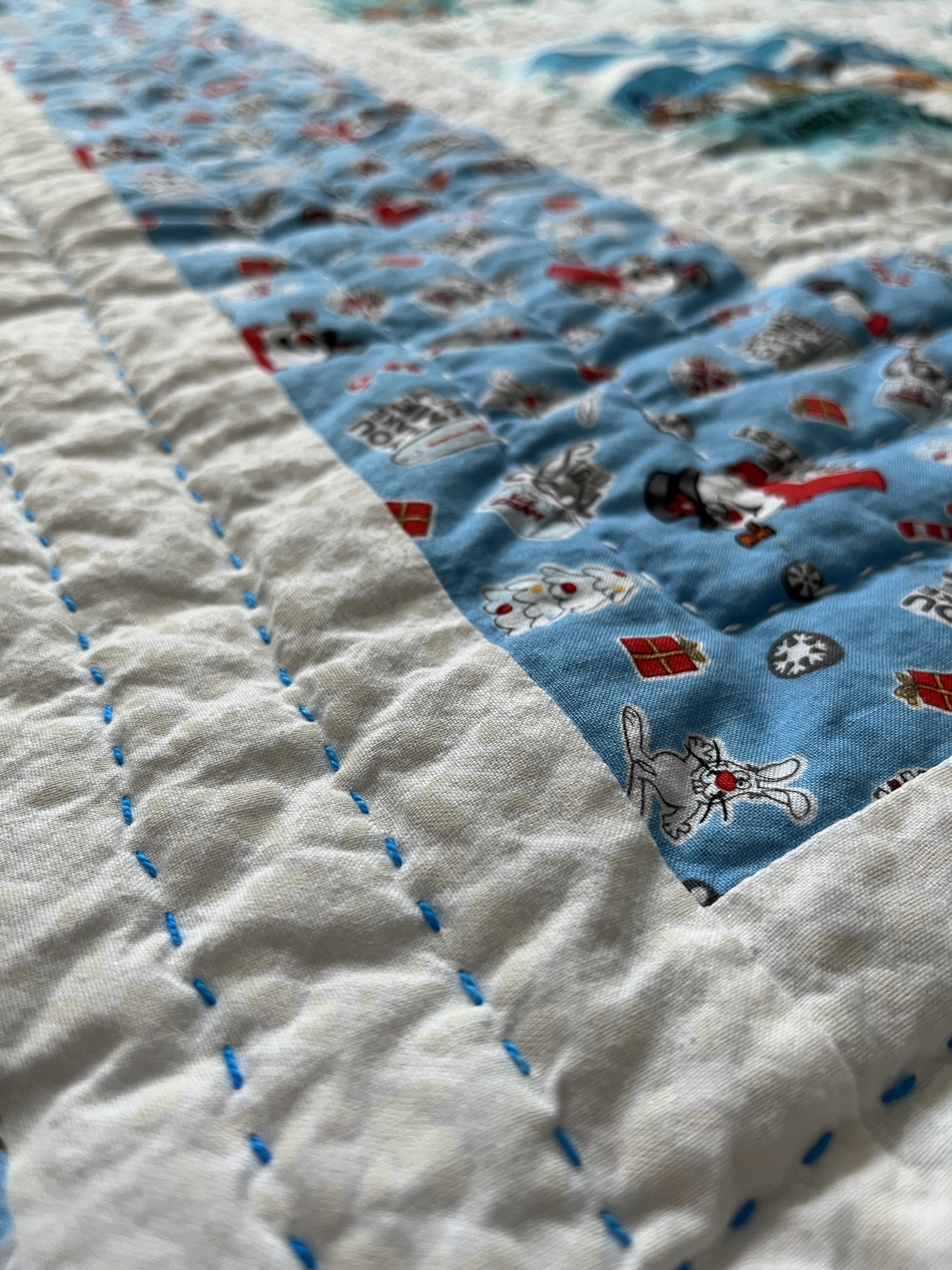
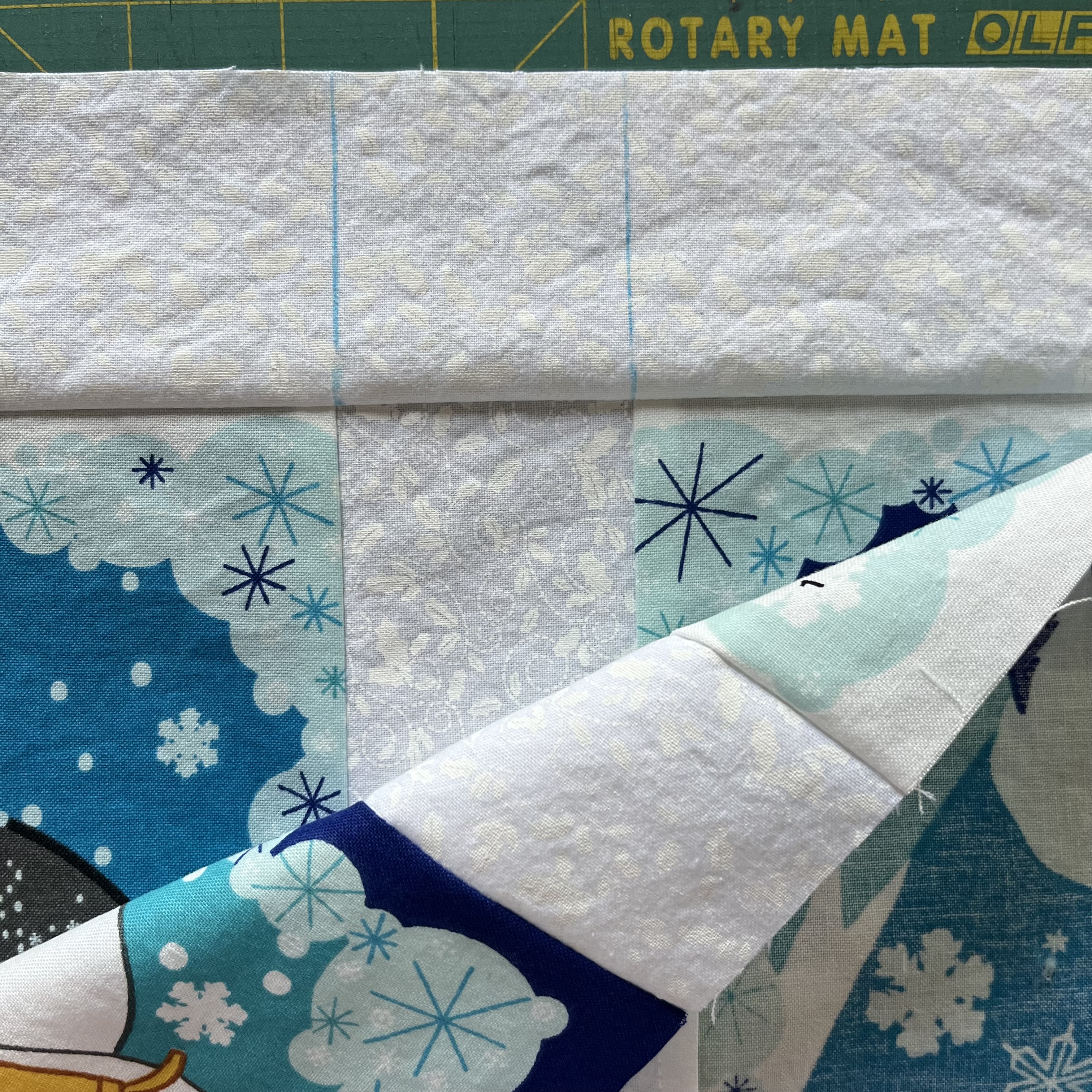
After attaching the sashing to the first row of sewn quilt blocks, square up a ruler with the seam of a quilt block and sashing. Then, make a mark along the sashing with the tailor’s chalk. (Note: you can use whatever temporary pencil or marker you prefer. Heck, you could even stick a pin on the far side of the sashing where the seam is.) You’ll want to mark the seams of all the quilt blocks along the sashing.
It’s now easy to see exactly where to pin the seams on the sashing.
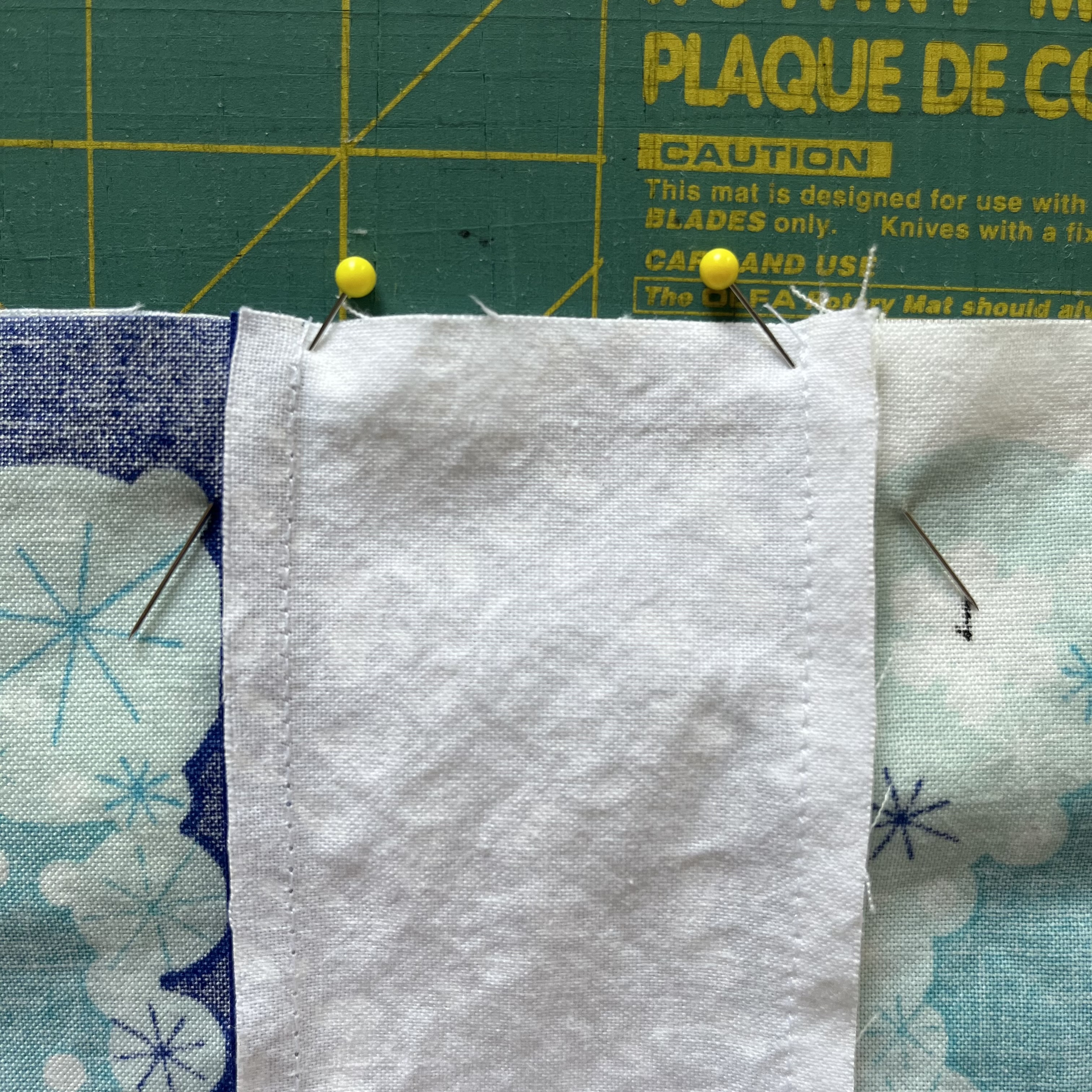
Now, take your next row of sewn quilt blocks and line the seams up with the marks. It’s not as satisfying as nesting seams, but it still feels good that you’re going to get an accurate placement.
I pin both seams and I also put at least one pin in the middle of each block.
Stitch the seam and voilà! A pretty darn accurate grid of quilt blocks!
Those chalk lines will go away in the wash.
I first came across the challenge of lining up quilt blocks when I was a quilt guild member. Another member posed the question to the group because her blocks were always a little offset. I hadn’t made a quilt with sashing at that point, so I listened and the best response was “pin it really well.” The most important pins are the ones at the seams of the second row and the chalk marks, but making those chalk marks are essential. It’s a simple trick and super easy to do with some common tools!
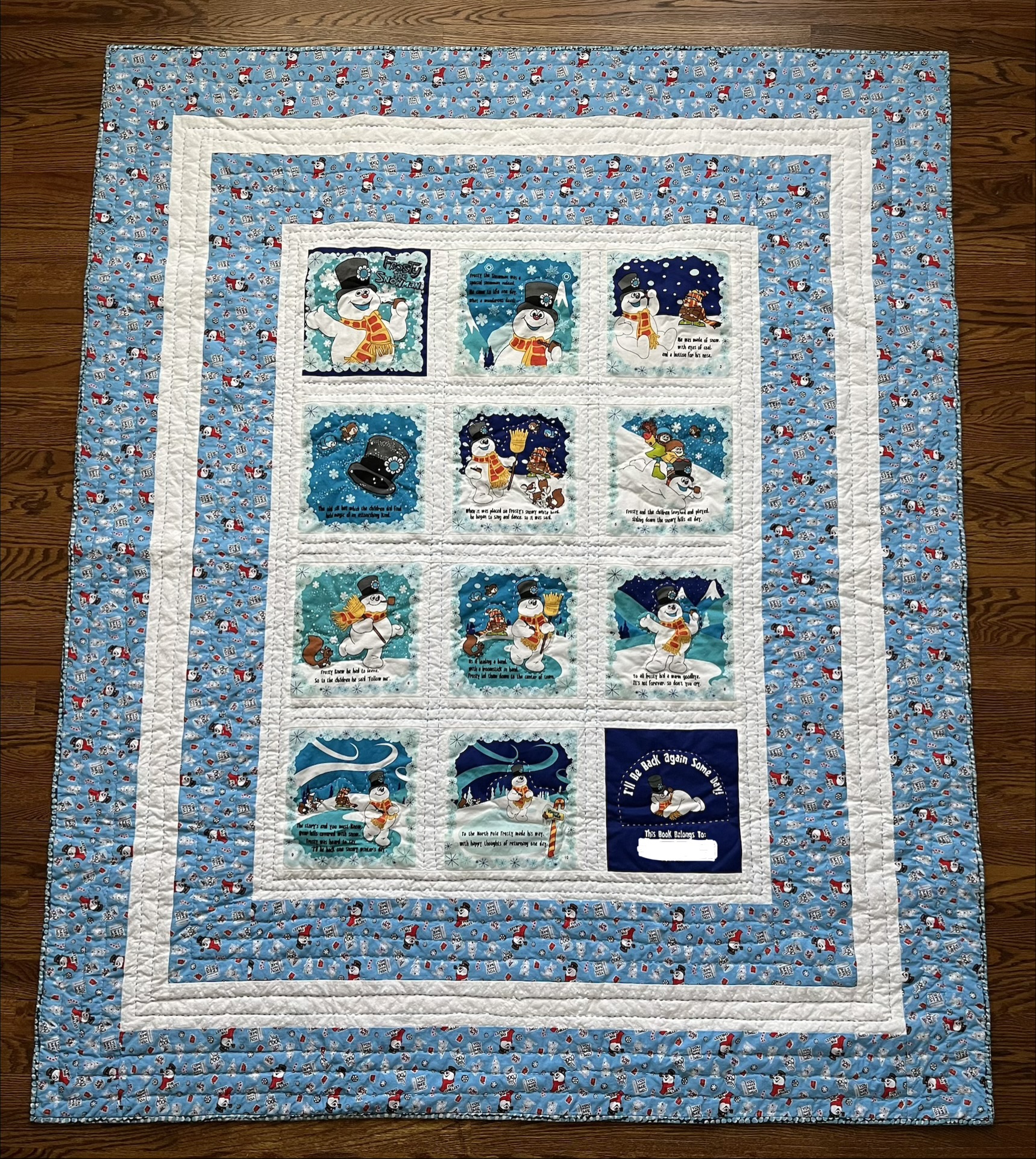
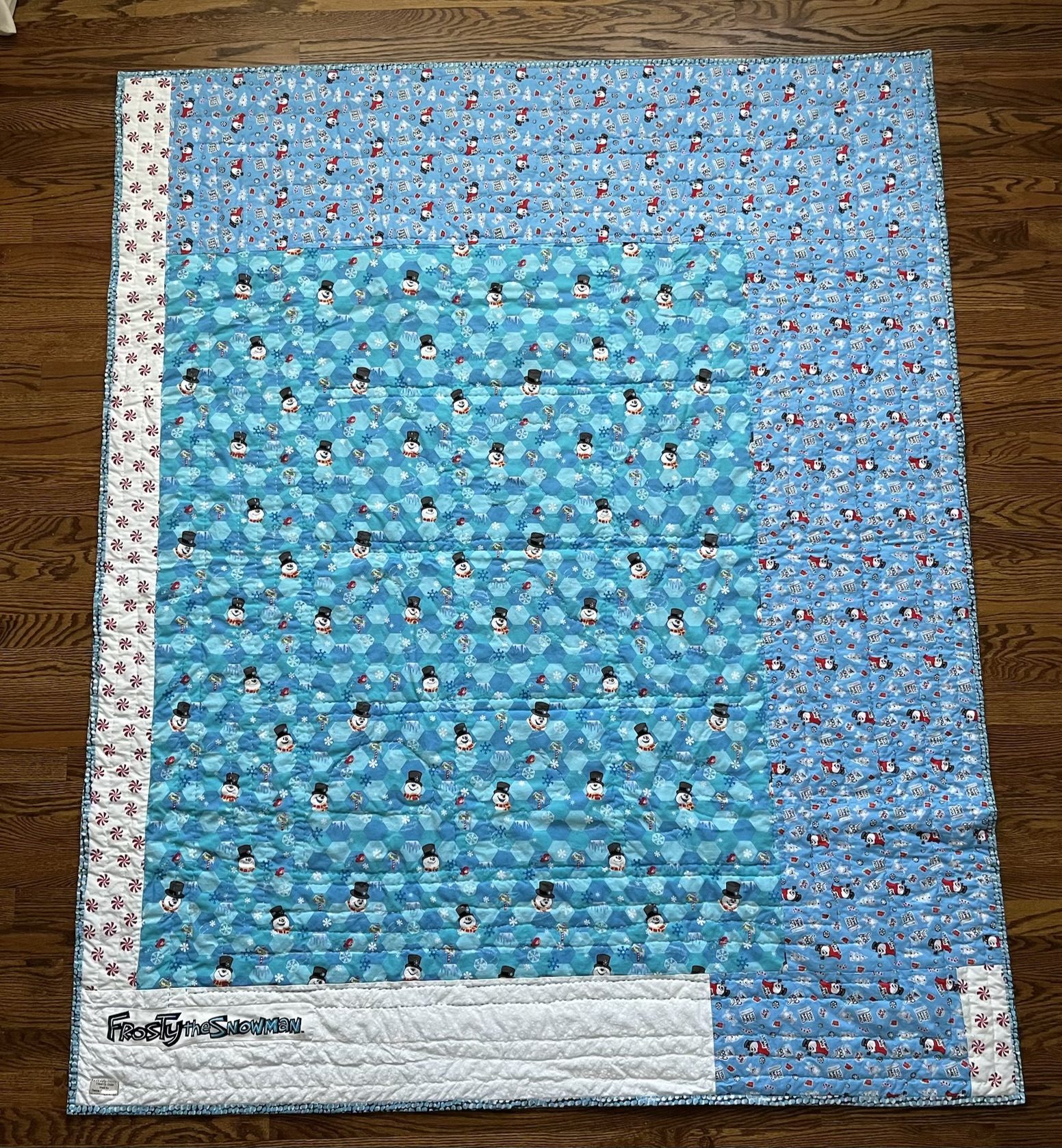
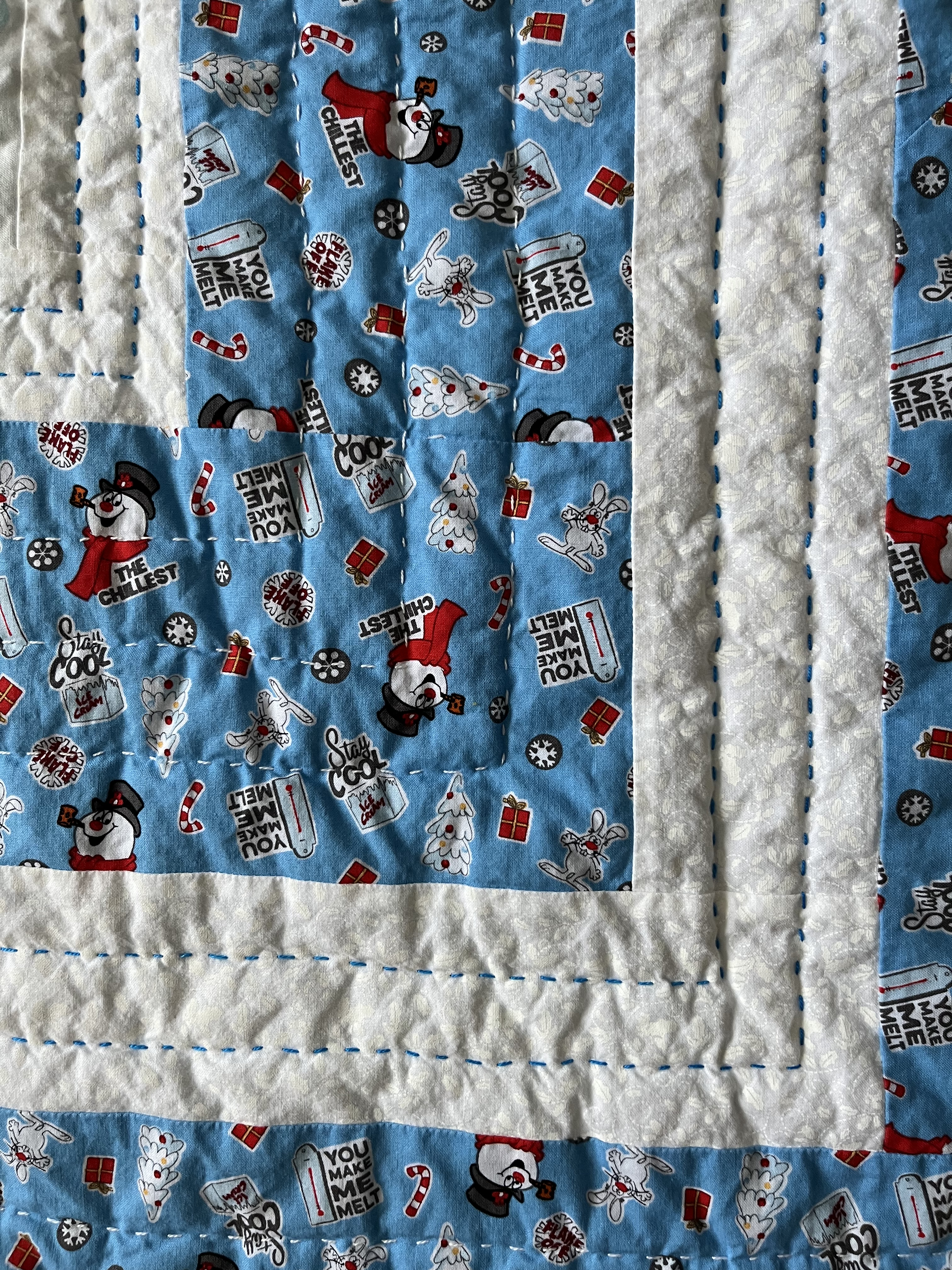
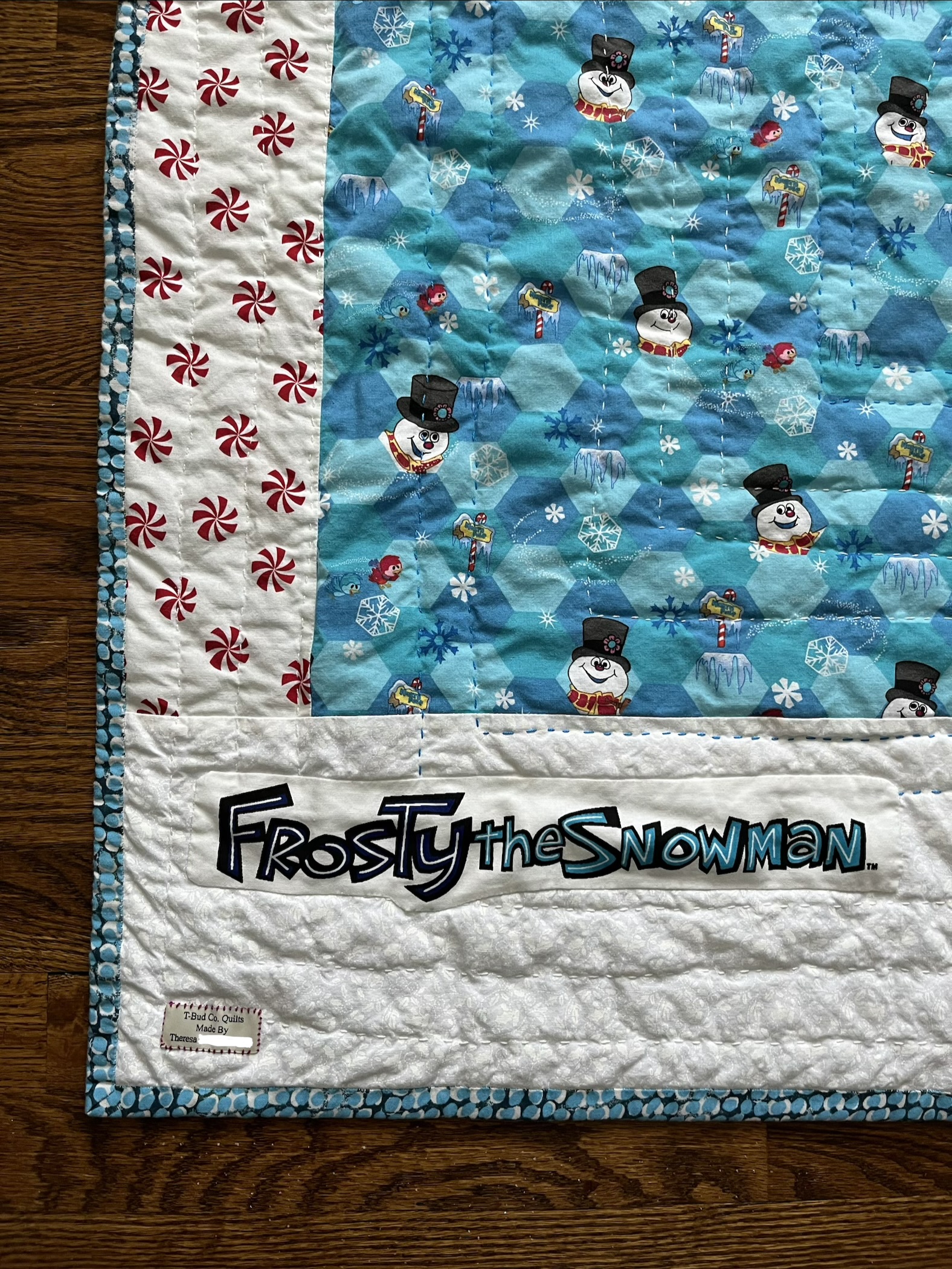
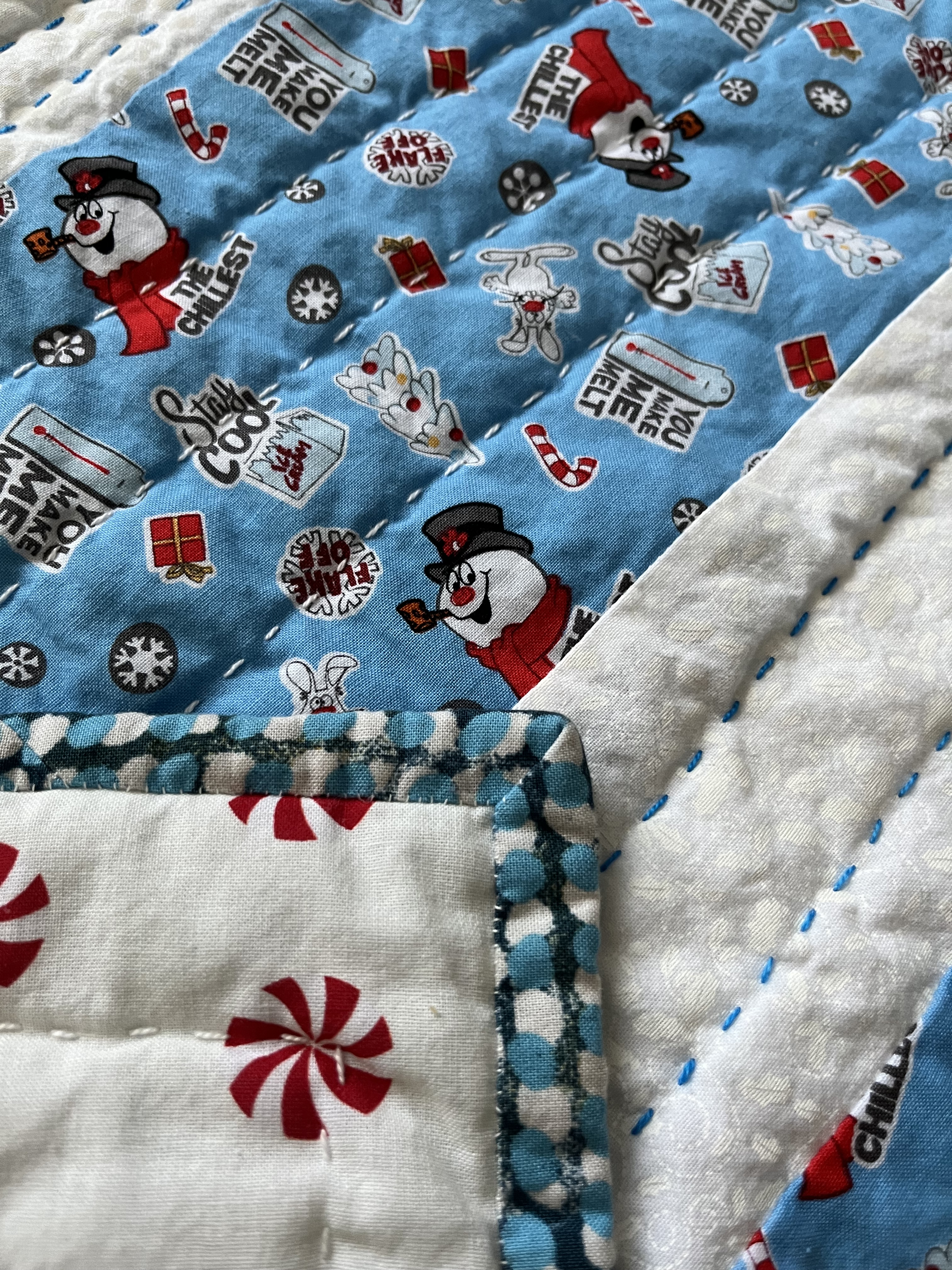
P.S. The quilt shown here is my Frosty the Snowman Quilt which is still in progress…stay tuned!
Add it to your Pinterest board for future reference!
My completed Conversation Sampler Quilt by AnneMarie Chany has a homespun, scrappy, Valentine’s Day style created with variety pink-hued fabrics and a tied finish.
Completed Conversation Heart Quilt
At long last, my Conversation Heart Quilt, as I call it, is done! I picked up AnneMarie Chany’s Conversation Sampler Quilt pattern in early 2019, purchased the fabric, sewed about two rows, and then life happened. About six years later, it’s completed and on a bed!
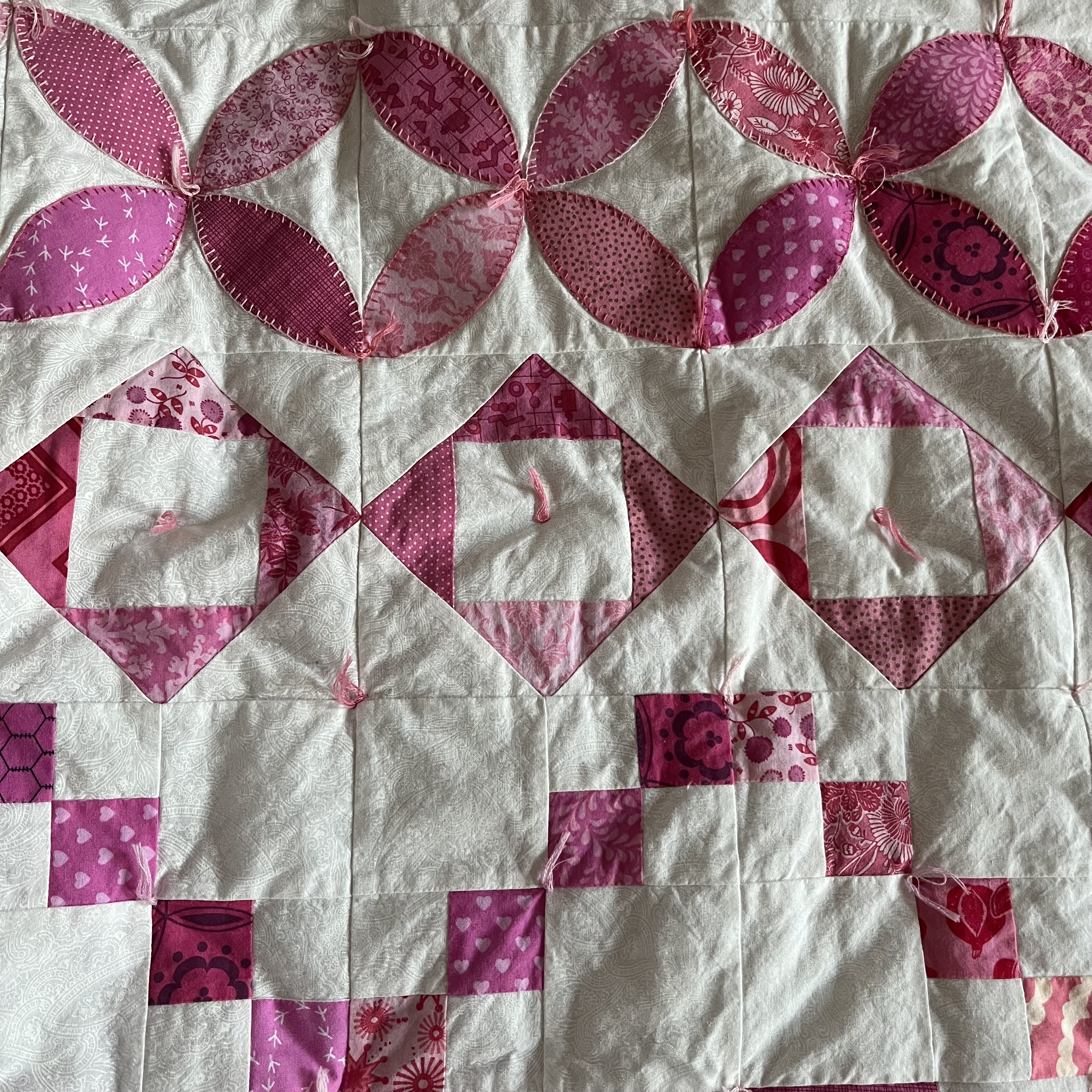
Close-up of rows 6, 7, & 8
The pattern uses a row-by-row construction method. That means, every row is sewn individually and then the rows are sewn together. Each row in this pattern is a different quilt block pattern. One of the appeals of sewing this pattern was the chance to create 12 different quilt blocks. Each block is unique and required different skills.
The instructions are written to create a rainbow within the rows, as seen on the front of the pattern. My vision was to keep the white, but use pink—so it felt more like Valentine’s Day. I also wanted a scrappy, homespun style.
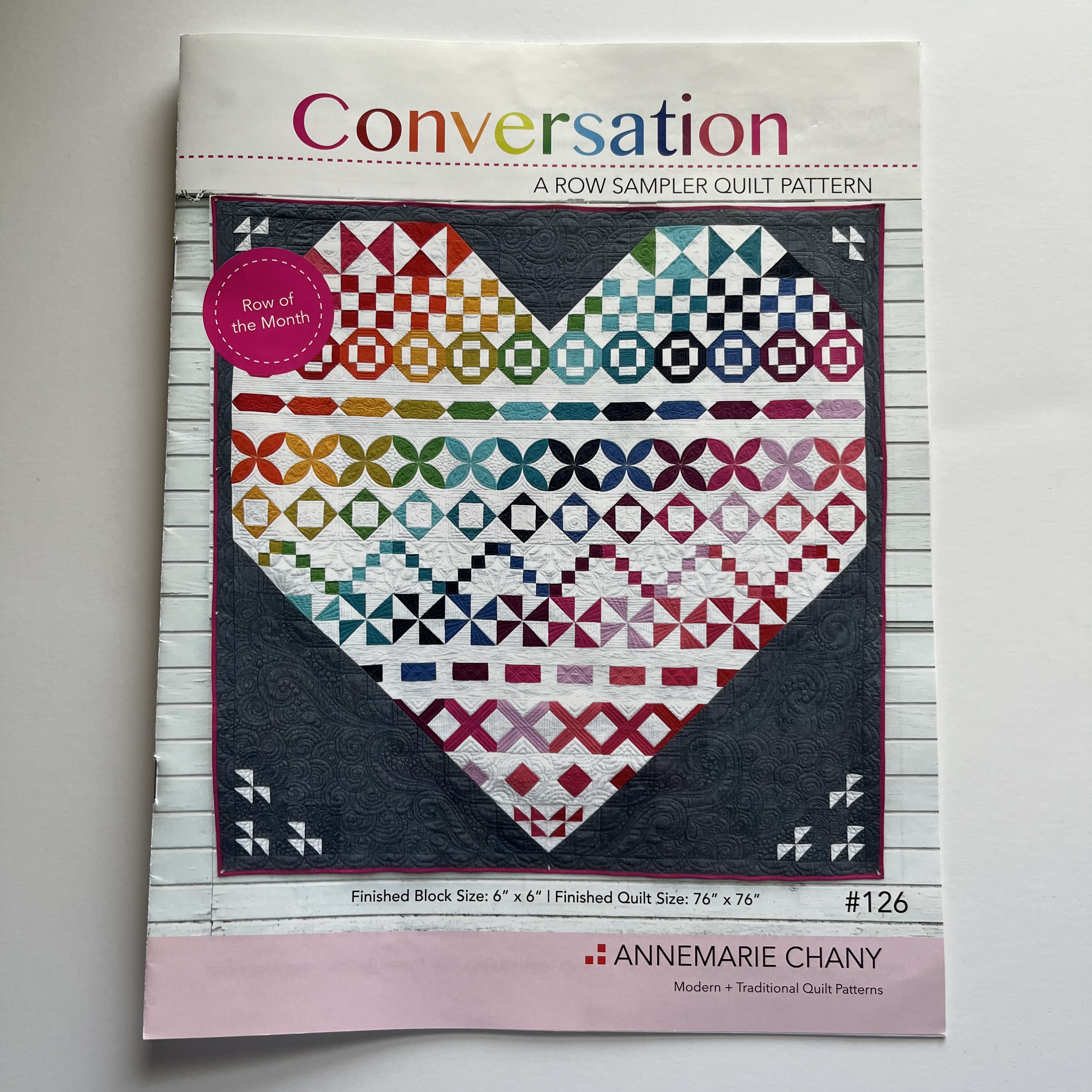
Conversation Heart Quilt pattern plus my fabric pull
I purchased fat quarters of fabric in an array of pink hues and prints. Plus, I pulled a few pink fabrics from my stash. Overall, I used about 20 different pink fabrics for the contrast in the blocks. The binding is made with leftover pink fabric. The white and navy fabrics I purchased new. The backing is a new flat sheet. For the blanket stitch on the Orange Peel blocks, tying, and quilting, I used about 20 different hues of pink embroidery floss.
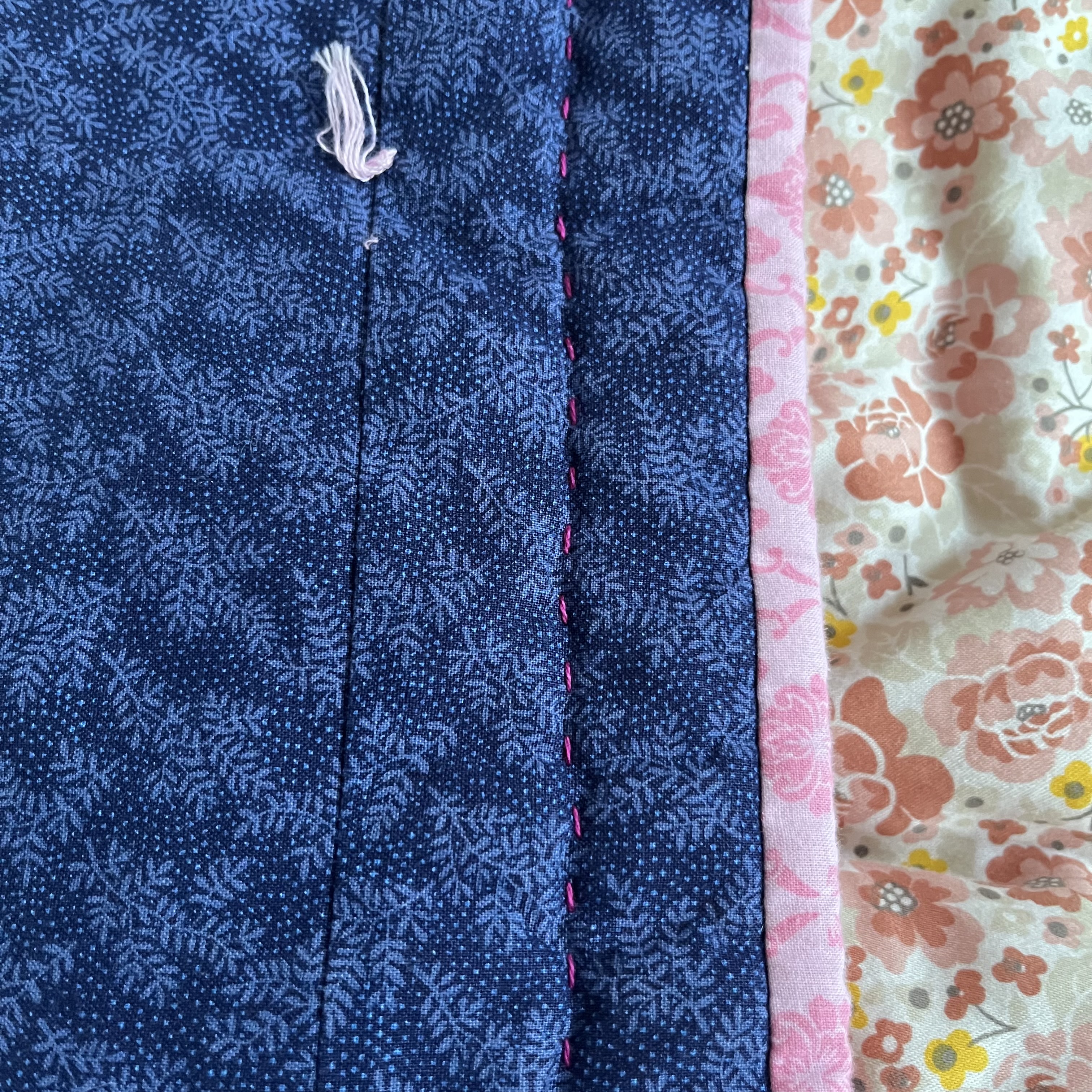
Close-up of the backing on the Conversation Heart Quilt
To finish the quilt, I put ties all throughout the blocks and did a single line of big-stitch quilting around the outer border. First, I have limitations for machine quilting, both with my own machine (it’s a basic model) and my budget to pay for longarm quilting by a professional. Second, tying is just a lovely way to create a homespun aesthetic. It’s just not as polished as machine quilting and really highlights the hand of the maker. Third, I wanted this quilt DONE, so I wasn’t going to hand quilt it. Especially with all those seams! (Seams create an obstacle to any kind of quilting.)
The resulting quilt achieves my vision and I’m pleased as punch with it! The colors exude a Valentine’s Day vibe (although this quilt is destined to be used year-round). The variety of pink fabrics used in both the blocks and binding create a scrappy style, as if the quilt was made with leftover material from different projects. The ties bring it all together with texture and a homespun feel.
Close-up of tie and single line of quilting
Since I have completed this quilt, I have seen it on the bed and thought, “that is a really nice quilt!” And, you know what? Isn’t that the purpose of creating—to make something that delights ourselves?
The Details:
+ Pattern is “Conversation Sampler Quilt Pattern” by AnneMarie Chany
+ Measures 76” square
+ Approximately 20 different pink fabrics
+ Approximately 20 different shades of pink embroidery floss
+ Finished with ties and a single line of hand quilting along the border
After sewing a baby-size quilt top with Maeberry Square’s Desert Series Quilt Pattern, I added borders with leftover fabric to create a twin-size quilt.
Completed Desert Sun & Then Some Quilt
Several years ago, I signed up to test Maeberry Square’s One Block | Three Designs Desert Series Pattern. Unfortunately, it looks like the shop is taking a break. You may remember this quilt from here. It’s a fun pattern and I love the colors. But, I’m a big-quilt kind of person. The top was only baby-size and I don’t have any babies to make quilts for! The top had been waiting patiently while I figured out what to do.
Center was tied with six-strand embroidery floss.
Finally, inspiration struck in the form of leftover fabric from some pillowcases I made. I decided to just add borders of fabric until I had a large enough quilt. To me, a quilt needs to be long enough to cover your shoulders and wrap around your feet while you’re fully stretched out. In the past, I’ve made a throw-size quilt and found it distinctly unsatisfying to use for a couch nap because either my feet were uncovered, or my shoulders were.
Close up of big-stitch quilting in borders
I gathered my leftover pillowcase fabric along with leftover fabric from the original quilt, too. With some mathing, I just kept cutting strips out of the fabric and sewing them on as borders. It has a vaguely Courthouse Steps quilt block kind of vibe. Once I had sewn all the leftover fabric on, I decided it was big enough. (To be honest, it could be bigger, but it passes my shoulder-to-toes test.)
It’s a leftover quilt because it was completed with materials leftover from a few different quilts.
With newly purchased batting and fabric, I basted the quilt and set about tying the quilt within the “Desert Sun” center. The embroidery floss I used was leftover from my Down the Rabbit Hole Quilt. Then, using the same floss, I did big stitch hand quilting in the borders.
Glamour shot of the quilting on the back
The binding was a quilting miracle! I used leftover binding I had made for a previous quilt project. And, you know what? It was the exact amount I needed for this quilt. I mean, it was exactly—I clipped off maybe 2” of extra binding. If there was ever a sign that this quilt was meant to be, this was it.
The leftover binding was the exact amount needed for this quilt.
And, that’s it! I finished an unfinished quilt top that was (to me) an unusable size in a size that is perfect for the bed that it is currently on. It’s a great feeling to clear out a project bin…and to start scheming about the next project!
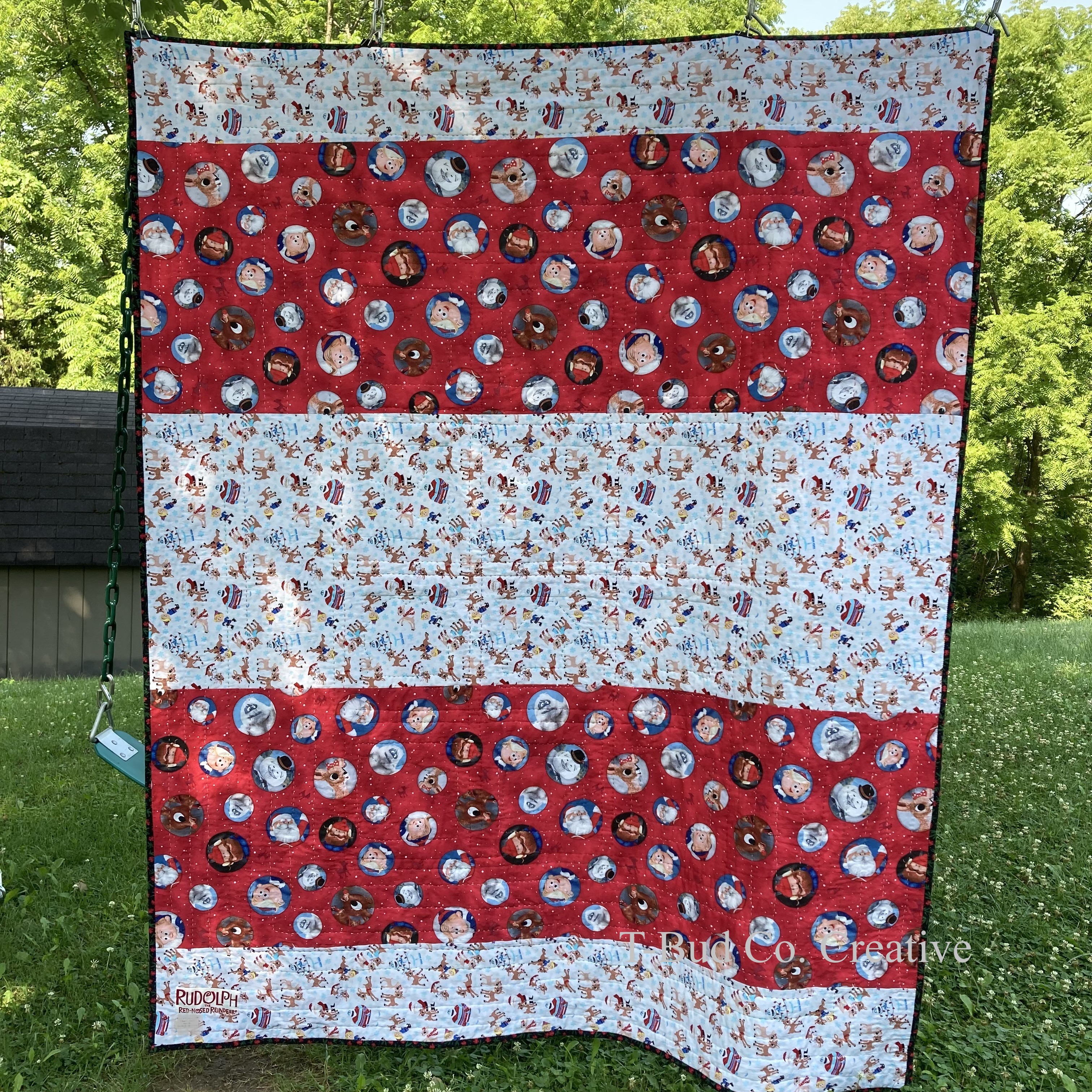
In July of 2022, I finally completed my Rudolph Christmas quilt that I made with a repurposed fabric panel.
My Rudolph Christmas quilt has been in the works for a handful of years. Last July, I finally finished it.
I bought a fabric panel that was intended to be sewn into a fabric kids’ book. Before I could make the book, I was gifted the completed book. (Disclaimer: I love the 1964 Rankin-Bass Rudolph the Red-Nosed Reindeer Christmas special—dated language and all—and I have an affinity for the Bumble. People tend to gift me and my family Rudolph-themed items!)
I decided to make each page a block and use some of the Rudolph and Bumble fabric I had been collecting as borders and backing. I did have to buy some white snowflake fabric to use for borders, too.
This was the first quilt I made after I realized I like quilts big enough to use. I want a quilt to be at least twin-size—it should cover my shoulders and feet! I simply kept adding borders to the page blocks until I was satisfied with the size
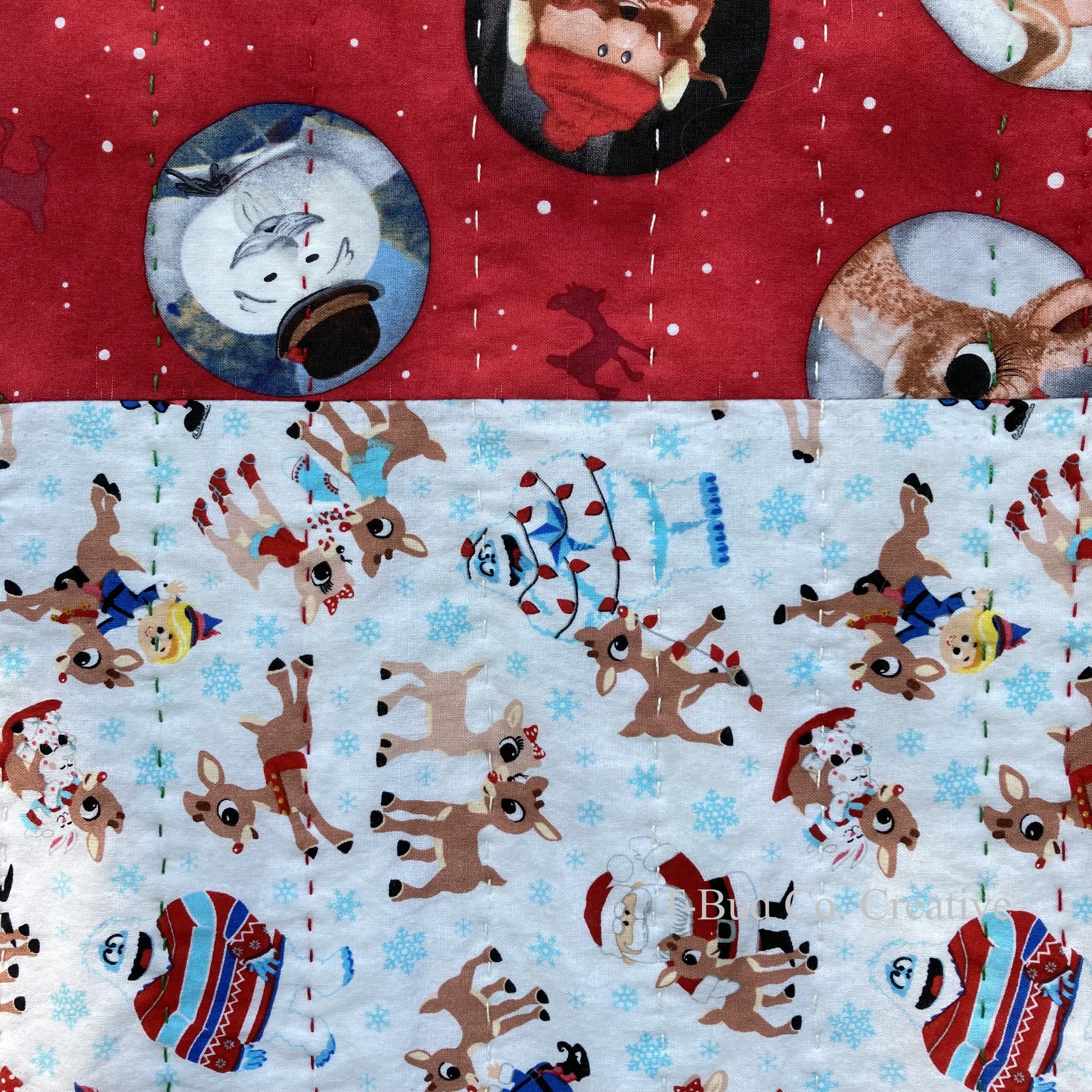
To quilt it, I decided to hand quilt it with big-stitch quilting. I quilted in each page block around the scene with white DMC pearl thread. Then I did straight quilting in a combination of red and green DMC pearl thread in the white snowflake borders. In the green Rudolph print borders, I did more straight quilting in white DMC pearl thread.
The binding is just a black Christmas-themed fabric. I think it’s a nice frame to the red, green, white of the quilt.
I was able to save the Rudolph logo from the panel and stitched it onto the back right above my quilt label.
I have to say, I love this quilt! I love the colors. I love the quilting. And the size is perfect. I have no desire to only have this quilt out at Christmas. Ha! And, isn’t that the point? To make a quilt that you love and use?
The details:
+ 76.5” H x 61.5” W
+ Machine pieced
+ Hand quilted
+ The blocks are from a panel that was designed to be sewn into a fabric book. I like the quilt better the book—it’s warmer, too!
+ Don’t ask how long it took me to finish this quilt!
I have a quilt that is about 15-years-old and had started to deteriorate on one side. I mended it by sandwiching the worn area between two layers of fabric and quilting it with big stitches.
Yellow quilt repaired and ready for bed.
A little history on this quilt: my mom made this quilt from a block-of-the-month quilt kit she got from Joann Fabrics & Crafts circa 2000. In 2006 or 2007, she mailed it to me as a college graduation gift (I graduated in 2005). Readers, this quilt is hand quilted. It has a muslin backing that is so soft. (Y’all know I love a muslin backing.) I love this quilt.
Wear is visible along the binding.
Unlike my M&M’s quilt that I mended by simply cutting off the worn area and re-binding the cut side, I didn’t want to lose size with this quilt. Inspired by Japanese Sashiko and Boro methods and aesthetics, I decided to reinforce the worn area of this quilt. Head over to Upcycle Stitches to learn more about Sashiko and Boro and to be inspired.
At some points, batting was exposed.
Since the worn area was about 6” wide along one side of the quilt, I simply cut a 13” x 72” strip of complementary fabric—at least the fabric in my stash that matched the best and that I had enough yardage of—ha! And, I had to cut and stitch together a couple of pieces to get a patch that size.
Here the patch is cut, ironed, and ready to be machine-stitched onto the front.
I then folded the fabric patch in half, longwise (wrong sides together) and ironed it. The ironed fold allowed me to see the halfway mark along the patch, which I wanted to land right on the original binding.
Pinned into place and then stitched on.
Next, I pinned the fabric to the quilt (right sides together), machine-stitched it down with my quilting foot, and then folded it over and gave it a little iron. Think of this patch going on like a really wide binding.
Pin-basting, getting it ready for quilting.
This is where it got a bit tricky, because I needed to quilt the fabric down before attaching the edge of the backside of the patch. I pin-basted the patch in place. Once that was done, I went to town with stitching big stitches in pearl cotton thread.
Stitch! Stitch! Stitch!
Finally, I stitched down the short sides and the edge of the backside using a needle-turn appliqué technique. I folded back and tucked in about a ¼” of the edge of the fabric and stitched the patch down right at the fold.
Needle-turn-like appliqué to finish the sides and back edge of the patch.
So, the repair is like a wide single-layer of binding that I quilted with big stitches and attached like an appliqué.
Finished patch.
Is it perfect? No. Is this the proper way to repair a quilt? Probably not. Is the quilt now usable and back on my bed? Absolutely! Does it sleep like a dream? You know it! And, really, isn’t that all that matters?
Now, let’s take an appreciation tour of my mom’s original quilting:
My favorite: she stitched in a chicken!
Tiny, perfect stitches.
For all you crinkle lovers. There’s no softer thread count than 15-year-old, well-used quilt!
How do you repair your quilts? Leave a comment if you’ve got a tip or trick that I just gotta know!